


Does a Larger Aperture Always Improve Image Quality? | Industrial Lens Guide
06/24/2026What Is the Difference Between C-Mount and CS-Mount?
06/25/2026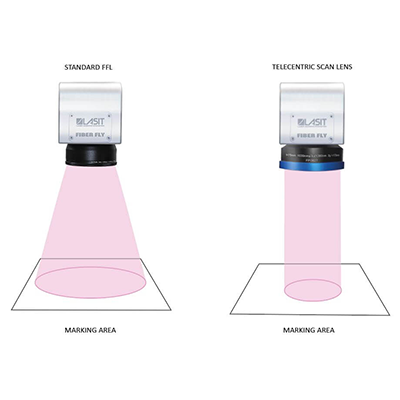
Telecentric Lens vs Standard Lens is one of the most important comparisons in industrial imaging and machine vision system design. While both lens types are capable of producing high-quality images, they are designed for different optical objectives and application requirements.
A standard lens is ideal for general-purpose imaging and vision systems where perspective effects are acceptable. A telecentric lens, on the other hand, is specifically engineered to maintain constant magnification and minimize perspective errors, making it the preferred choice for precision measurement and dimensional inspection.
Understanding the differences between these lens types is an important part of modern optical design. In this guide, we will compare telecentric and standard lenses from the perspectives of imaging principles, optical performance, measurement accuracy, cost, and application suitability.
What Is a Standard Lens?
A standard lens, sometimes referred to as a conventional lens, uses perspective projection to create an image.
In a standard lens system:
- Objects closer to the camera appear larger.
- Objects farther from the camera appear smaller.
- Magnification changes with working distance.
- Perspective distortion naturally occurs.
Because of their compact design and lower manufacturing cost, standard lenses are widely used in:
- Machine vision
- Robotics
- Smart security systems
- Traffic monitoring
- AI cameras
- Consumer imaging
Standard lenses are often selected using factors such as sensor size, focal length, and field of view. If you are new to lens selection, our Lens Selection Guide provides a detailed overview of the process.
What Is a Telecentric Lens?
A telecentric lens is a specialized optical system designed to ensure that the chief rays entering the lens remain parallel to the optical axis.
This unique design provides several important advantages:
- Constant magnification
- Minimal perspective error
- Extremely low distortion
- Accurate edge detection
- Superior dimensional measurement
Unlike standard lenses, telecentric lenses maintain the same image scale even when an object moves slightly within the inspection range.
As a result, telecentric optics are commonly used in:
- Precision metrology
- Semiconductor inspection
- PCB inspection
- Medical device measurement
- High-accuracy machine vision systems
Telecentric lens performance is closely related to advanced optical design principles, including aberration correction, distortion control, and imaging geometry optimization.
Telecentric Lens vs Standard Lens: Key Differences
The following table summarizes the major differences between the two lens types.
| Parameter | Telecentric Lens | Standard Lens |
|---|---|---|
| Perspective Error | Extremely Low | Visible |
| Magnification Stability | Constant | Changes with Distance |
| Measurement Accuracy | Excellent | Moderate |
| Distortion | Very Low | Depends on Lens Design |
| Edge Detection | Highly Accurate | Less Consistent |
| Size | Larger | Smaller |
| Cost | Higher | Lower |
| Best Application | Measurement | General Imaging |
For applications requiring accurate dimensional inspection, telecentric lenses provide significant advantages over standard lenses.
Optical Design Differences
The most significant difference between the two lens types lies in their optical architecture.
Standard Lens Design
A standard lens is designed to balance:
- Image quality
- Cost
- Compact size
- Wide field of view
Engineers often optimize standard lenses for general-purpose imaging applications where slight perspective distortion is acceptable.
Many industrial systems use standard lenses together with a properly selected sensor. To better understand this relationship, see our Sensor Guide.
Telecentric Lens Design
Telecentric lenses require a more complex optical structure.
Their design typically includes:
- Larger optical elements
- Specialized aperture placement
- Parallel chief ray control
- Enhanced distortion correction
These features increase manufacturing complexity but deliver significantly better measurement accuracy.
Because telecentric optics are a specialized branch of optical design, they are frequently used when precision is more important than system cost.
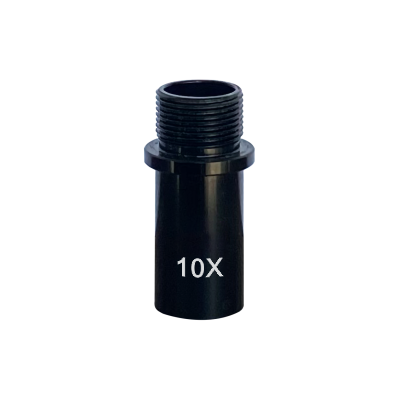
M12 Telecentric Lenses
Why Telecentric Lenses Are Used for Precision Measurement
One of the primary reasons engineers choose telecentric lenses is their ability to maintain consistent magnification.
Consider a diameter measurement system.
With a standard lens:
- Small changes in object position can affect image size.
- Measurement results may vary.
- Inspection accuracy decreases.
With a telecentric lens:
- Magnification remains constant.
- Object dimensions remain stable.
- Measurement repeatability improves.
This capability makes telecentric lenses ideal for:
Semiconductor Inspection
Critical dimensions on semiconductor components require micron-level accuracy.
PCB Inspection
Telecentric imaging improves measurement consistency across the inspection area.
Precision Manufacturing
Mechanical parts can be measured with minimal optical error.
Medical Device Inspection
Medical components often require highly accurate dimensional verification.
When distortion becomes a concern, you may also find our Distortion Guide helpful.
Imaging Performance Comparison
Standard Lens Imaging Characteristics
Advantages:
- Lower cost
- Compact size
- Wide selection of focal lengths
- Suitable for most vision tasks
Limitations:
- Perspective distortion
- Changing magnification
- Reduced measurement accuracy
Telecentric Lens Imaging Characteristics
Advantages:
- Constant magnification
- Near-zero perspective distortion
- Accurate edge detection
- Excellent measurement capability
Limitations:
- Higher cost
- Larger physical size
- Smaller field of view options
At this point in the discussion, the distinction between Telecentric Lens vs Standard Lens becomes clear: one prioritizes imaging flexibility, while the other prioritizes measurement precision.
When Should You Choose a Telecentric Lens?
Choose a telecentric lens when your application involves:
- Precision dimensional measurement
- Metrology systems
- Semiconductor inspection
- PCB inspection
- Automated quality control
- Medical device manufacturing
Industries commonly using telecentric optics include:
- Machine Vision
- Medical Imaging
- Advanced industrial automation
When Should You Choose a Standard Lens?
A standard lens is often the better choice when your primary goal is image acquisition rather than measurement.
Recommended applications include:
- Robotics Vision
- Smart Security
- Smart Traffic
- AI Cameras
- Object Detection Systems
- Embedded Vision
Standard lenses provide excellent performance while maintaining lower system costs.
Cost Comparison
Telecentric lenses are generally more expensive because they require:
- Additional optical elements
- Higher manufacturing precision
- Tight assembly tolerances
- Advanced distortion correction
Standard lenses can often deliver sufficient performance at a fraction of the cost.
Therefore, lens selection should always be based on application requirements rather than specifications alone.
How to Select the Right Lens
Before selecting a lens, consider the following questions:
Is dimensional accuracy critical?
If yes, choose a telecentric lens.
Is object detection the primary task?
If yes, a standard lens is often sufficient.
What is the required field of view?
Use our FOV Calculator to determine the appropriate focal length.
What sensor will be used?
Review our Sensor Guide for sensor compatibility considerations.
What level of distortion is acceptable?
Consult our Distortion Guide to better understand distortion effects.
Related Resources
To continue learning about industrial lens technologies, explore the following resources:
- Optical Design
- Lens Selection Guide
- Sensor Guide
- Distortion Guide
- FOV Calculator
- Machine Vision Solutions
- Robotics Vision Solutions
- Medical Imaging Solutions
Frequently Asked Questions
Q: What is the main difference between a telecentric lens and a standard lens?
A: A telecentric lens maintains constant magnification and minimizes perspective error, while a standard lens uses perspective projection and magnification changes with distance.
Q: Why are telecentric lenses more expensive?
A: They require larger optical elements, tighter tolerances, and more sophisticated optical engineering.
Q: Can telecentric lenses completely eliminate distortion?
A: No optical system is completely perfect, but telecentric lenses can reduce distortion to extremely low levels.
Q: Are telecentric lenses necessary for machine vision?
A: Not always. They are primarily required for measurement and metrology applications.
Q: What industries commonly use telecentric lenses?
A: Semiconductor manufacturing, precision inspection, PCB production, and medical device manufacturing are among the most common users.
Q: Can a standard lens be used for measurement?
A: Yes, but measurement accuracy will generally be lower compared to a telecentric lens.
Q: How do telecentric lenses improve edge detection?
A: By minimizing perspective effects and maintaining constant magnification, object edges remain more consistent and easier to measure.
Q: How do I choose the correct telecentric lens?
A: You should evaluate field of view, sensor size, working distance, and required measurement accuracy before selecting a lens.
Conclusion
Telecentric Lens vs Standard Lens ultimately comes down to the balance between measurement accuracy and imaging flexibility.
Telecentric lenses are the preferred choice for dimensional inspection, metrology, and precision manufacturing because they provide constant magnification, minimal distortion, and highly accurate measurements.
Standard lenses remain the most practical solution for general machine vision, robotics, security, traffic monitoring, and AI imaging systems due to their compact size and lower cost.
By understanding the optical principles behind Telecentric Lens vs Standard Lens, engineers can make better lens selection decisions, optimize imaging performance, and build more reliable machine vision systems.
.png)