


C-Mount vs M12 Lens: What’s the Difference?
06/02/2026
What Is Focal Length in Machine Vision?
06/04/2026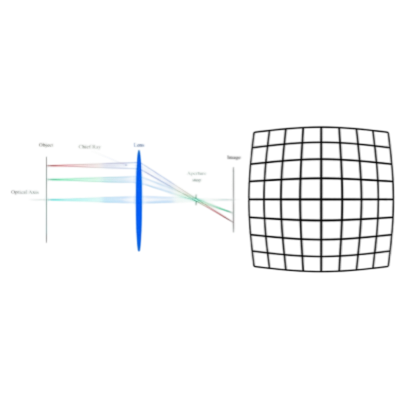
Introduction
Optical distortion is one of the most critical factors that can influence the accuracy of AI vision systems. In industrial imaging, robotics, machine vision, and smart security, even minor distortion can cause errors in object detection, measurement, and navigation. Understanding optical distortion, its causes, and how to mitigate it is essential for engineers, integrators, and AI developers who rely on precise imaging.
This article explores the impact of optical distortion on AI vision accuracy, compares lens characteristics, and provides guidance for selecting the right low-distortion lenses for industrial and embedded applications. Users can also access TOWIN’s Knowledge Center for in-depth technical resources: .
What Is Optical Distortion?
Optical distortion refers to deviations in an image where straight lines appear curved or misaligned. It is an inherent property of lens systems and varies with lens type, focal length, and sensor size. The most common distortion types include:
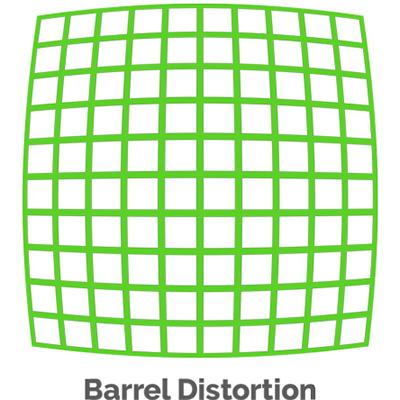
1. Barrel Distortion
Lines bow outward from the image center, typical in wide-angle lenses.
2. Pincushion Distortion
Lines curve inward, often seen in telephoto lenses.
3. Mustache (Complex) Distortion
A combination of barrel and pincushion distortions, usually in high-zoom lenses.
Causes of Optical Distortion include lens design limitations, sensor-lens mismatches, focal length extremes, and manufacturing tolerances.
Visualizing these distortions is essential for AI vision systems, as they directly affect object recognition, measurement, and FOV accuracy.
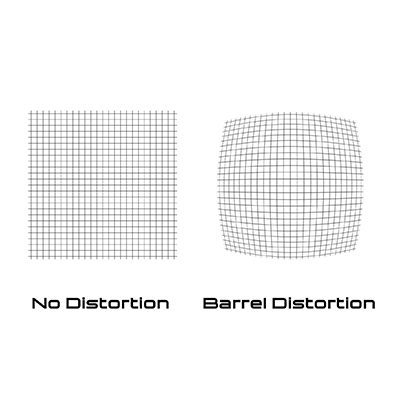
barrel distortion VS no distortion
How Optical Distortion Impacts AI Vision Accuracy
Optical distortion can degrade AI vision system performance in several ways:
1. Object Detection Errors
Distorted images may misrepresent object boundaries, leading to misclassification by AI models.
2. Measurement and Inspection Errors
Industrial inspection systems may produce inaccurate size, length, or area calculations if images are distorted. This is critical in applications such as PCB inspection, semiconductor fabrication, and automated quality control.
3. Field of View Misrepresentation
Distortion alters the true field of view, affecting robotics navigation, drone mapping, and surveillance coverage.
4. Reduced Machine Learning Model Performance
AI models trained on distorted images may not generalize well, resulting in decreased detection accuracy and increased false positives.
Recommended Linking:
- Learn more about sensor-lens matching and FOV calculations in TOWIN’s Knowledge Center.
- Use the FOV Calculator to assess field of view with minimal distortion.
Key Factors That Influence Optical Distortion
Several parameters affect distortion levels in AI vision systems:
| Factor | Impact on Distortion |
|---|---|
| Focal Length | Wide-angle lenses → barrel distortion; telephoto lenses → pincushion distortion |
| Sensor Size | Larger sensors amplify lens distortion if optics are not matched |
| Lens Quality | Low-quality optics increase aberrations and edge distortion |
| Zoom Range | High-zoom lenses may produce complex mustache distortion patterns |
| Aperture Design | Optical design and coatings influence distortion and image sharpness |
By understanding these factors, engineers can minimize distortion and optimize AI vision accuracy.
Lens Selection Guidance for AI Vision
Minimizing optical distortion starts with proper lens selection. Key guidelines include:
1. Choose Low-Distortion Lenses
Industrial lenses designed for low distortion maintain accurate imaging across the field of view.
2. Match Sensor Size to Lens
Correct sensor-lens pairing reduces geometric errors and misalignment in AI analysis.
3. Balance Focal Length and Working Distance
Consider both field of view and distortion when selecting lenses for long-range or wide-angle applications.
4. Verify MTF Performance
Lenses with higher MTF provide sharper images with minimal distortion, critical for AI object recognition.
5. Consider Calibration and Software Correction
While hardware design reduces distortion, software calibration can correct residual errors for high-accuracy AI vision systems.
Recommended Linking:
- Explore TOWIN’s Low Distortion Lens Guide for AI vision applications.
- Use the FOV Calculator for field of view assessment.
Applications Where Minimizing Optical Distortion Is Critical
- Machine Vision: PCB inspection, defect detection, semiconductor inspection.
- Robotics Vision: Autonomous navigation, object detection, AI-assisted robotics.
- Smart Security: Facial recognition, surveillance, perimeter monitoring.
- Drone Imaging: Mapping, infrastructure inspection, survey accuracy.
- Industrial Automation: Assembly line monitoring, AI-driven quality control.
Proper lens selection reduces distortion, ensuring AI systems perform reliably across these scenarios.
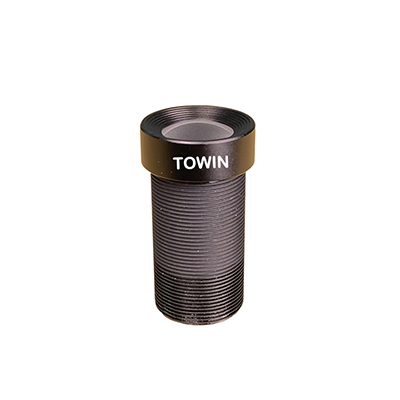
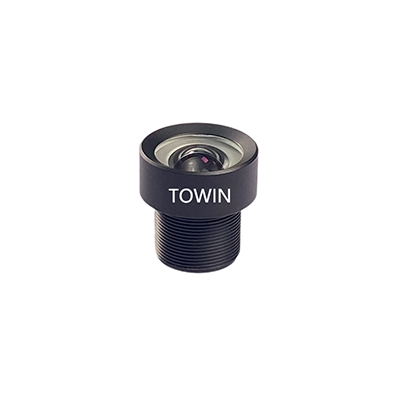
25mm M12 low-distortion lens
Frequently Asked Questions
Q1: What is optical distortion in lenses?
A1: Optical distortion is the bending or misalignment of image lines due to lens design limitations.
Q2: How does distortion affect AI vision accuracy?
A2: It can cause misclassification, measurement errors, FOV misrepresentation, and reduced model performance.
Q3: Can software correct lens distortion?
A3: Yes, software can partially correct distortion, but selecting low-distortion lenses minimizes errors.
Q4: Which lenses are best for minimizing distortion?
A4: Industrial low-distortion lenses with proper focal length and MTF performance are ideal for AI vision.
Q5: Does sensor size influence distortion?
A5: Larger sensors can amplify lens distortion if the optics are not designed for the sensor format.
Conclusion
Optical distortion can significantly reduce AI vision accuracy if not properly addressed. Understanding its types, causes, and impacts allows engineers to select lenses that minimize distortion, improve measurement reliability, and ensure precise object detection. Industrial low-distortion lenses, proper sensor-lens pairing, and calibration are essential for achieving optimal AI performance in machine vision, robotics, smart security, and industrial automation.
To learn more, explore the TOWIN Knowledge Center and leverage tools like the FOV Calculator to enhance AI vision accuracy with minimal optical distortion.