3mm vs. 6mm Industrial Lens
11/06/2025
Fisheye Lens for Street Photography
11/06/2025
High-security areas demand surveillance systems that leave no room for compromise. Whether safeguarding government facilities, financial institutions, or critical infrastructure, the quality of your CCTV lenses directly impacts the effectiveness of your security measures. The best CCTV lenses for high-security areas combine cutting-edge technology, robust construction, and precision optics to deliver crystal-clear footage even in challenging conditions.
Why High-Security Areas Need Specialized CCTV Lenses
High-security zones face unique challenges, such as low-light conditions, long-range monitoring, and the need to capture fine details like facial features or license plates. Standard lenses often fall short in these scenarios, leading to blurry images or limited coverage. The best CCTV lenses for high-security areas are designed to overcome these obstacles with features like:
- High-resolution imaging: Captures minute details for forensic analysis.
- Wide dynamic range (WDR): Balances extreme lighting contrasts.
- Infrared (IR) compatibility: Ensures visibility in complete darkness.
- Vandal-resistant designs: Withstands tampering or physical attacks.
Investing in specialized lenses reduces blind spots, enhances threat detection, and provides irrefutable evidence when incidents occur.
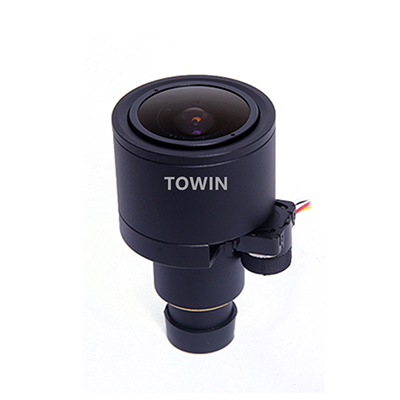
2.7-13mm Auto Iris F1.3 IR corrected CCTV lens
Key Features to Look for in CCTV Lenses for High-Security Areas
Selecting the right lenses requires evaluating several critical factors:
1. Focal Length and Field of View
The focal length determines the lens’s magnification and coverage area. For high-security applications:
- Short focal lengths (2.8mm–8mm): Ideal for wide-angle views in small spaces like entryways or cashier stations.
- Long focal lengths (12mm–50mm+): Suited for long-range surveillance, such as monitoring perimeters or parking lots.
- Varifocal lenses (e.g., 5–50mm) offer flexibility to adjust the field of view as needed.
2. Aperture Size (f-stop)
- A lower f-stop (e.g., f/1.2) allows more light to enter the lens, improving performance in low-light conditions. This is crucial for nighttime surveillance or indoor areas with minimal illumination.
3. Image Quality and Resolution
- Opt for lenses compatible with high-resolution cameras (4MP, 8MP, or higher). Look for aspherical lens elements to minimize distortion and ensure edge-to-edge clarity.
4. Durability and Environmental Resistance
High-security areas often expose lenses to harsh conditions. Choose models with:
- IP67 or higher ratings: Waterproof and dustproof construction.
- IK10 impact resistance: Protects against vandalism.
- Temperature tolerance: Operates reliably in extreme heat or cold.
5. Advanced Technologies
Modern lenses may include features like:
- Auto-iris control: Adjusts to lighting changes automatically.
- P-iris lenses: Maintains optimal depth of field and sharpness.
- IR-corrected optics: Prevents focus shifts when switching between day and night modes.

C-mount IR corrected CCTV lens
How to Choose the Right CCTV Lenses for Your High-Security Needs
- Assess your environment: Identify lighting conditions, distance to targets, and potential obstacles.
- Define your goals: Prioritize features like low-light performance, zoom capability, or vandal resistance.
- Test before buying: Many manufacturers offer demo lenses to evaluate real-world performance.
- Consult experts: Work with security integrators to ensure compatibility with your existing system.
FAQs
1. What is the difference between varifocal and fixed-focal lenses?
Varifocal lenses allow manual adjustment of the focal length, offering flexibility in framing shots. Fixed-focal lenses have a set focal length, providing consistent image quality but less adaptability.
2. Can I use a standard lens in a high-security area?
While possible, standard lenses may lack the low-light performance, durability, or resolution needed for critical surveillance. The best CCTV lenses for high-security areas are purpose-built to address these challenges.
3. How does lens aperture affect image quality?
A wider aperture (lower f-stop) lets in more light, improving image brightness and reducing noise in low-light conditions. It also enables shallower depth of field, which can isolate subjects from backgrounds.
4. Are IR-corrected lenses necessary for nighttime surveillance?
Yes. Non-IR-corrected lenses may shift focus when switching to infrared mode, resulting in blurry images. IR-corrected lenses maintain sharpness regardless of lighting.
5. What maintenance do CCTV lenses require?
Regularly clean the lens surface with a microfiber cloth to remove dust or smudges. Check for condensation inside the housing, especially in humid environments, and ensure seals remain intact.
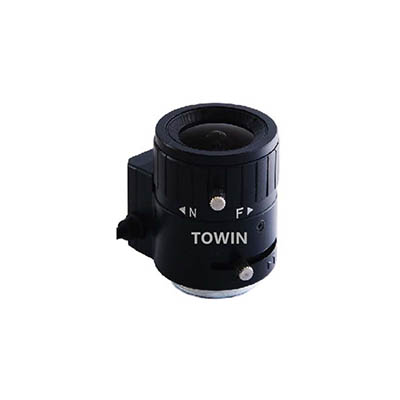
2.8-12mm F1.4 IR Corrected Lens , CCTV Zoom Lens
Final Thoughts
The best CCTV lenses for high-security areas are not just accessories—they’re the foundation of a reliable surveillance system. By prioritizing features like low-light performance, durability, and advanced optics, you can ensure your security setup meets the demands of high-stakes environments.