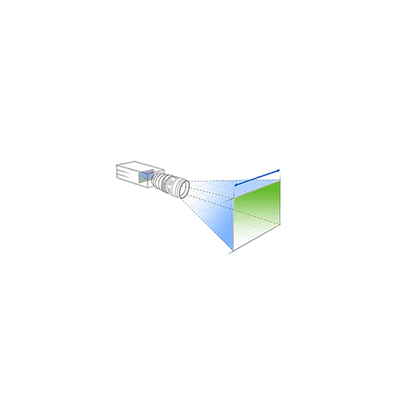



Wide Angle M12 board lens
11/05/2025
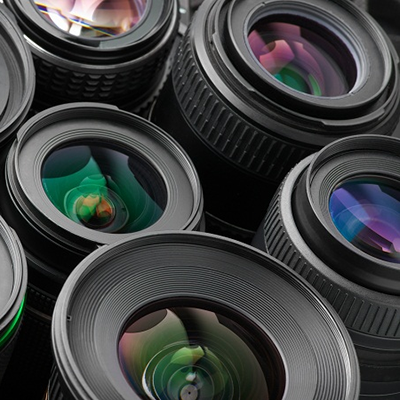
The Best CCTV Lenses for High-Security Areas
11/06/2025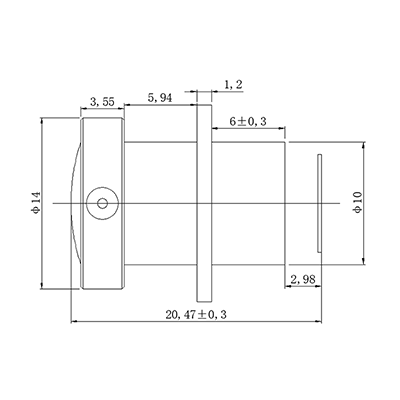
When selecting an Industrial Lens for machine vision, robotics, or quality inspection systems, the focal length is a critical factor. Two common options—3mm vs. 6mm Industrial Lens—offer distinct advantages and limitations depending on the application.
Understanding Focal Length in Industrial Lenses
The focal length of an Industrial Lens determines its field of view (FOV), depth of field (DoF), and image resolution. Shorter focal lengths (e.g., 3mm) capture wider angles, while longer focal lengths (e.g., 6mm) provide narrower, more magnified views. This fundamental difference influences their suitability for specific tasks, such as close-up inspections or long-distance monitoring.
3mm Industrial Lens: Pros and Cons
A 3mm Industrial Lens excels in applications requiring a broad FOV. Its compact size and lightweight design make it ideal for embedded systems or drones where space is limited.
1. Advantages:
- Wider Field of View: Captures more of the scene, reducing the need for multiple cameras.
- Compact Design: Fits into tight spaces, such as robotic arms or portable devices.
- Cost-Effective: Generally cheaper than longer focal length lenses.
2. Disadvantages:
- Limited Depth of Field: Objects at varying distances may appear blurry.
- Lower Magnification: Less suitable for detailed inspections of small components.
3. Best Use Cases:
- Surveillance systems monitoring large areas.
- Agricultural drones inspecting crops.
- Automated packaging lines requiring wide-angle coverage.
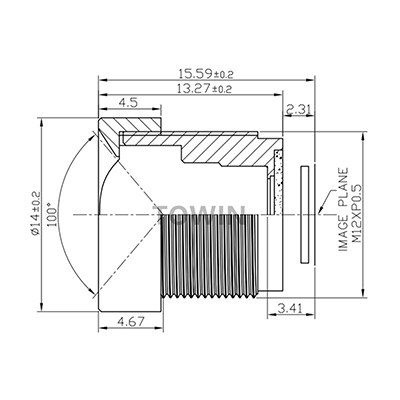
Low distortion wide angle 3mm Industrial lens
6mm Industrial Lens: Pros and Cons
A 6mm Industrial Lens offers higher magnification and sharper focus on distant or small objects. Its narrower FOV makes it ideal for precision tasks.
1. Advantages:
- Enhanced Magnification: Ideal for inspecting tiny defects or components.
- Greater Depth of Field: Maintains focus across multiple planes.
- Improved Image Clarity: Reduces distortion for accurate measurements.
2. Disadvantages:
- Narrower Field of View: Requires more cameras for large-area coverage.
- Bulkier Design: May not fit into compact systems.
- Higher Cost: Typically more expensive than 3mm lenses.
3. Best Use Cases:
- Electronics manufacturing for solder joint inspection.
- Pharmaceutical quality control for pill defect detection.
- Automotive assembly lines for component alignment.
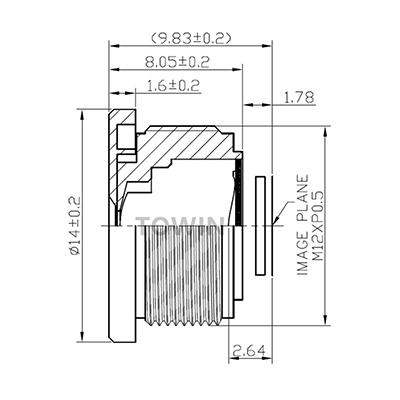
Low distortion 6mm M12 Industrial lens
Key Differences: 3mm vs. 6mm Industrial Lens
To summarize, the choice between 3mm vs. 6mm Industrial Lenses hinges on three factors:
- Field of View: A 3mm lens captures wider scenes, while a 6mm lens focuses on smaller areas.
- Depth of Field: A 6mm lens maintains sharpness across greater distances, whereas a 3mm lens struggles with varying focal planes.
- Application Suitability: A 3mm lens is better for broad surveillance, while a 6mm lens excels in precision inspection.
For example, a 3mm lens might monitor a warehouse floor, while a 6mm lens inspects circuit board components.
How to Choose Between 3mm and 6mm Industrial Lenses
Selecting the right Industrial Lens involves evaluating your project’s requirements:
- Working Distance: Measure the distance between the lens and the object. A 6mm lens requires more space for optimal focus.
- Object Size: Smaller objects demand higher magnification (6mm), while larger scenes need a wider FOV (3mm).
- Lighting Conditions: Longer focal lengths may require brighter illumination to avoid noise.
- Budget: 3mm lenses are often more affordable, but 6mm lenses justify their cost with superior precision.
FAQs
1. What is the main difference between a 3mm and 6mm Industrial Lens?
The primary difference lies in focal length: a 3mm lens provides a wider FOV, while a 6mm lens offers higher magnification and a narrower view.
2. Which lens is better for drone applications?
A 3mm lens is preferable for drones needing wide-angle coverage, such as agricultural or surveillance drones.
3. Do 6mm Industrial Lenses work well in low-light conditions?
They can, but they may require additional lighting to maintain image quality compared to shorter focal length lenses.
4. Can I use a 3mm lens for barcode scanning?
Only if the barcode is large and close to the camera. For smaller or distant barcodes, a 6mm lens is more effective.
5. What industries benefit most from 6mm Industrial Lenses?
Electronics, pharmaceuticals, and automotive manufacturing rely heavily on 6mm lenses for quality control and defect detection.
6. How does sensor size affect lens selection?
Larger sensors may require longer focal lengths to achieve similar FOVs as smaller sensors, impacting the choice between 3mm and 6mm lenses.

3mm wide angle IR corrected CCTV lens
Conclusion
The debate between 3mm vs. 6mm Industrial Lens boils down to your application’s demands. A 3mm lens is perfect for wide-area monitoring, while a 6mm lens shines in precision tasks. By considering factors like FOV, DoF, and budget, you can select the ideal lens to optimize your system’s performance.