


How to Choose the Right Machine Vision Lens
05/29/2026
Understanding Sensor Size in Industrial Cameras
05/31/2026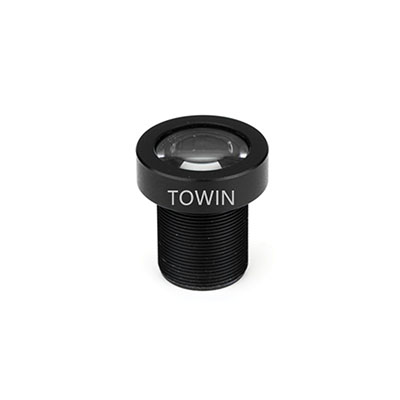
Introduction
Low Distortion Lens in Industrial Imaging is a critical topic in modern machine vision, factory automation, robotics, and precision inspection systems. In industrial environments where dimensional accuracy and image consistency are essential, lens distortion can directly affect measurement precision, AI recognition performance, and overall system reliability.
A standard consumer lens may produce visible image deformation near the edges of the frame. While this may be acceptable in photography, it becomes a serious problem in industrial inspection applications where accurate geometry and positional consistency are required. A low distortion lens helps minimize these optical errors, ensuring that straight lines remain straight and object dimensions remain accurate across the image.
Today, low distortion optics are widely used in:
- Machine vision systems
- Semiconductor inspection
- Robotics guidance
- Smart traffic monitoring
- PCB inspection
- Medical imaging
- Automated measurement equipment
This article explains what a low distortion lens is, how distortion affects industrial imaging systems, and how to select the right optical solution for precision applications.
For additional industrial imaging resources, users can explore the Towin Knowledge Center.
What Is Lens Distortion?
Lens distortion is an optical aberration that causes straight lines to appear curved or warped in an image. Distortion becomes more noticeable toward the outer edges of the image.
In industrial imaging systems, distortion can lead to:
- Measurement inaccuracies
- Positioning errors
- Unstable robotic guidance
- Incorrect object dimensions
- AI recognition failure
Distortion is usually measured as a percentage. Lower distortion percentages indicate better geometric accuracy.
Industrial machine vision systems often require distortion values below 1%, while precision metrology applications may require distortion below 0.1%.
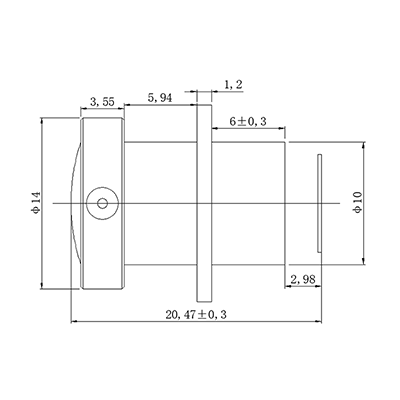
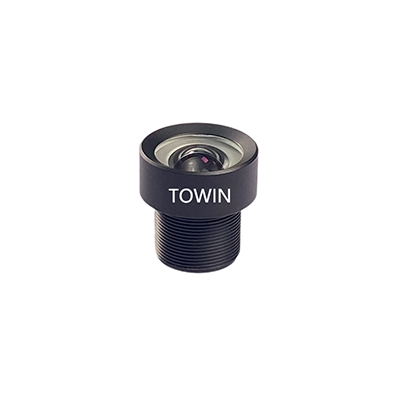
6mm Low Distortion Automotive Camera Lens
Types of Lens Distortion
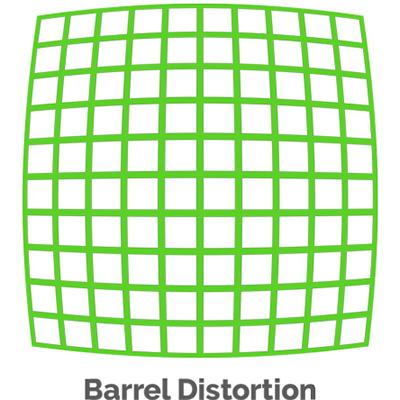
Barrel Distortion
Barrel distortion causes straight lines to curve outward from the center of the image.
This distortion is common in:
- Wide-angle lenses
- Low-cost optics
- Consumer camera lenses
Effects include:
- Expanded image edges
- Inaccurate dimensional measurements
- Reduced edge precision
Pincushion Distortion
Pincushion distortion causes straight lines to curve inward toward the center.
This effect may appear in:
- Telephoto lenses
- Long focal length optics
In industrial imaging, pincushion distortion can negatively affect:
- Coordinate calculations
- Robotic positioning
- Calibration accuracy
Mustache Distortion
Mustache distortion combines barrel and pincushion distortion patterns.
It is more complex and difficult to correct through software calibration alone.
High-end industrial optics are specifically designed to minimize this issue.
Why Low Distortion Matters in Industrial Imaging
In industrial systems, image geometry directly affects inspection accuracy.
A low distortion lens improves:
- Dimensional consistency
- Edge accuracy
- Position detection
- Calibration precision
- AI vision reliability
Applications requiring high geometric precision include:
- Semiconductor inspection
- PCB measurement
- Robot arm positioning
- Metrology systems
- OCR and barcode reading
Even small distortion errors can create major problems when measuring microscopic components or aligning robotic systems.
How a Low Distortion Lens Works
A low distortion lens uses advanced optical design techniques to reduce geometric deformation across the image.
These designs may include:
- Precision glass elements
- Aspherical lens structures
- Optimized optical coatings
- Advanced lens group arrangements
Industrial lenses are engineered to maintain:
- Straight line accuracy
- Uniform magnification
- Stable edge sharpness
Compared with consumer lenses, industrial low distortion optics prioritize measurement precision rather than artistic image characteristics.
Low Distortion vs Standard Industrial Lenses
| Feature | Standard Lens | Low Distortion Lens |
|---|---|---|
| Geometric Accuracy | Moderate | High |
| Measurement Reliability | Limited | Excellent |
| Edge Distortion | More noticeable | Minimal |
| Robotics Precision | Lower | Higher |
| Calibration Stability | Moderate | Improved |
Although low distortion lenses are generally more expensive, they significantly improve industrial inspection reliability.
Relationship Between Distortion and Field of View
Wider fields of view generally increase distortion challenges.
Wide-angle lenses often require more advanced optical correction because image rays bend more aggressively near the sensor edges.
The relationship between field of view and focal length can be estimated using the following formula:
FOV =
Sensor Size × Working Distance
Focal Length
When designing an industrial imaging system, engineers must balance:
- Field of view
- Working distance
- Resolution
- Distortion control
For practical calculations, users can utilize the Towin FOV Calculator.
Applications of Low Distortion Lenses
Machine Vision Inspection
Machine vision systems require accurate image geometry for:
- Defect detection
- Dimensional measurement
- Alignment inspection
A low distortion lens improves consistency across the inspection area.
Robotics Vision
Robotic systems rely on accurate object positioning.
Distortion can cause:
- Incorrect coordinate mapping
- Picking errors
- Motion instability
Low distortion optics improve robotic guidance accuracy and repeatability.
PCB Inspection
PCB inspection requires precise imaging of tiny electronic components.
Industrial lenses used in PCB inspection must provide:
- Minimal geometric error
- High edge clarity
- Stable magnification
Smart Traffic Systems
Traffic imaging systems require accurate object recognition across wide viewing areas.
Low distortion lenses help improve:
- License plate recognition
- Vehicle tracking
- AI traffic analysis
Medical Imaging
Medical optical systems require high geometric consistency for:
- Microscopic inspection
- Surgical imaging
- Diagnostic equipment
Precision imaging improves reliability and image interpretation.
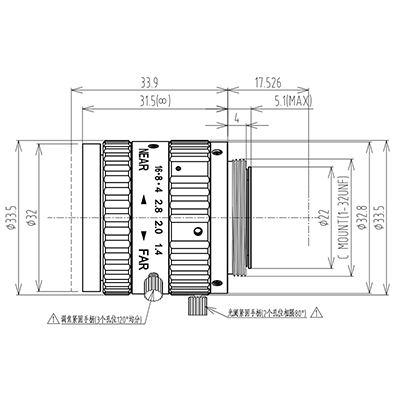
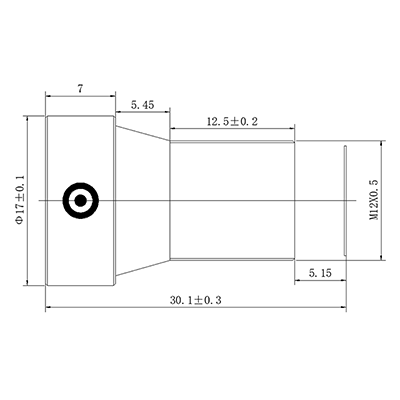
16mm FA Industrial Lens Low Distortion Scanning Lens
Factors to Consider When Choosing a Low Distortion Lens
Sensor Size Compatibility
The lens image circle must fully cover the camera sensor.
Common industrial sensor formats include:
- 1/2″
- 2/3″
- 1″
- APS-C
Larger sensors often require higher-quality optical correction.
Resolution Matching
High-resolution cameras demand high-resolution optics.
Pairing a high-megapixel sensor with a low-quality lens may reduce:
- Image sharpness
- Measurement precision
- Edge detail
Working Distance
Working distance influences:
- Magnification
- Field of view
- Lens selection
Different industrial applications require different optical configurations.
Distortion Specification
Industrial lenses typically specify distortion as a percentage.
General recommendations:
- <1% for standard industrial imaging
- <0.5% for precision automation
- <0.1% for metrology applications
Telecentric Lenses and Distortion Control
Telecentric lenses represent one of the best solutions for minimizing perspective and distortion errors.
Advantages include:
- Constant magnification
- Minimal perspective shift
- Excellent dimensional accuracy
Telecentric optics are commonly used in:
- Semiconductor manufacturing
- Precision metrology
- Industrial measurement systems
Common Mistakes When Selecting Industrial Lenses
Many users choose lenses based only on focal length while ignoring distortion performance.
Common mistakes include:
- Using consumer lenses for measurement applications
- Ignoring edge distortion
- Choosing low-cost optics for precision inspection
- Overlooking calibration requirements
- Mismatching lens resolution with sensor resolution
Careful optical evaluation helps improve long-term imaging reliability.
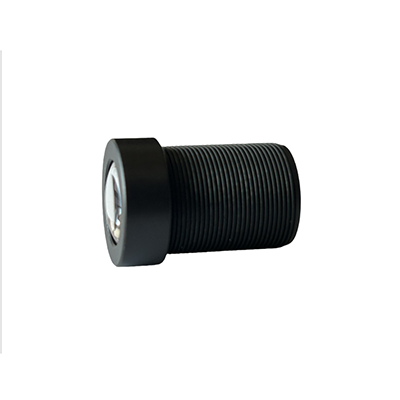
25mm-Low Distortion Telecentric Lens
Frequently Asked Questions
Q: What is considered low distortion in industrial imaging?
A: Most industrial applications consider distortion below 1% acceptable, while precision metrology may require below 0.1%.
Q: Why is distortion important in machine vision?
A: Distortion affects dimensional accuracy, object positioning, and AI recognition reliability.
Q: Are telecentric lenses distortion-free?
A: Telecentric lenses significantly reduce perspective and distortion errors but are not always completely distortion-free.
Q: Can software correction eliminate distortion?
A: Software calibration can reduce distortion effects, but optical correction is still preferred for high-precision applications.
Q: Are low distortion lenses more expensive?
A: Yes, because they require more advanced optical engineering and tighter manufacturing tolerances.
Conclusion
Selecting the correct optical solution is essential for achieving reliable industrial imaging performance. A high-quality Low Distortion Lens in Industrial Imaging improves geometric accuracy, enhances robotic positioning stability, and supports precision measurement applications across automation, semiconductor inspection, medical imaging, and AI vision systems.
As industrial automation continues to advance, low distortion optical technology becomes increasingly important for maintaining consistent image quality and accurate machine vision performance. Engineers and system integrators should carefully evaluate distortion specifications, sensor compatibility, resolution requirements, and application needs before selecting a lens.
To learn more about industrial optics, machine vision systems, and imaging technologies, visit the Towin Knowledge Center and explore additional resources related to Low Distortion Lens in Industrial Imaging.