


M12 lenses for AR/VR headsets
08/18/2025
Wide Angle wich Low Distortion Lens
08/18/2025
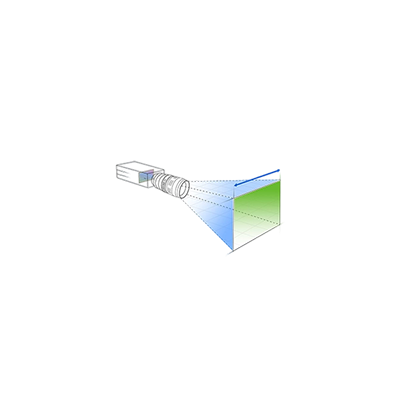
Machine vision lenses are essential optical components in industrial imaging systems. They determine how accurately a camera captures objects, measures dimensions, detects defects, and recognizes details during automated inspection. Different machine vision lens types are designed for different imaging requirements, including fixed working distances, adjustable fields of view, high magnification, and wide-area inspection.
Understanding the types of machine vision lenses is the first step toward selecting the right optics for your camera and application. From fixed focal length industrial lenses to varifocal, telecentric, macro, and wide-angle designs, each type offers different optical characteristics and performance advantages.
This guide explains the main machine vision lens types, their differences, typical industrial applications, and the key factors to consider when selecting an industrial lens. It also introduces M12, C-Mount, and CS-Mount lens options to help you identify a suitable solution for your imaging system.
Quick Overview: Main Types of Machine Vision Lenses
- Fixed Focal Length Lenses: Suitable for stable inspection setups with defined working distances.
- Varifocal and Zoom Lenses: Allow focal length adjustment for different fields of view.
- Telecentric Lenses: Designed for precision measurement with controlled perspective effects.
- Macro Lenses: Used for close-up imaging and small-feature inspection.
- Wide-Angle and Fisheye Lenses: Capture large fields of view in compact or panoramic imaging systems.
1. Fixed Focal Length Machine Vision Lenses
Fixed focal length lenses are among the most widely used machine vision camera lenses in industrial automation. They have a fixed focal length, which means the focal length cannot be adjusted during operation. Once the lens, camera, and object positions are configured, the imaging geometry remains consistent.
These lenses are particularly suitable for inspection systems where the object distance, field of view, and camera position remain relatively stable. Their optical construction can provide consistent imaging performance, making them a practical choice for automated inspection and measurement systems.
Key Advantages
- Stable focal length and imaging geometry.
- Consistent image quality for repetitive inspection tasks.
- Available in different focal lengths and sensor formats.
- Suitable for compact and high-resolution industrial imaging systems.
Typical Applications
- PCB and electronic component inspection.
- Barcode and QR code reading.
- Automated optical inspection (AOI).
- Product positioning and dimensional inspection.
- Factory automation and machine vision systems.
For industrial cameras requiring stable image quality and repeatable inspection results, fixed focal length lenses are often a practical starting point. TOWIN offers a range of C-Mount machine vision lenses and M12 industrial lenses for different sensor sizes, resolutions, and imaging requirements.
2. Varifocal and Zoom Machine Vision Lenses
Varifocal and zoom lenses allow users to adjust the focal length to change the field of view and image magnification. They are useful when an imaging system needs greater flexibility than a fixed focal length configuration can provide.
Although the terms are sometimes used interchangeably, they are not always identical. A varifocal lens generally requires refocusing after focal length adjustment, while a parfocal zoom lens is designed to maintain focus during zooming within its specified operating conditions.
Key Advantages
- Adjustable field of view without replacing the lens.
- Flexible framing for different object sizes or working distances.
- Useful for camera systems with changing imaging requirements.
- Can reduce the need to keep multiple fixed-focal-length configurations.
Typical Applications
- Multi-scene industrial monitoring.
- Security and surveillance systems.
- Variable-area inspection.
- Intelligent traffic monitoring.
For applications requiring adjustable focal lengths, explore TOWIN’s CS-Mount varifocal and camera lenses and C-Mount lens range.
3. Telecentric Machine Vision Lenses
Telecentric lenses are specialized optical systems designed for precision measurement and dimensional inspection. Unlike conventional lenses, object-space telecentric designs maintain a nearly constant magnification over a specified working-distance range.
This optical characteristic helps reduce perspective-related measurement errors when objects have different heights or when dimensional consistency is important.
Key Advantages
- Reduced perspective distortion within the designed operating range.
- More consistent magnification for dimensional measurement.
- Suitable for precise edge and feature inspection.
- Useful for measuring components with varying object heights.
Typical Applications
- Precision component measurement.
- Electronic connector inspection.
- Mechanical part dimensional analysis.
- Pharmaceutical and medical component inspection.
Telecentric lenses are specialized solutions and should not be treated as interchangeable with conventional fixed focal length lenses. Selection requires consideration of magnification, working distance, object size, sensor dimensions, and available illumination. For applications requiring this optical design, confirm the required specifications and product availability with your optical supplier.
4. Macro Machine Vision Lenses
Macro lenses are designed for close-up imaging and applications that require detailed observation of small objects. They are useful when standard imaging configurations cannot provide sufficient magnification or image detail.
In industrial inspection, macro imaging may be achieved through dedicated macro optics, close-up attachments, or an appropriately configured lens and camera system. The required magnification and working distance should be determined before selecting the optical configuration.
Key Advantages
- Detailed imaging of small components and surface features.
- Suitable for close-range inspection.
- Can support high-magnification imaging configurations.
- Useful for identifying small defects and structural details.
Typical Applications
- Microelectronic component inspection.
- PCB solder joint examination.
- Small-part surface defect detection.
- Precision assembly inspection.
When selecting a macro imaging solution, pay attention to magnification, working distance, depth of field, sensor resolution, and available lighting.
5. Wide-Angle and Fisheye Machine Vision Lenses
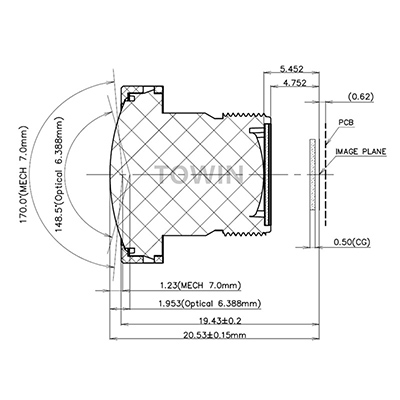
Wide-angle and fisheye lenses are designed to capture a larger field of view than conventional lenses with similar camera configurations. They are particularly useful when the imaging system needs to cover a large area or monitor a wide surrounding environment.
Wide-angle lenses can provide broad scene coverage, while fisheye lenses use a specialized projection to capture extremely wide viewing angles. Depending on the optical design, fisheye images may exhibit significant geometric distortion that requires calibration or software correction.
Key Advantages
- Wide field of view for large-area imaging.
- Compact integration for embedded vision systems.
- Useful for panoramic and surrounding-area monitoring.
- Suitable for selected robotics and automotive imaging applications.
Typical Applications
- Robotics navigation and environmental perception.
- Automotive surround-view cameras.
- Drone imaging and aerial monitoring.
- Smart security and panoramic surveillance.
TOWIN provides wide-angle lenses and fisheye lenses for compact imaging systems. For applications requiring accurate geometric measurements, also consider low distortion lenses.
6. Machine Vision Lens Types Comparison
Different machine vision lens types serve different imaging purposes. The following table summarizes their primary characteristics and typical industrial applications.
| Lens Type | Main Characteristics | Typical Applications |
|---|---|---|
| Fixed Focal Length | Stable focal length and imaging geometry | Industrial inspection and automation |
| Varifocal / Zoom | Adjustable focal length and field of view | Variable-scene imaging and monitoring |
| Telecentric | Consistent magnification within the designed range | Precision dimensional measurement |
| Macro | Close-up and high-magnification imaging | Small-part and surface inspection |
| Wide-Angle / Fisheye | Broad field of view | Robotics, automotive and panoramic imaging |
7. Machine Vision Lens Mount Types: M12, C-Mount and CS-Mount
In addition to optical design, the lens mount is another important consideration when selecting machine vision camera lenses. The mount determines the mechanical connection between the lens and camera and affects compatibility, installation, and optical positioning.
M12 / S-Mount Lenses
M12 lenses use an M12 × 0.5 threaded mount and are widely used in compact camera modules and embedded vision systems. Their small size makes them suitable for space-constrained applications.
Typical applications include compact machine vision cameras, robotics, automotive imaging, drones, and smart security systems.
Explore TOWIN M12 Industrial Lenses →
C-Mount Lenses
C-Mount lenses use a standardized 1-inch, 32-threads-per-inch mount with a 17.526 mm flange focal distance. They are widely used in industrial cameras and machine vision inspection systems.
They are suitable for factory automation, high-resolution imaging, precision inspection, and intelligent traffic monitoring.
Explore TOWIN C-Mount Machine Vision Lenses →
CS-Mount Lenses
CS-Mount lenses share the same 1-inch, 32-threads-per-inch thread standard as C-Mount lenses but have a shorter flange focal distance of 12.526 mm. This difference means that C-Mount and CS-Mount cameras and lenses are not directly interchangeable without considering the correct adapter and optical spacing.
CS-Mount lenses are commonly used in CCTV, IP cameras, and selected industrial imaging systems.
Explore TOWIN CS-Mount Lenses →
Before choosing a mount, always confirm the camera’s mechanical interface, flange focal distance, sensor format, and lens compatibility.
8. How to Choose the Right Machine Vision Lens
Choosing the right machine vision lens requires more than matching the focal length. The lens must work with the camera sensor, inspection distance, required field of view, resolution, and operating environment.
1. Match the Lens to the Camera Sensor
The lens image circle must adequately cover the camera sensor. If the lens image circle is too small, image corners may become dark or unusable. Sensor format and lens compatibility should therefore be checked before purchase.
Learn more about industrial camera sensor sizes and lens compatibility.
2. Select the Correct Focal Length
Focal length affects the field of view and image magnification at a given working distance. A shorter focal length generally provides a wider field of view, while a longer focal length provides a narrower field of view.
To estimate the required field of view and focal length, use the Machine Vision FOV Calculator.
3. Consider Working Distance
Working distance is the distance between the lens and the object being inspected. The selected lens must provide the required field of view and focus performance at the actual installation distance.
4. Check Resolution Requirements
The lens should provide sufficient resolving power for the camera sensor and the smallest feature that needs to be detected. A high-megapixel camera alone does not guarantee detailed images if the lens cannot resolve the required object features.
5. Evaluate Optical Distortion
Distortion can affect measurement accuracy and geometric recognition. For applications requiring accurate dimensional inspection, consider a lens designed with controlled distortion and verify its optical performance against the project requirements.
Read our Optical Distortion Guide to understand how distortion affects industrial imaging.
6. Check Aperture and Lighting Conditions
Aperture influences the amount of light reaching the sensor and the depth of field. The appropriate aperture depends on illumination, exposure time, object movement, and the required image sharpness.
7. Confirm Mount and Mechanical Compatibility
Check the mount type, thread specifications, flange focal distance, dimensions, and available installation space. Mechanical compatibility is essential for reliable integration.
For a more detailed selection process, read our Industrial Lens Selection Guide.
9. Machine Vision Lens Applications in Different Industries
Different industries have different optical requirements. The right machine vision lens depends on the inspection task, camera configuration, working distance, and imaging environment.
| Industry | Imaging Requirements | Potential Lens Options |
|---|---|---|
| Industrial Inspection | High resolution and stable imaging | Fixed focal length and C-Mount |
| Robotics Vision | Wide coverage and object recognition | Wide-angle, M12 and TOF |
| Automotive Imaging | Wide FOV and compact integration | M12 and automotive lenses |
| Smart Security | Day/night imaging and scene coverage | CS-Mount, varifocal and fisheye |
| Precision Measurement | Geometric accuracy and detailed imaging | Low-distortion and telecentric designs |
Explore TOWIN’s application-specific machine vision lens solutions and robotics vision solutions to understand how different industrial optics support real imaging systems.
For automotive camera applications, see our ADAS lens solutions.
10. What About TOF and LiDAR Optical Lenses?
TOF (Time of Flight) and LiDAR optical systems are used in active depth-sensing applications. They should be distinguished from conventional machine vision imaging lenses because their optical requirements are closely related to infrared illumination, signal transmission, and depth measurement.
TOF lenses are designed for depth cameras that use infrared light to measure object distance. Important optical considerations include infrared transmission, distortion, chief ray angle (CRA), relative illumination, and wavelength compatibility.
TOWIN offers dedicated TOF lens solutions for 3D depth sensing, including applications using 850nm and 940nm infrared wavelengths.
For robotics and depth-perception projects, the lens should be selected according to the sensor, illumination wavelength, field of view, operating distance, and required depth accuracy.
11. Why Choose TOWIN for Industrial Machine Vision Lenses?
TOWIN specializes in industrial optical lenses for machine vision, embedded vision, robotics, automotive imaging, and intelligent camera applications.
Our product portfolio covers different lens mounts and optical configurations to support a wide range of industrial imaging requirements.
- M12 / S-Mount Lenses: Compact lenses for embedded cameras, robotics, automotive imaging, and other space-constrained systems.
- C-Mount Lenses: Industrial camera lenses for factory automation, machine vision inspection, and high-resolution imaging.
- CS-Mount Lenses: Fixed focal length and varifocal options for selected CCTV and intelligent camera applications.
- Low Distortion Lenses: Optical solutions for measurement, recognition, and applications requiring controlled geometric distortion.
- Wide-Angle and Fisheye Lenses: Compact optical solutions for wide-field imaging systems.
- TOF Lenses: Specialized optics for infrared depth-sensing cameras.
In addition to standard products, TOWIN supports OEM/ODM cooperation and custom optical development according to project requirements. Customization can involve focal length, sensor format, field of view, distortion, mechanical dimensions, and other optical specifications, subject to technical evaluation.
Learn more about TOWIN as an industrial lens manufacturer and explore our complete industrial optical lens portfolio.
12. Frequently Asked Questions About Machine Vision Lenses
Q1: What are the main types of machine vision lenses?
A: Common machine vision lens types include fixed focal length, varifocal, zoom, telecentric, macro, wide-angle, and fisheye lenses. Each type is designed for different imaging requirements, such as stable inspection, adjustable fields of view, precision measurement, or wide-area imaging.
Q2: What is the most commonly used lens for machine vision?
A: Fixed focal length lenses suit industrial machine vision well, thanks to stable focal length and consistent imaging geometry. Choose C-Mount lenses for industrial cameras and M12 lenses for compact embedded vision systems.
Q3: What is the difference between M12 and C-Mount lenses?
A: M12 lenses use an M12 × 0.5 threaded mount and are generally compact, making them suitable for embedded cameras. C-Mount lenses use a 1-inch, 32-threads-per-inch mount with a 17.526 mm flange focal distance and are widely used in industrial cameras. The correct choice depends on camera compatibility, sensor size, and application requirements.
Q4: How do I choose the focal length of a machine vision lens?
A: Focal length selection depends on sensor dimensions, working distance, and the required field of view. A shorter focal length generally captures a wider area, while a longer focal length provides a narrower field of view at the same working distance. Use an FOV calculation to estimate the required focal length before selecting a lens.
Q5: What is the difference between a fixed focal length and a varifocal lens?
A: A fixed focal length lens has a non-adjustable focal length and is suitable for stable imaging setups. A varifocal lens allows the focal length to be adjusted, providing flexibility when the field of view needs to change. Varifocal lenses generally require refocusing after adjustment.
Q6: Are low-distortion lenses important for machine vision?
A: Yes. Low-distortion lenses are particularly important for dimensional measurement, geometric inspection, and applications where accurate object positioning is required. Lower optical distortion helps reduce geometric errors, although calibration and system-level accuracy also depend on the camera and installation.
Q7: Can one machine vision lens work with different camera sensors?
A: Not necessarily. A lens must provide an image circle that adequately covers the sensor and must meet the required resolution and mechanical compatibility. A lens designed for a smaller sensor may produce vignetting when used with a larger sensor.
Q8: Can TOWIN provide customized industrial machine vision lenses?
A: TOWIN supports OEM/ODM and custom optical development according to project requirements. Customers can discuss focal length, sensor format, field of view, resolution, distortion, mechanical dimensions, and other optical specifications with the engineering team.
Conclusion: Select the Right Machine Vision Lens for Your Application
Understanding the different types of machine vision lenses helps engineers and system integrators select the right optical configuration for industrial imaging. Fixed focal length lenses are suitable for stable inspection systems, varifocal lenses provide adjustable fields of view, telecentric and macro designs support specialized inspection tasks, and wide-angle or fisheye lenses enable broader scene coverage.
Beyond optical design, sensor compatibility, focal length, working distance, resolution, distortion, and lens mount must all be considered during the selection process.
As an industrial lens manufacturer, TOWIN provides M12, C-Mount, CS-Mount, low-distortion, wide-angle, fisheye, and TOF lens solutions for different imaging applications.
Looking for the right machine vision lens for your project? Explore our industrial lens portfolio or contact our team to discuss your optical requirements and customized lens solutions.