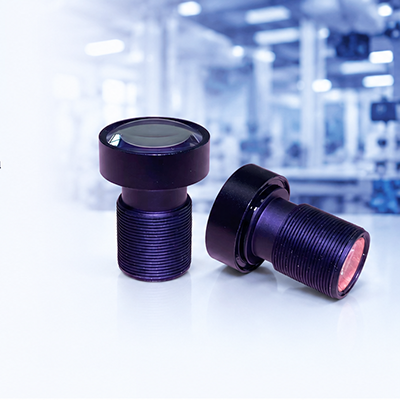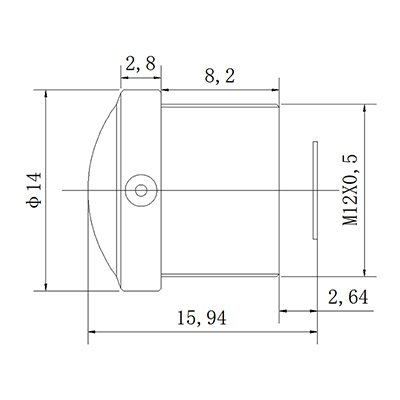



M12 lenses for automotive ADAS
08/15/2025
Achromatic low distortion lens
08/15/2025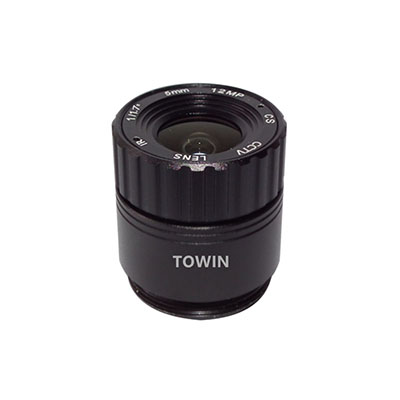
A fixed focus lens is an optical lens designed to maintain a predetermined focus position or working distance without continuous user-controlled focusing during normal operation. It is commonly used in compact cameras, embedded vision systems, industrial imaging equipment, and applications where the camera and target remain at a relatively stable distance.
However, a fixed focus lens is not necessarily the same as a fixed focal length lens. Fixed focal length describes a lens that cannot change its focal length through zooming, while fixed focus describes how the focusing position is established or adjusted. Understanding this difference is important when selecting an industrial camera lens.
In machine vision and industrial imaging, choosing the right lens involves more than focal length. Engineers must also consider sensor size, field of view (FOV), working distance, resolution, aperture, distortion, and mounting interface. This guide explains how fixed focus lenses work, how they differ from other lens types, and how to select an appropriate optical solution for industrial applications.
1. What Is a Fixed Focus Lens?
A fixed focus lens is a lens configured to focus at a predetermined object distance or focus position. Unlike an autofocus lens, it does not continuously adjust its focus automatically during operation.
Depending on the optical and mechanical design, a fixed focus lens may be factory-focused, manually focused during installation, or adjusted during initial camera assembly and then locked in position.
For example, an embedded vision camera may use a compact lens that is focused during manufacturing for a specific working distance. Once installed, the camera captures images without requiring further focus adjustment.
Fixed focus designs are particularly useful when:
- The camera-to-object distance remains relatively stable.
- The imaging system operates within a predefined focus range.
- Continuous autofocus is unnecessary.
- Compact mechanical construction is preferred.
- The camera is integrated into a fixed industrial or embedded vision system.
It is important to distinguish the focusing mechanism from focal length. A lens can have a fixed focal length while still allowing manual focus adjustment. Therefore, the terms fixed focus and fixed focal length should not be used interchangeably.
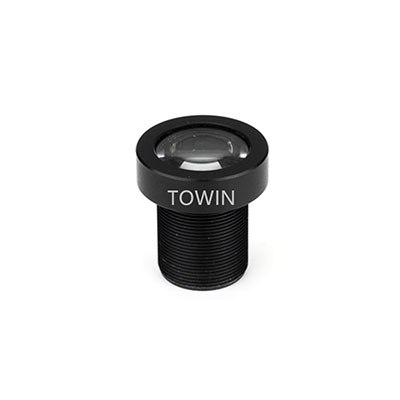
M12 fixed-focus CCTV industrial lens
2. How Does a Fixed Focus Lens Work?
A fixed focus lens uses its optical elements to form a focused image on the camera sensor at a selected object distance. The lens position and optical configuration determine where the image plane is formed.
During camera integration, the lens can be adjusted to achieve the required image sharpness at the intended working distance. Once the desired focus position is established, the lens may be secured mechanically to maintain consistent imaging.
Key Components of a Fixed Focus Imaging System
- Optical Elements: Lens elements refract incoming light and form an image.
- Focus Position: The selected optical position determines the distance at which the image is sharply focused.
- Image Sensor: The CMOS or CCD sensor receives the image formed by the lens.
- Working Distance: The distance between the front of the lens and the object being imaged.
- Aperture: Controls the amount of light passing through the optical system and influences depth of field.
In industrial applications, the depth of field (DOF) is particularly important. A fixed focus system should provide sufficient depth of field to keep objects acceptably sharp across the expected range of working distances.
Engineers should evaluate the actual working distance, aperture, sensor characteristics, and required image quality rather than assuming that a fixed focus lens will produce sharp images at every distance.
3. Fixed Focus vs. Fixed Focal Length vs. Prime Lens
One of the most common sources of confusion in optical terminology is the difference between fixed focus lenses and fixed focal length lenses.
Although these terms are sometimes used interchangeably in general descriptions, they refer to different optical characteristics.
| Lens Type | Main Characteristic | Focus Adjustment | Typical Application |
|---|---|---|---|
| Fixed Focus Lens | Designed for a predetermined focus position or distance | Usually no continuous user adjustment during operation | Embedded cameras and fixed-distance imaging |
| Fixed Focal Length Lens | Has one permanent focal length and cannot optically zoom | May allow manual or automatic focusing | Machine vision, CCTV and industrial cameras |
| Prime Lens | Photography term for a lens with a single focal length | Usually supports manual or automatic focusing | Photography and video imaging |
| Varifocal Lens | Allows adjustment of focal length and field of view | Usually requires refocusing after focal length adjustment | Security cameras and adjustable surveillance systems |
Fixed Focus vs. Fixed Focal Length
A fixed focal length lens cannot change its optical focal length through zooming. However, it may still have a focusing mechanism that allows the user to adjust the focus distance.
For example, a 6mm industrial lens remains a 6mm lens regardless of its focusing position. Adjusting the lens focus does not change its focal length.
By contrast, a fixed focus camera may have its lens position preset for a specific object distance. The system is designed to operate without further focusing adjustments.
Fixed Focus vs. Prime Lens
A prime lens has a fixed focal length rather than a variable zoom range. Most conventional prime camera lenses support manual or autofocus operation.
Therefore, a prime lens is not automatically a fixed focus lens. The distinction is particularly important when discussing industrial optics and embedded camera modules.
4. Fixed Focus Lens vs. Autofocus and Varifocal Lens
Fixed focus, autofocus, and varifocal lenses are designed for different imaging requirements. Selecting the appropriate configuration depends on whether the object distance, field of view, or focusing position changes during operation.
| Feature | Fixed Focus | Autofocus | Varifocal |
|---|---|---|---|
| Focus operation | Preset or fixed during operation | Automatically adjusts focus | Usually manually adjusted |
| Focal length | Depends on optical design | Depends on optical design | Adjustable |
| Continuous focus adjustment | No | Yes | Not necessarily |
| Mechanical complexity | Can be relatively simple | Requires focusing mechanism | Requires focal length adjustment |
| Typical use | Stable imaging distance | Changing object distances | Adjustable viewing range |
When Should You Choose a Fixed Focus Lens?
A fixed focus configuration is suitable when the camera and target maintain a relatively stable relationship. It can simplify camera integration and eliminate the need for continuous autofocus control.
When Should You Choose an Autofocus Lens?
Autofocus is useful when objects move through different distances or when the camera needs to capture subjects at varying positions. The focusing system automatically adjusts the optical focus to maintain image sharpness.
When Should You Choose a Varifocal Lens?
A varifocal lens is useful when the required field of view needs to be adjusted during installation or operation. It allows users to change the focal length within a specified range, although refocusing may be necessary after adjustment.
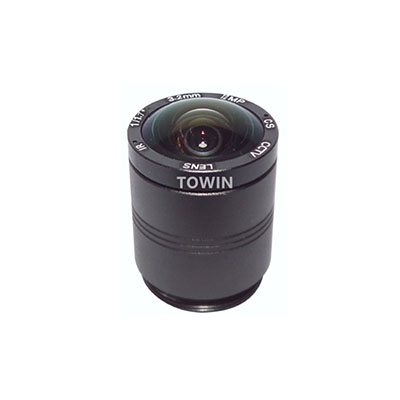
IR-corrected CS-mount Fixed Focal lens
5. Advantages of Fixed Focus Lenses in Industrial Imaging
Fixed focus lenses can provide practical advantages in industrial imaging systems where working conditions are predictable and consistent image capture is required.
1. Simplified Optical and Mechanical Design
Removing the need for continuous autofocus operation can simplify the camera system. Depending on the design, fewer moving focusing components may reduce mechanical complexity and integration requirements.
2. Consistent Imaging at a Defined Working Distance
When the lens is properly focused and mechanically secured, it can maintain consistent imaging at the intended working distance. This is beneficial for automated inspection systems that repeatedly capture objects in a controlled position.
3. Compact Camera Integration
Fixed focus configurations are suitable for compact embedded cameras and space-constrained devices. Small optical assemblies can be integrated into equipment where size and weight are important design considerations.
4. Reduced Focus Control Requirements
Applications that do not require continuous focusing may avoid additional autofocus control hardware and software. This can simplify system architecture and reduce integration effort.
5. Suitable for High-Volume OEM Applications
Fixed focus optical configurations can be appropriate for OEM camera products manufactured for consistent imaging conditions. Once the optical design and assembly parameters are validated, the same configuration can be integrated into multiple camera units.
However, image quality is not determined by focusing mechanism alone. Resolution, MTF, distortion, aperture, sensor matching, and manufacturing tolerances remain essential performance factors.
6. Common Applications of Fixed Focus Lenses
Fixed focus lenses are used in a variety of imaging systems where the target distance and camera configuration are relatively stable. Their applications extend beyond consumer cameras into industrial automation, embedded vision, security, and automotive imaging.
1. Machine Vision and Industrial Inspection
In automated inspection systems, cameras often capture products at predefined positions along a production line. A fixed focus configuration can provide consistent imaging without continuous autofocus adjustments.
Typical applications include:
- Product appearance inspection.
- Barcode and QR code recognition.
- Component positioning and identification.
- Packaging inspection.
- Automated quality control.
For applications requiring high measurement accuracy, engineers should also evaluate lens distortion, MTF performance, resolution, and working distance.
Explore TOWIN Machine Vision Lens Solutions for industrial inspection and automation applications.
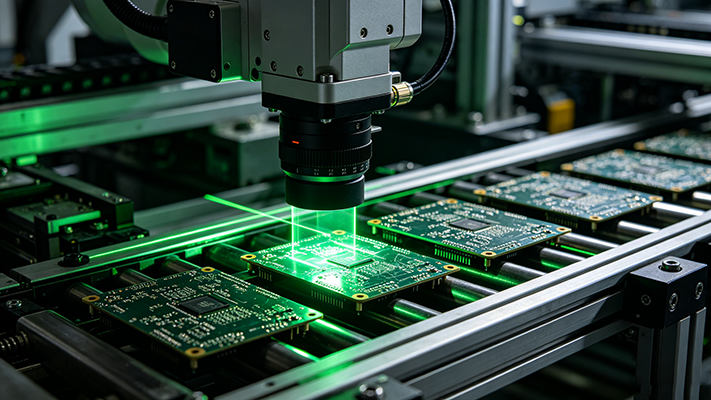
Machine Vision Optics
2. Robotics and Embedded Vision
Compact fixed focus optical configurations can be integrated into robotic vision modules, embedded cameras, and intelligent devices.
When the camera operates within a predefined imaging range, a fixed focus design can reduce the need for continuous focus adjustment.
Typical applications include:
- Robot navigation and object detection.
- Automated positioning.
- Pick-and-place systems.
- Embedded AI vision devices.
For compact optical integration, explore TOWIN M12 Lens Solutions.
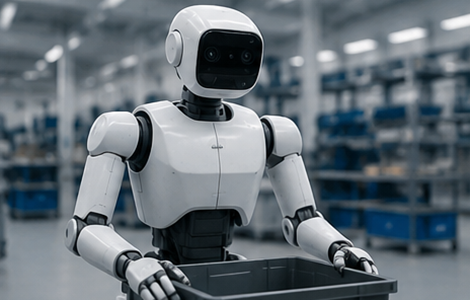
Robotics
3. Automotive Imaging
Automotive camera systems often use compact lenses designed for predefined viewing directions and installation positions.
Fixed focal length optical designs are commonly considered for applications such as:
- Surround-view camera systems.
- Rear-view cameras.
- Driver assistance imaging.
- Vehicle monitoring systems.
Automotive optical design requires careful consideration of field of view, temperature variation, environmental durability, optical distortion, and sensor compatibility.
4. Smart Security and Surveillance
Fixed focal length lenses are frequently used in surveillance cameras installed to monitor predefined areas. When the camera position and monitoring distance remain stable, a fixed focal length configuration can provide an appropriate field of view without requiring optical zoom.
Typical applications include:
- Indoor CCTV monitoring.
- Building security systems.
- Access control cameras.
- Industrial facility monitoring.
7. How to Choose the Right Fixed Focus Lens for Industrial Applications
Selecting the right fixed focus lens requires matching the optical specifications with the camera sensor and actual imaging environment. A lens that works well in one system may not provide sufficient image quality or field of view in another.
Engineers should evaluate the following parameters before selecting a lens.
1. Focal Length
Focal length determines the relationship between the lens, sensor, and field of view. A shorter focal length generally provides a wider field of view, while a longer focal length provides a narrower field of view under comparable imaging conditions.
Select a focal length according to the required object coverage, working distance, and sensor dimensions.
2. Sensor Size
The lens image circle must adequately cover the camera sensor. If the sensor is larger than the supported image circle, vignetting or dark corners may appear.
Common industrial sensor formats include 1/4″, 1/3″, 1/2.7″, 1/2.5″, 1/2.3″, 1/1.8″, and larger formats.
Always check the actual sensor dimensions and the lens specifications rather than relying only on nominal sensor format labels.
3. Resolution and Pixel Size
The lens must provide sufficient optical resolution for the camera sensor and the application’s inspection requirements.
For high-resolution industrial cameras, engineers should consider MTF performance and pixel size rather than selecting a lens based only on its advertised megapixel rating.
4. Field of View (FOV)
Field of view determines the area captured by the camera. It is influenced by focal length, sensor size, working distance, and optical design.
An unsuitable FOV may cause the target to appear too small, exclude important details, or capture an unnecessarily large background area.
Use the TOWIN FOV Calculator to estimate the required field of view based on your sensor and lens parameters.
5. Working Distance
Working distance is the distance between the front of the lens and the target object. A fixed focus configuration must be suitable for the actual working distance and the expected variation in object position.
For applications involving objects at different heights or positions, depth of field should be evaluated carefully.
6. Aperture and Depth of Field
Aperture controls the amount of light entering the optical system and affects depth of field. A smaller aperture can increase depth of field, but it also reduces the amount of light reaching the sensor and may introduce diffraction-related resolution loss at very small apertures.
The appropriate F-number depends on lighting conditions, exposure time, object movement, sensor sensitivity, and image quality requirements.
7. Lens Mount
The lens mounting interface must be compatible with the camera housing and mechanical structure.
Common industrial lens mounts include:
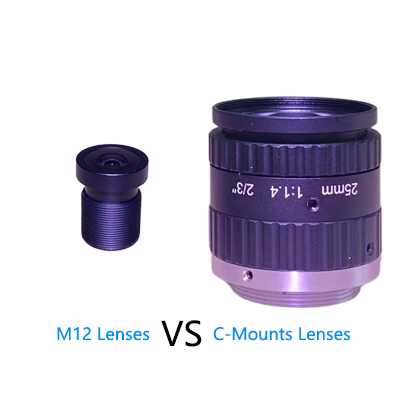
- M12 / S-Mount: Compact threaded lenses widely used in embedded vision, smart cameras, and automotive imaging.
- C-Mount: A common industrial camera interface used in machine vision and inspection systems.
- CS-Mount: Frequently used in CCTV and security camera applications.
Explore TOWIN S-Mount and M12 Lenses for compact industrial imaging applications.
8. Optical Distortion
Distortion changes the geometric relationship between an object and its image. It is especially important in machine vision applications involving dimensional measurement, positioning, and precision inspection.
For measurement-oriented applications, engineers should evaluate the specified distortion performance across the entire image field.
Industrial Fixed Focus Lens Selection Checklist
| Selection Parameter | What to Check | Why It Matters |
|---|---|---|
| Focal Length | Required focal length in mm | Determines field of view and image scale |
| Sensor Size | Sensor format and dimensions | Ensures image circle compatibility |
| Resolution | MP rating and pixel size | Supports required image detail |
| Field of View | Horizontal and vertical coverage | Ensures the complete target is captured |
| Working Distance | Actual object-to-lens distance | Determines focus and installation requirements |
| Aperture | F-number and iris type | Affects brightness and depth of field |
| Mount | M12, C-Mount or CS-Mount | Ensures mechanical compatibility |
| Distortion | Optical distortion specification | Supports accurate image geometry |
| Operating Environment | Temperature, vibration and lighting | Supports reliable system operation |
For a more detailed selection process, read our Machine Vision Lens Selection Guide.
8. TOWIN Fixed Focal Length Lens Solutions
TOWIN provides industrial optical lens solutions for machine vision, embedded cameras, CCTV, automotive imaging, and other industrial applications.
Our lens portfolio includes compact M12/S-Mount lenses, C-Mount industrial lenses, and CS-Mount fixed focal length lens configurations for different sensor formats and imaging requirements.
For applications requiring a fixed focal length optical configuration, explore our Fixed Focal Megapixel Lens Collection.
The product range includes different optical specifications, including:
- Multiple effective focal lengths.
- Different sensor format compatibility.
- Various horizontal field of view options.
- Different resolution configurations.
- Fixed and adjustable iris options depending on the model.
Choosing the correct industrial lens requires matching the product specifications with your actual camera and application requirements. A fixed focal length lens may still require initial focus adjustment during installation, depending on its mechanical design.
Custom Industrial Lens Development
For OEM camera manufacturers and industrial equipment developers, lens selection may involve additional optical and mechanical requirements.
TOWIN can work with customers to evaluate application requirements such as focal length, sensor size, field of view, distortion, resolution, lens mount, and mechanical dimensions.
If your application requires a customized optical configuration, contact our team with your camera and imaging specifications.
Contact TOWIN for Industrial Lens Solutions →
9. Frequently Asked Questions About Fixed Focus Lenses
Q1: What is a fixed focus lens?
A: A fixed focus lens is designed to operate at a predetermined focus position or working distance without continuous user-controlled focusing during normal operation. It is commonly used in embedded cameras and industrial imaging systems with relatively stable object distances.
Q2: Is a fixed focus lens the same as a fixed focal length lens?
A: No. A fixed focus lens refers to a focusing configuration, while a fixed focal length lens has a single focal length and cannot optically zoom. A fixed focal length lens may still support manual or automatic focus adjustment.
Q3: What is the difference between a fixed focus lens and a prime lens?
A: A prime lens has a fixed focal length rather than a variable zoom range. It usually supports manual or autofocus operation. A fixed focus lens refers to a lens configured for a predetermined focus position. Therefore, not every prime lens is a fixed focus lens.
Q4: Can a fixed focus lens be adjusted?
A: It depends on the lens design. Some fixed focus lenses come factory-focused and permanently secured, while others support initial manual adjustment during camera assembly or installation. After setup, they typically run without continuous focusing.
Q5: What are the main applications of fixed focus lenses?
A: Embedded vision cameras, industrial inspection systems, smart security cameras, robotics, automotive imaging, and other applications with a relatively stable working distance use fixed focus lenses.
Q6: Are fixed focus lenses suitable for machine vision?
A: Yes. Fixed focus configurations can be suitable for machine vision applications where the camera-to-object distance is controlled. Engineers should evaluate focal length, sensor size, FOV, resolution, distortion, aperture, and depth of field to ensure the lens meets the imaging requirements.
Q7: How do I choose the right fixed focus lens for an industrial camera?
A: Start by identifying the camera sensor size, required field of view, working distance, resolution, and lens mount. Then evaluate aperture, distortion, and depth of field. Matching these parameters to the actual application is essential for reliable image quality.
Q8: Can TOWIN provide custom fixed focal length lenses?
A: TOWIN provides industrial lens solutions for different imaging requirements. For OEM and customized projects, contact our team with your sensor specifications, focal length, FOV, working distance, mounting requirements, and application details to discuss a suitable optical solution.
10. Conclusion
A fixed focus lens is a practical optical solution for imaging systems that operate at a predetermined focus position or relatively stable working distance. Its suitability depends on the camera configuration, optical requirements, and operating environment.
It is equally important to understand the difference between fixed focus and fixed focal length lenses. A fixed focal length lens cannot change its focal length through zooming, but it may still support manual or automatic focusing. This distinction helps engineers avoid specification errors and select the right lens for their camera systems.
For industrial imaging, the best lens should match the sensor size, focal length, field of view, working distance, resolution, aperture, and distortion requirements.
Whether you are developing a machine vision camera, embedded imaging device, automotive camera, or industrial inspection system, TOWIN can help you evaluate suitable optical configurations.
Explore TOWIN Fixed Focal Length Lenses or Contact Our Team for Your Industrial Lens Project.