


Low-Distortion Lens in Telescopes
11/06/2025
Bespoke optical lens designer & supplier
11/06/2025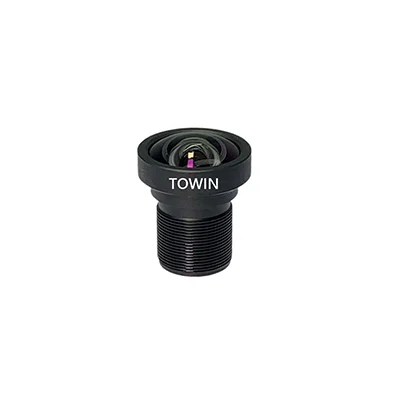
Medical endoscopy has transformed minimally invasive procedures, enabling clinicians to diagnose and treat conditions with unprecedented precision. At the heart of this evolution lies M12 Lenses for Medical Endoscopy, a critical component that ensures high-resolution imaging in confined spaces. These lenses, designed for compatibility with M12 lens mounts, combine compact size with optical excellence, making them indispensable in modern endoscopic systems.
Why M12 Lenses Are Essential for Medical Endoscopy
Endoscopes rely on tiny lenses to capture detailed images of internal organs, tissues, and cavities. Traditional lenses often struggle with size constraints, leading to compromised image quality. M12 Lenses for Medical Endoscopy address this challenge by offering a standardized M12 thread mount, which balances compactness with optical performance. Their design supports high-resolution sensors, ensuring clinicians receive clear, distortion-free visuals even in narrow endoscopic channels.
The M12 format’s versatility allows manufacturers to integrate these lenses into various endoscopic devices, from flexible scopes for gastrointestinal exams to rigid scopes used in arthroscopy. This adaptability, combined with their ability to withstand sterilization processes, makes M12 lenses a top choice for medical applications.

M12 CCTV lens 3-Megapixel IR corrected
Key Benefits of M12 Lenses for Medical Endoscopy
1. High-Resolution Imaging:
M12 lenses are engineered to minimize aberrations, delivering sharp, high-contrast images critical for detecting subtle abnormalities. Their multi-element design enhances light transmission, ensuring bright visuals in low-light environments like the colon or bronchial tubes.
2. Compact and Lightweight:
The M12 thread mount’s small diameter (typically 12mm) allows lenses to fit into slim endoscope shafts without sacrificing performance. This compactness is vital for procedures requiring maneuverability, such as navigating the twists of the small intestine.
3. Durability and Sterilization Compatibility:
Medical-grade M12 lenses are constructed from materials like stainless steel or reinforced polymers, resisting corrosion and damage from repeated sterilization cycles. This durability ensures long-term reliability in high-stakes environments.
4. Cost-Effectiveness:
Standardized M12 mounts simplify lens replacement and system upgrades, reducing maintenance costs. Their widespread adoption also drives economies of scale, making high-quality optics more affordable for healthcare providers.
5. Integration with Advanced Technologies:
M12 lenses seamlessly pair with 4K cameras, 3D imaging systems, and AI-powered diagnostic tools, enhancing their utility in cutting-edge procedures.
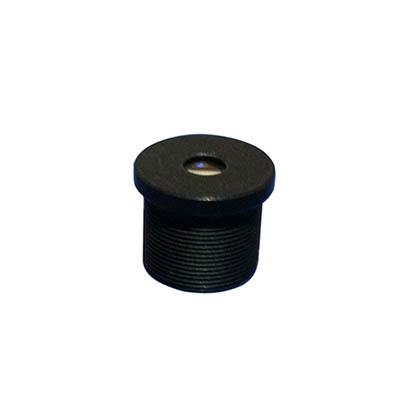
12mm M12 mount low-distortion lens
Applications of M12 Lenses in Medical Endoscopy
- Gastroenterology: Used in colonoscopes and gastroscopes to screen for colorectal cancer and peptic ulcers.
- Pulmonology: Integrated into bronchoscopes for lung biopsies and early lung cancer detection.
- Urology: Featured in cystoscopes for bladder examinations and stone removal.
- Orthopedics: Employed in arthroscopes to visualize joint damage and guide repairs.
- Neurology: Adapted for neuroendoscopes to access brain cavities with minimal trauma.
Choosing the Right M12 Lenses for Medical Endoscopy
Selecting the optimal lens depends on factors like focal length, field of view (FOV), and depth of field. For instance:
- A wide-angle M12 lens (e.g., 2.8mm focal length) captures broader views, ideal for surveying large organ surfaces.
- A narrow-angle lens (e.g., 12mm focal length) provides magnified details, crucial for precise biopsies.
Manufacturers often offer custom coatings to reduce glare or enhance contrast in specific tissue types, further tailoring lenses to clinical needs.
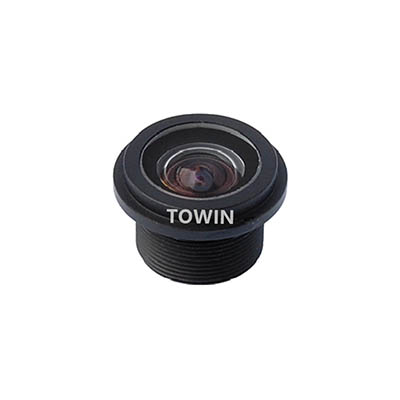
1.5mm F2.0 M12 Mount Automotive lens
FAQs
1. What makes M12 lenses suitable for sterilization?
M12 lenses for medical endoscopy are crafted from biocompatible materials like sapphire or medical-grade stainless steel, which resist chemical degradation and thermal stress during autoclaving or ethylene oxide sterilization.
2. Can M12 lenses be used in disposable endoscopes?
Yes! Some disposable endoscopes incorporate M12 lenses to balance cost and performance, though reusable lenses remain more common in high-volume settings.
3. How do M12 lenses compare to C-mount lenses in endoscopy?
M12 lenses are smaller and lighter, making them preferable for narrow-channel endoscopes. C-mount lenses, while offering similar optical quality, are bulkier and better suited for larger diagnostic equipment.
4. Are M12 lenses compatible with all endoscopic cameras?
Most modern endoscopic cameras with M12 thread mounts can use these lenses. However, compatibility depends on the camera’s sensor size and lens specifications. Always verify with the manufacturer.
5. What is the typical lifespan of an M12 lens in medical endoscopy?
With proper care, M12 lenses can last 5–10 years, though frequent sterilization and mechanical stress may reduce their lifespan. Regular inspections for scratches or coating damage are recommended.
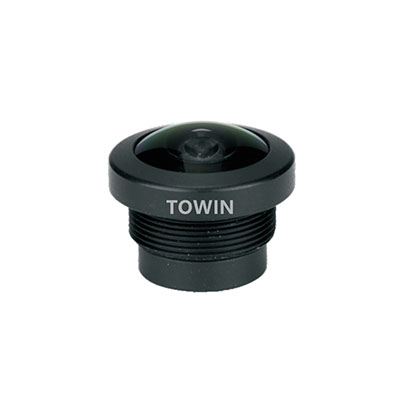
4-Megapixel F2.4 M12 mount fisheye lens
The Future of M12 Lenses in Medical Imaging
As endoscopy evolves toward robotic-assisted procedures and AI-driven diagnostics, the demand for high-performance, miniaturized optics will surge. M12 lenses, with their proven track record, are poised to play a pivotal role in this future. Innovations like fluid-lens technology (which adjusts focus electronically) and anti-fog coatings could further enhance their capabilities, ensuring clinicians continue to rely on these tiny yet mighty components.
Conclusion
M12 Lenses for Medical Endoscopy represent a fusion of precision engineering and medical necessity, enabling safer, more effective minimally invasive procedures. Their compact size, optical excellence, and durability make them indispensable in modern healthcare, from routine screenings to complex surgeries. As technology advances, these lenses will remain at the forefront of endoscopic innovation, driving better patient outcomes and transforming the landscape of diagnostic medicine.