


ECE-certified Automotive lens
11/06/2025
M12 Lenses for Medical Endoscopy
11/06/2025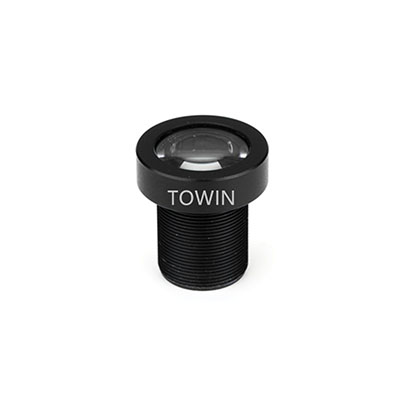
Astronomy enthusiasts and professionals alike crave telescopes that deliver razor-sharp images of distant galaxies, planets, and nebulae. However, traditional lenses often introduce distortions like chromatic aberration, spherical aberration, and comatic aberration, which blur details and frustrate observers. Enter the Low-Distortion Lens in Telescopes—a game-changing optical component designed to minimize these flaws and elevate observational precision.
What Is a Low-Distortion Lens in Telescopes?
A Low-Distortion Lens in Telescopes is an advanced optical element engineered to reduce light refraction errors that distort images. Unlike conventional lenses, which bend light unevenly across their surfaces, low-distortion variants use specialized materials, coatings, and multi-layer designs to ensure light rays converge accurately. This results in sharper, more color-accurate images with minimal edge distortion.
For instance, apochromatic lenses—a type of low-distortion lens—combine multiple glass types to correct chromatic aberration, a common issue where colors fail to focus at the same point. By addressing such flaws, these lenses enable telescopes to capture celestial objects with breathtaking fidelity.
Why Low-Distortion Lens in Telescopes Matters
The impact of a Low-Distortion Lens in Telescopes extends beyond hobbyist stargazing. Professional astronomers rely on these lenses for:
- Astrophotography: Capturing high-resolution images of deep-sky objects.
- Scientific Research: Analyzing fine details on planetary surfaces or stellar atmospheres.
- Education: Providing clear visuals for classrooms and planetariums.
Without low-distortion technology, even minor aberrations could mislead researchers or diminish the awe of cosmic exploration.
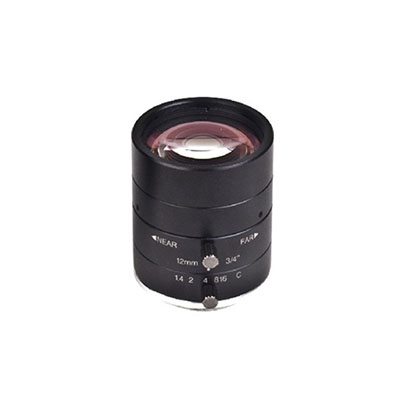
low-distortion C-mount lens
Key Features of Low-Distortion Lens in Telescopes
- 1. Multi-Coating Technology: Anti-reflective coatings reduce light loss and glare, enhancing contrast.
- 2. Aspherical Surfaces: Curved surfaces that deviate from traditional spherical shapes to correct distortions.
- 3. ED (Extra-Low Dispersion) Glass: Minimizes chromatic aberration by slowing down specific light wavelengths.
- 4. Precision Alignment: Ensures all lens elements are perfectly positioned to maintain optical integrity.
These features collectively ensure that a Low-Distortion Lens in Telescopes delivers images as close to “real life” as possible.
How Low-Distortion Lens Enhances Telescope Performance
- Sharper Images: By eliminating edge blurring, low-distortion lenses reveal fine structures on planets, like Jupiter’s bands or Saturn’s rings.
- Color Accuracy: Reduced chromatic aberration means stars appear as crisp points of light, not colored halos.
- Wider Field of View: Low-distortion designs allow for broader celestial snapshots without sacrificing clarity.
- Improved Astrophotography: Long-exposure images remain sharp, even at the edges of the frame.
FAQs
1. What causes distortion in telescope lenses?
Distortion arises from imperfections in lens curvature, glass quality, or coatings. Spherical aberration occurs when light rays from the edge focus differently than those from the center, while chromatic aberration splits colors due to varying refraction rates.
2. How does a Low-Distortion Lens in Telescopes compare to standard lenses?
Standard lenses often compromise on edge sharpness and color accuracy. A Low-Distortion Lens in Telescopes prioritizes uniform focus across the entire field, making it superior for detailed observations.
3. Are Low-Distortion Lenses expensive?
While premium models can be costly, advancements in manufacturing have made affordable options available. Mid-range telescopes now frequently include low-distortion elements.
4. Can I upgrade my existing telescope with a Low-Distortion Lens?
It depends on the telescope’s design. Some models allow lens swaps, but others require full optical system replacements. Consult the manufacturer or a specialist before upgrading.
5. Do Low-Distortion Lenses work better in certain conditions?
Yes! They excel in low-light conditions and high-magnification settings, where even slight distortions become noticeable. Urban observers also benefit from reduced light pollution effects.
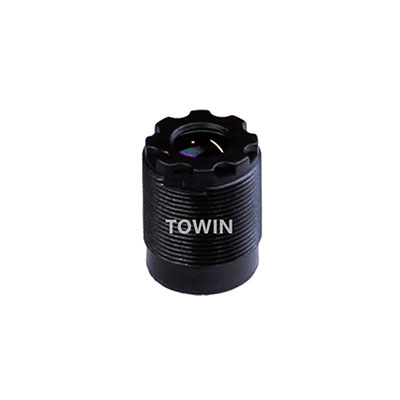
low-distortion-M8-Mount-lens
Conclusion
The adoption of Low-Distortion Lens in Telescopes marks a paradigm shift in astronomy. By eliminating optical flaws that have plagued telescopes for centuries, these lenses empower users to explore the cosmos with unprecedented clarity.