

How to Reduce Distortion in Lenses?
06/11/2025S-Mount Lenses User Guide
06/11/2025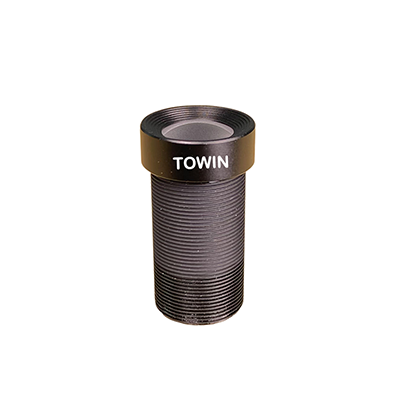
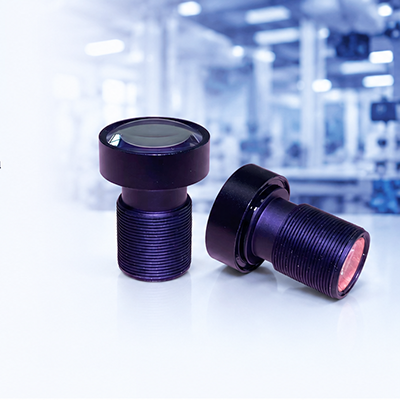
M12 lens, also known as S-Mount lenses or board lenses, are compact optical lenses widely used in embedded vision systems, industrial cameras, robotics, automotive imaging, and smart devices. Their small mechanical footprint makes them suitable for camera designs where space, weight, and optical performance must be carefully balanced.
However, selecting the right M12 lens involves more than checking its thread size or focal length. Sensor compatibility, field of view (FOV), resolution, distortion, aperture, and working distance all affect the final imaging performance.
In this guide, we explain M12 lens specifications, compare common optical designs, and show how to choose an appropriate S-Mount lens for your camera system. You can also explore TOWIN’s M12 lens product range to compare available optical configurations and product specifications.
Quick Overview:
- Mount interface: Typically M12 × 0.5 threaded mount.
- Common applications: Embedded vision, machine vision, robotics, automotive cameras, and security imaging.
- Key selection factors: Sensor size, focal length, FOV, resolution, distortion, aperture, and working distance.
- Selection priority: Confirm camera compatibility first, then match the optical specifications to the imaging task.
1. What Is an M12 Lens (S-Mount Lens)?
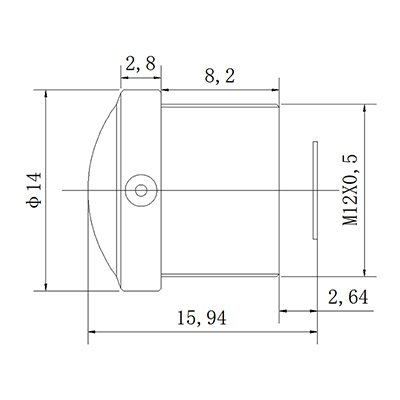
An M12 lens is a compact camera lens that typically uses an M12 × 0.5 threaded mounting interface. The M12 designation refers to the nominal 12 mm thread diameter, while the 0.5 mm value indicates the thread pitch.
Because these lenses are commonly installed directly into threaded lens holders on printed circuit board (PCB) cameras, they are also known as board lenses or miniature lenses.
The terms M12 lens and S-Mount lens are commonly used interchangeably in compact camera applications. However, the mounting thread alone does not guarantee complete compatibility. The camera’s lens holder, optical back focus, image circle, and mechanical clearance must also be checked.
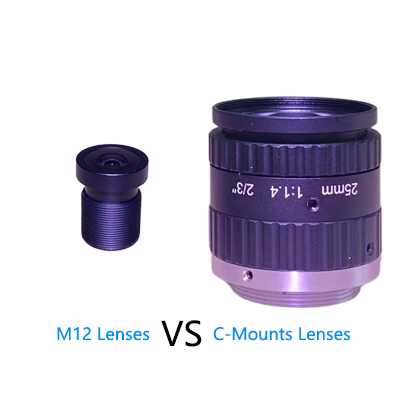
M12 Lens vs. C-Mount and CS-Mount Lenses
M12, C-Mount, and CS-Mount lenses serve different camera integration requirements; M12 lenses are generally selected for compact embedded cameras, while C-Mount and CS-Mount lenses are commonly used in larger industrial cameras and surveillance systems.
| Feature | M12 / S-Mount | C-Mount | CS-Mount |
|---|---|---|---|
| Mount interface | M12 × 0.5 thread | 1-32 UN thread | 1-32 UN thread |
| Typical flange focal distance | Depends on lens holder and camera design | 17.526 mm | 12.526 mm |
| Mechanical size | Compact | Larger | Larger |
| Common camera type | Board-level and embedded cameras | Industrial cameras | CCTV and IP cameras |
| Typical applications | Embedded vision, robotics, automotive imaging | Machine vision, inspection, automation | Security and surveillance |
The correct mount depends on the camera housing, lens holder, sensor position, and mechanical requirements. For industrial camera systems requiring larger optical formats or specific mechanical interfaces, explore TOWIN’s industrial optical lens portfolio.
2. M12 Lens Specifications Explained
Understanding the main optical parameters is essential when selecting an M12 lens. A lens that physically fits a camera may still produce poor results if its image circle, resolution, or field of view does not match the sensor and application.
2.1 Sensor Size and Image Circle
Sensor size determines the active imaging area of the camera. Common sensor formats used with M12 lenses include 1/4-inch, 1/3-inch, 1/2.8-inch, 1/2.5-inch, 1/2.3-inch, and 1/1.8-inch formats.
The lens image circle must cover the active sensor area. If the image circle is too small, the captured image may show dark corners, vignetting, or incomplete sensor coverage.
When comparing lenses, do not rely only on the nominal sensor format. Check the actual sensor dimensions and the lens’s specified image circle.
For a deeper explanation, read our industrial camera sensor size and compatibility guide.
2.2 Focal Length
Focal length is one of the most important parameters affecting the field of view. It determines the angular coverage of a lens when used with a specific sensor size.
- Short focal length: Generally provides a wider field of view and captures more of the surrounding scene.
- Long focal length: Generally provides a narrower field of view and greater image magnification at the same working distance.
The appropriate focal length depends on sensor dimensions, object size, camera position, and required field of view. It should not be selected independently of the working distance.
2.3 Field of View (FOV)
Field of View (FOV) describes the area visible to a camera at a given working distance. It is commonly specified as horizontal FOV, vertical FOV, and diagonal FOV.
For an ideal rectilinear lens, the horizontal field of view angle can be estimated using:
Horizontal FOV Formula:HFOV = 2 × arctan (Sensor Width / (2 × Focal Length))
Sensor width and focal length must use the same units. The resulting HFOV is expressed in degrees when the calculation is performed using the appropriate angle conversion.
For a practical estimate of the object width at a given working distance:
Approximate Object Width:Object Width ≈ Sensor Width × Working Distance / Focal Length
This is a simplified thin-lens approximation. Actual results depend on lens design, focus position, distortion, and the precise definition of working distance.
To estimate your camera’s viewing area, use the TOWIN FOV Calculator. Enter your sensor size, focal length, and working distance to evaluate the approximate field of view before selecting a lens.
2.4 Resolution and Optical Performance
M12 lenses are available in different resolution configurations for various camera sensors and imaging tasks. However, a lens’s advertised megapixel rating should not be considered the only indicator of image quality.
The actual imaging performance also depends on sensor pixel size, optical MTF, contrast, aberration control, illumination, and the image quality required across the field.
For high-resolution embedded cameras, confirm that the lens provides sufficient optical performance for the sensor’s pixel pitch and intended image area.
2.5 Lens Distortion
Lens distortion changes the geometric shape or position of objects in an image. It is particularly important in machine vision applications involving measurement, positioning, image alignment, and object recognition.
- Barrel distortion: Straight lines may appear to curve outward from the image center.
- Pincushion distortion: Straight lines may appear to curve inward toward the image center.
- Low-distortion optical design: Helps preserve geometric accuracy and reduce the need for image correction.
For applications requiring more accurate geometric imaging, explore TOWIN’s low distortion M12 lens range.
2.6 Aperture and F-Number
The aperture controls how much light passes through the lens. The F-number is the ratio of focal length to the effective aperture diameter.
A lower F-number generally allows more light to reach the sensor, which can be beneficial in low-light imaging. However, aperture selection also affects depth of field, optical performance, and exposure.
For low-light camera systems, consider the illumination level, exposure time, sensor sensitivity, and required depth of field together.
2.7 Total Track Length and Mechanical Compatibility
Total Track Length (TTL) describes the distance from the first optical surface to the image plane. It is an important mechanical parameter when integrating an M12 lens into a camera housing.
The lens must also be compatible with the camera’s threaded holder, focusing range, mounting depth, and available internal space. Always verify the lens mechanical drawing and camera specifications before final assembly.
3. How to Choose the Right M12 Lens
Choosing the right M12 lens requires a systematic evaluation of the camera sensor, required viewing area, object distance, image quality, and operating environment. The following steps provide a practical selection process for embedded vision and industrial imaging projects.
Step 1: Confirm the Camera Sensor Size
Start by identifying the camera sensor format and its active imaging dimensions. Select a lens with an image circle that adequately covers the sensor.
For example, a lens designed for a larger image circle may be usable with a smaller sensor, but the resulting field of view will depend on the sensor’s active dimensions. A lens with insufficient image coverage may produce vignetting.
Step 2: Determine the Required Field of View
Define the width and height of the object or inspection area that must be captured. Also determine the available distance between the camera and the object.
Use these measurements to estimate the required field of view and focal length. You can calculate the initial values with the online FOV calculation tool.
Step 3: Select the Appropriate Focal Length
After determining the required FOV, compare focal lengths that can cover the target area. Shorter focal lengths are generally suitable for wider scene coverage, while longer focal lengths are more appropriate for narrower views.
The final selection should be verified using the actual sensor size, working distance, and lens specifications.
Step 4: Match Resolution to the Imaging Task
Consider the smallest feature that the camera needs to identify or measure. The lens must provide sufficient optical resolution and contrast for the camera sensor and image-processing requirements.
For inspection and measurement, evaluate MTF and edge-to-edge image quality rather than relying exclusively on a nominal megapixel rating.
Step 5: Evaluate Distortion Requirements
When using the camera for dimensional measurement, alignment, or precise positioning, treat distortion control as an important selection factor.
For applications where geometric accuracy is essential, consider a low distortion M12 lens and verify its distortion specifications against the actual system requirements.
Step 6: Consider Lighting and Aperture
Evaluate the available illumination, exposure time, sensor sensitivity, and depth-of-field requirements. A larger aperture may help capture more light, but the final choice must also account for the required image quality and focus range.
Step 7: Verify Mechanical and Environmental Requirements
Before confirming the lens, check the M12 thread, lens holder, TTL, focusing method, operating temperature, vibration exposure, and environmental protection requirements.
For automotive or outdoor applications, additional considerations may include moisture resistance, dust protection, temperature stability, and mechanical reliability.
4. Common Types of M12 Lenses and Their Applications
Different M12 optical designs are developed for different imaging requirements. The correct lens type depends on the scene coverage, distortion tolerance, illumination, installation space, and application environment.
4.1 Low Distortion M12 Lens
Low distortion M12 lenses are designed for applications where geometric accuracy is important. They help reduce image deformation that may affect measurement, positioning, and image analysis.
Typical applications: Machine vision, industrial inspection, robotics guidance, and dimensional measurement.
Explore low distortion M12 lenses for compact camera systems requiring controlled geometric distortion.
4.2 M12 Fisheye Lens
Fisheye M12 lenses provide an extremely wide field of view and are suitable for applications requiring broad scene coverage. Depending on the optical design, they may use circular or diagonal fisheye projections.
Fisheye projection produces substantial geometric mapping differences from conventional rectilinear lenses, so select the optical design to fit the camera’s image-processing requirements.
Typical applications: Panoramic imaging, surround-view systems, robotics perception, and wide-area monitoring.
Explore TOWIN M12 fisheye lenses for wide-angle embedded imaging applications.
4.3 Wide Angle M12 Lens
Wide-angle M12 lenses capture a broader scene than standard-angle lenses with the same sensor format. They are useful when camera installation space is limited or a larger viewing area is required.
When selecting a wide-angle lens, evaluate its FOV, distortion, image circle, and edge image quality together.
Typical applications: Robotics, smart devices, automotive cameras, and compact monitoring systems.
View wide-angle M12 lens options for different viewing-angle requirements.
4.4 Low-Light Sensitive M12 Lens
Low-light sensitive lenses are designed to support imaging in environments with limited illumination. Optical factors such as aperture, transmission, and aberration control influence the amount and quality of light reaching the sensor.
Typical applications: Night vision cameras, smart security systems, and low-illumination embedded imaging.
4.5 M12 Pinhole Lens
Pinhole M12 lenses feature compact optical structures for camera systems with strict installation-space or appearance requirements. Their suitability depends on the required image quality, viewing angle, and available light.
Typical applications: Compact access-control devices, embedded monitoring systems, and space-constrained camera modules.
4.6 M12 Automotive Lens
Designers use automotive M12 lenses in compact vehicle camera systems. They can optimize each lens design for wide viewing angles, environmental resistance, vibration tolerance, and temperature stability.
Typical applications: Rearview cameras, surround-view systems, parking assistance, and ADAS imaging.
For automotive projects, verify the complete lens assembly against the required environmental and vehicle-level specifications.
Explore TOWIN M12 / S-Mount Lens Products
TOWIN offers M12 / S-Mount lens options for different sensor formats, focal lengths, fields of view, and optical requirements. Compare available models and specifications to identify a suitable lens for your camera system.
5. M12 Lens Applications in Industrial and Embedded Vision
M12 lenses are widely used in compact imaging systems where small mechanical dimensions and flexible optical configurations are important. Their applications cover several industrial and intelligent imaging sectors.
5.1 Machine Vision and Industrial Inspection
In compact machine vision systems, M12 lenses can support image capture for object detection, barcode reading, positioning, and inspection tasks. Lens selection should consider sensor resolution, working distance, FOV, and distortion requirements.
For broader industrial inspection projects, explore TOWIN’s industrial vision solutions.
5.2 Robotics and Autonomous Systems
Robotics systems use compact cameras for navigation, obstacle detection, positioning, and environmental perception. M12 lenses can provide different viewing angles depending on the camera’s position and the robot’s vision requirements.
5.3 Automotive Imaging and ADAS
M12 lenses are used in compact automotive camera modules, including rearview, parking assistance, and surround-view applications. The appropriate lens must meet the required field of view, image quality, and environmental specifications.
5.4 Smart Security and Embedded Cameras
Compact M12 lenses are suitable for embedded security cameras and intelligent monitoring devices. Depending on the application, designers may prioritize wide-angle coverage, low-light performance, or compact mechanical dimensions.
5.5 Drone and Aerial Imaging
Weight and installation space are important factors in drone camera design. M12 lenses can provide compact imaging configurations for navigation, aerial observation, and inspection systems.
5.6 Medical and Smart Devices
Compact optical modules are also used in selected medical devices and smart imaging products. The lens must be matched to the sensor, working distance, illumination, and image quality requirements of the equipment.
Looking for an M12 Lens for Your Application?
Whether you are developing a machine vision camera, robotics system, automotive camera, or embedded imaging device, TOWIN can help evaluate lens specifications and suitable optical configurations.
6. Why Choose TOWIN for M12 Lens Solutions?
Selecting an M12 lens supplier involves more than comparing focal lengths and prices. Optical compatibility, product consistency, technical support, and customization capabilities are also important for successful camera integration.
TOWIN focuses on industrial optical lenses, including M12 / S-Mount, C-Mount, CS-Mount, and customized optical solutions for machine vision and embedded imaging applications.
Optical Design and Customization
Different imaging projects may require specific focal lengths, sensor compatibility, FOV, distortion control, infrared correction, or mechanical dimensions. TOWIN supports OEM/ODM optical development based on project requirements.
Product Selection and Technical Support
Our team can help evaluate key lens parameters, including sensor size, focal length, working distance, field of view, resolution, and mechanical compatibility.
Quality Inspection
Lens quality verification may include appearance inspection, dimensional inspection, and optical performance checks. The applicable inspection items depend on the product specifications and project requirements.
For product information, technical discussions, or customized optical requirements, contact TOWIN’s optical lens team.
7. Frequently Asked Questions About M12 Lenses
Q1: Is an M12 lens the same as an S-Mount lens?
A: The terms M12 lens and S-Mount lens are commonly used interchangeably for lenses with an M12 × 0.5 threaded interface. However, complete compatibility also depends on the camera’s lens holder, optical back focus, image circle, and mechanical design.
Q2: What does M12 × 0.5 mean?
A: M12 refers to the nominal thread diameter of 12 mm, while 0.5 indicates a thread pitch of 0.5 mm. This threaded interface is commonly used in compact board-level camera lenses.
Q3: How do I choose the right focal length for an M12 lens?
A: Select focal length according to the camera sensor size, required field of view, working distance, and object dimensions. A shorter focal length generally provides a wider field of view, while a longer focal length provides a narrower view.
Q4: Are M12 lenses compatible with all image sensors?
A: No. Compatibility depends on the lens image circle, sensor dimensions, resolution requirements, and camera mechanical structure. Always verify the specified sensor format and optical coverage before selecting a lens.
Q5: What is the difference between a wide-angle M12 lens and a fisheye M12 lens?
A: Both designs provide wide viewing angles, but their optical projections differ. A conventional wide-angle lens generally aims to preserve a rectilinear image, while a fisheye lens uses a specialized projection to capture an extremely wide field of view, often with more visible geometric curvature.
Q6: Are M12 lenses suitable for machine vision?
A: Yes. M12 lenses can be used in compact machine vision and embedded inspection systems. The lens must be selected according to sensor resolution, FOV, working distance, distortion, and required image quality.
Q7: Can M12 lenses be customized?
A: Customization may be available depending on the optical and mechanical requirements. Project discussions may include focal length, sensor matching, FOV, distortion, infrared performance, and mechanical dimensions. Contact TOWIN to discuss your specific requirements.
Q8: What information should I provide when requesting an M12 lens?
A: Provide the camera or sensor model, sensor size, required resolution, target field of view, working distance, object dimensions, lighting conditions, and mounting requirements. These details help determine suitable lens configurations.
Conclusion: How to Select the Right M12 Lens
Choosing the right M12 lens requires a complete understanding of sensor compatibility, focal length, field of view, resolution, distortion, aperture, and mechanical requirements. A lens should not be selected based on its mounting thread alone.
For embedded vision, machine vision, robotics, automotive imaging, and other compact camera applications, matching the optical design to the actual imaging task is essential for reliable performance.
TOWIN provides a range of M12 / S-Mount optical lenses and OEM/ODM customization support for different imaging requirements. Explore our M12 lens products or M12 lens solutions to find a suitable starting point for your project.
Need Help Selecting an M12 Lens?
Share your sensor specifications, working distance, required FOV, and application details with TOWIN. Our team can help evaluate suitable lens options for your project.