


Best Fisheye Lens for Astrophotography
09/04/2025
Low distortion surveillance lens
09/04/2025
When stepping into the world of photography, understanding lens types is crucial. Among them, how to define a wide angle lens stands out as a game-changer for capturing vast landscapes, dynamic architecture, or immersive interior shots. But what exactly makes a lens “wide angle”?
1. Focal Length: The Primary Indicator
The first step in how to define a wide angle lens is its focal length. Typically, lenses with a focal length of 35mm or shorter (on full-frame cameras) fall into this category. Ultra-wide lenses, such as 14mm or 20mm, exaggerate perspective and depth, making them ideal for dramatic compositions. For example, a 24mm lens on a crop-sensor camera (equivalent to ~36mm) still offers a wider field of view than standard lenses, perfect for travel or street photography.
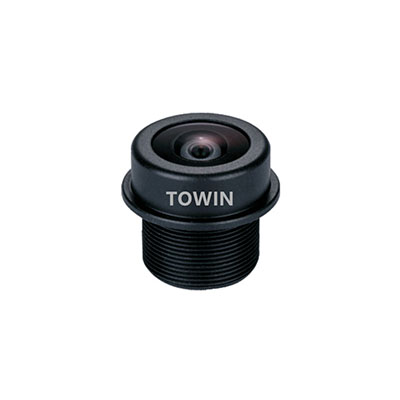
1.6mm F1.8 S-Mount Wide Angle Lens
2. Angle of View: Expanding Horizons
A wide angle lens is distinguished by its angle of view, which exceeds 65 degrees. This allows photographers to capture more of a scene in a single frame. For instance, a 16mm lens can encompass an entire room or a sweeping mountain range, whereas a 50mm lens (standard) would require stitching multiple shots. This expansive perspective is why wide-angle lenses are favored in real estate and landscape photography.
3. Distortion Characteristics: Embrace or Correct?
Wide-angle lenses often introduce geometric distortion, such as barrel distortion (straight lines bending outward). While this can be undesirable in portraits, it adds creativity to architectural shots. Modern lenses, like the Nikon 14-24mm f/2.8, incorporate advanced optics to minimize distortion. For post-processing, tools like Adobe Lightroom offer lens correction profiles to straighten lines automatically.
4. Depth of Field: Sharpness from Foreground to Background
Another hallmark of how to define a wide angle lens is its deep depth of field. Even at wide apertures (e.g., f/2.8), these lenses keep most of the scene in focus, making them excellent for landscapes. However, this trait requires careful composition to avoid clutter. Use leading lines or layered elements to guide the viewer’s eye through the image.
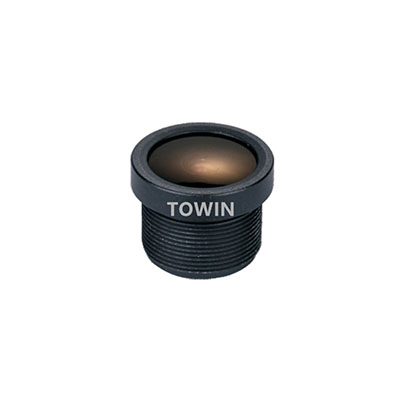
2.7mm Wide Angle Automotive Lens
5. Practical Applications: When to Use Them
Finally, how to define a wide angle lens isn’t complete without understanding its applications. These lenses excel in:
- Landscape photography: Capturing vast skies and terrain.
- Architecture: Showcasing entire buildings without backing up.
- Event photography: Fitting large groups into tight spaces.
Conclusion
Mastering how to define a wide angle lens empowers photographers to think creatively and tackle challenging scenarios. By focusing on focal length, angle of view, distortion, depth of field, and practical use, you’ll unlock the full potential of these versatile tools.