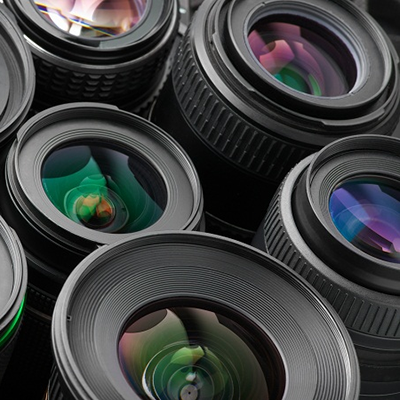



M12 S-mount wide angle 2.5mm board lens
11/20/2025
Fisheye Lens Filters
11/21/2025
When it comes to choosing the right lens for your photography or security needs, you may find yourself deciding between a CCTV lens and a regular camera lens. Both lenses serve distinct purposes, each with unique features that directly impact camera quality and performance.
What is the Difference Between CCTV Lens and Regular Camera Lens?
To understand the difference between a CCTV lens vs. regular camera lens, we must first consider the purpose of each lens type.
- CCTV lenses are designed specifically for surveillance cameras. They are often used in security systems, providing continuous monitoring of a location.
- Regular camera lenses, on the other hand, are used in photography or videography cameras. These lenses vary in shape and size, designed to capture high-quality images for both professional and personal use.
How Do CCTV Lenses Work?
CCTV lenses are optimized for security purposes. These lenses typically feature a fixed focal length or a vari-focal design that allows them to focus at a particular range. Many CCTV lenses also have a wide field of view, allowing for the coverage of a larger area.
The main feature of a CCTV lens is its ability to maintain focus over long distances, making it ideal for surveillance purposes. CCTV lenses are often paired with infrared lighting to help capture images in low-light conditions, making them perfect for 24/7 monitoring.

M12 S-mount wide angle CCTV board lens
How Do Regular Camera Lenses Work?
Regular camera lenses are used for capturing still images or videos. These lenses are often available in a variety of types, such as wide-angle, telephoto, or macro lenses, depending on the type of photography you’re interested in. Unlike CCTV lenses, regular camera lenses can often be manually adjusted for different focal lengths, allowing for greater versatility.
These lenses are designed to provide the highest possible image quality, whether you are shooting portraits, landscapes, or action shots. They come with features like aperture control and the ability to adjust depth of field, making them ideal for creative photography.
CCTV Lens vs. Regular Camera Lens: Key Differences
1. Functionality
The primary difference between a CCTV lens and a regular camera lens lies in their functionality. CCTV lenses are specifically designed for surveillance. They offer continuous, wide-area monitoring, ensuring that security cameras can capture everything in their view. Regular camera lenses are more versatile and intended for capturing high-quality images or video for a wide range of creative purposes.
2. Image Quality
While both lenses are designed to provide clear images, the quality of the images differs between CCTV lenses and regular camera lenses. Regular camera lenses are generally built for higher-quality image capture with more sophisticated features such as greater sharpness, contrast, and color accuracy. CCTV lenses, while functional for surveillance, may not offer the same level of image quality, as their main goal is to provide coverage over an area, rather than capturing fine details.
3. Flexibility and Adjustments
Regular camera lenses often come with manual control over features such as zoom, focus, and aperture, allowing photographers to adjust the settings based on the scene. CCTV lenses, by contrast, tend to have fixed focal lengths or limited zoom features, as they are focused on maintaining a wide, fixed view of a specific area for security purposes.
4. Cost
Due to the nature of their design and use, CCTV lenses tend to be less expensive than regular camera lenses. Regular camera lenses, especially high-quality ones used by professional photographers, can be significantly more expensive due to their complex engineering and the high image quality they deliver.
5. Mounting and Compatibility
CCTV lenses are typically mounted onto surveillance cameras and may require special brackets or other accessories to ensure proper installation. Regular camera lenses are generally designed to be compatible with specific camera bodies (such as DSLRs, mirrorless cameras, or point-and-shoot models) and can be easily swapped out depending on the needs of the photographer.

C-mount IR corrected CCTV lens
When to Use a CCTV Lens vs. a Regular Camera Lens?
The decision to use a CCTV lens vs. regular camera lens depends on the type of photography or surveillance you are involved in.
- Use a CCTV lens if you are setting up a security system that requires continuous monitoring over an area, especially if low-light performance is important.
- Use a regular camera lens if your goal is to capture high-quality images or videos for personal or professional photography.
Pros and Cons of CCTV Lenses
Pros:
- Excellent for security monitoring and continuous surveillance.
- Often equipped with infrared technology for low-light environments.
- Generally more affordable compared to regular camera lenses.
Cons:
- Limited image quality compared to regular camera lenses.
- Less flexible in terms of focal length and adjustments.
- Primarily designed for fixed views, limiting creative control.
Pros and Cons of Regular Camera Lenses
Pros:
- High image quality, ideal for professional photography.
- Versatile with adjustable settings like aperture, focus, and zoom.
- Suitable for a variety of creative projects, from portraits to landscapes.
Cons:
- Expensive compared to CCTV lenses.
- Requires regular maintenance and careful handling.
- Not suitable for continuous surveillance or monitoring.
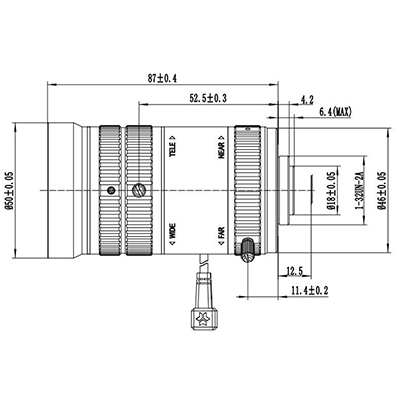
CS mount P-Iris CCTV lens
FAQs
What is the main purpose of a CCTV lens?
A CCTV lens is designed for surveillance purposes. It allows cameras to monitor large areas continuously, often with infrared technology for low-light performance.
Can a regular camera lens be used for surveillance?
While it is possible to use a regular camera lens for surveillance, it is generally not ideal due to the lack of continuous focus and monitoring features that CCTV lenses provide. Regular camera lenses are better suited for photography.
Which lens is better for low-light environments?
CCTV lenses are often better equipped for low-light environments, as many feature infrared capabilities to enhance visibility in darkness, making them ideal for 24/7 security monitoring.
Are CCTV lenses compatible with regular cameras?
Most CCTV lenses are designed specifically for security cameras and are not compatible with regular cameras. However, some models may feature universal mounts that allow them to be adapted for other uses.
Conclusion
In the debate of CCTV Lens vs. Regular Camera Lens, the choice largely depends on your needs. If you are setting up a surveillance system, a CCTV lens will serve you best, offering security-specific features at a more affordable price. However, if you are looking for high-quality images or videos, a regular camera lens is the better option, offering more flexibility and superior image quality.
Looking for a suitable CCTV lens for your camera system? Explore our range of megapixel CCTV lenses to compare focal lengths, sensor compatibility, resolution, and other optical specifications for your application.