How are machine vision lenses used?
10/10/2025
Rapid prototyping optical lens supplier
10/10/2025
Photography enthusiasts and professionals alike are constantly seeking equipment that pushes the boundaries of what’s possible. Among the latest innovations, aspherical lenses with fast aperture performance stand out as game-changers, delivering stunning image quality while enabling rapid shooting in low-light conditions. These advanced lenses combine precision engineering with cutting-edge optical design, making them indispensable for photographers who demand excellence.
Why Aspherical Lenses with Fast Aperture Performance Are Revolutionizing Photography
Traditional spherical lenses suffer from optical aberrations, such as spherical aberration and coma, which distort images and reduce sharpness. Aspherical lenses, however, feature non-spherical surfaces that correct these distortions, ensuring edge-to-edge clarity. When paired with fast aperture ratings (e.g., f/1.2, f/1.4), these lenses allow more light to reach the sensor, enabling faster shutter speeds and superior low-light performance.
The combination of aspherical elements and fast apertures is particularly beneficial for:
- Portrait photographers seeking creamy bokeh and precise subject isolation.
- Sports and wildlife photographers requiring rapid focus and minimal motion blur.
- Astrophotographers capturing dimly lit celestial objects with exceptional detail.

Lens Aperture
Key Advantages of Aspherical Lenses with Fast Aperture Performance
1. Superior Image Quality
Aspherical lenses eliminate spherical aberration, resulting in sharper images with higher contrast. Fast apertures further enhance this by reducing diffraction and maximizing light intake.
2. Enhanced Low-Light Capability
A wide aperture (e.g., f/1.4) lets in significantly more light than slower lenses (e.g., f/2.8), allowing photographers to shoot in dim environments without compromising exposure or relying on high ISO settings.
3. Faster Autofocus Performance
The increased light transmission of fast apertures improves autofocus speed and accuracy, making these lenses ideal for dynamic subjects.
4. Compact and Lightweight Designs
Modern aspherical lenses often incorporate advanced materials, reducing size and weight without sacrificing optical performance.
How Aspherical Lenses with Fast Aperture Performance Work
Aspherical lenses use mathematically precise curved surfaces to focus light more accurately than traditional spherical lenses. This design minimizes optical flaws like chromatic aberration and distortion. When combined with a fast aperture, the lens achieves:
- Shallow Depth of Field: Creates beautiful background blur (bokeh) for artistic portraits.
- Low-Light Excellence: Captures detailed images in challenging lighting conditions.
- High-Speed Shooting: Enables faster shutter speeds to freeze motion.
For example, the Sony FE 50mm f/1.2 GM incorporates aspherical elements and a fast aperture, delivering exceptional sharpness and bokeh. (External Link: Sony FE 50mm f/1.2 GM Review)
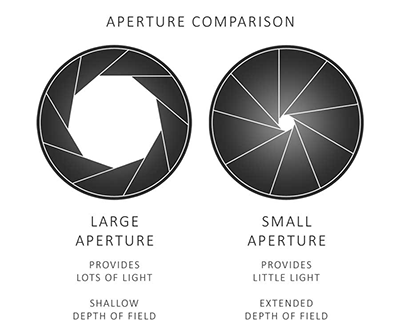
Lens Aperture
Common Misconceptions About Aspherical Lenses with Fast Aperture Performance
1. “They’re Only for Professionals”
While high-end models exist, many affordable aspherical lenses with fast apertures cater to enthusiasts.
2. “Fast Apertures Are Unnecessary”
Even casual photographers benefit from faster lenses in low light or when shooting moving subjects.
3. “Aspherical Lenses Are Fragile”
Modern designs use durable materials, ensuring longevity even in rugged conditions.
FAQs
1. What makes aspherical lens with fast aperture performance better than regular lenses?
Aspherical lenses correct optical distortions, while fast apertures improve low-light performance and autofocus speed. Together, they deliver sharper, clearer images with greater versatility.
2. Are aspherical lens with fast aperture performance worth the investment?
Absolutely! For photographers prioritizing image quality and low-light capabilities, these lenses offer unmatched performance.
3. Can beginners use aspherical lens with fast aperture performance?
Yes! Many entry-level models provide excellent results without overwhelming complexity.
4. Do aspherical lens with fast aperture performance work well in video?
Definitely. Their fast autofocus and smooth bokeh make them ideal for videography, especially in dimly lit settings.
5. How do I maintain aspherical lens with fast aperture performance?
Regular cleaning and proper storage are essential. Avoid exposing the lens to extreme temperatures or moisture.
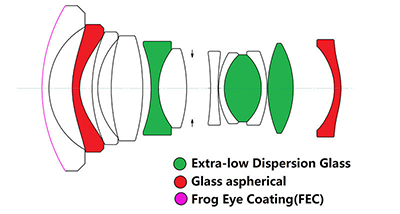
Low-dispersion lenses with wide aperture
Conclusion
As technology advances, aspherical lenses with fast aperture performance will continue to redefine what’s possible in photography. Their ability to deliver stunning clarity, rapid focus, and exceptional low-light performance makes them a must-have for professionals and enthusiasts alike.