


Are M12 Lenses Suitable for Machine Vision?
07/21/2026
Machine Vision Lens Manufacturer: How to Choose the Right Industrial Vision Lens Partner
07/23/2026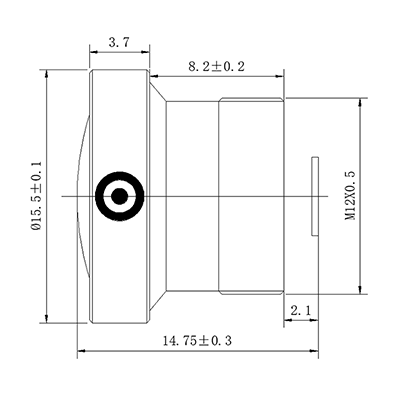
940nm TOF lenses have become increasingly popular in modern 3D depth sensing systems because they provide excellent eye safety, strong infrared performance, and reliable depth measurement capabilities.
As applications such as robotics, autonomous systems, facial recognition, and AI vision continue to develop, engineers require optical solutions that can deliver accurate distance measurement under different environments.
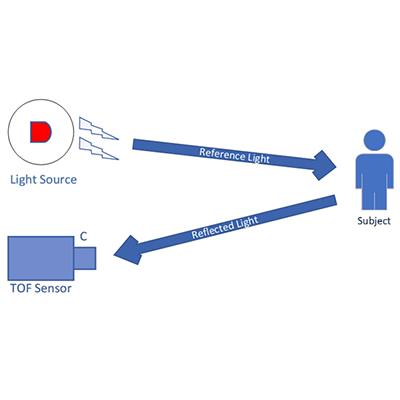
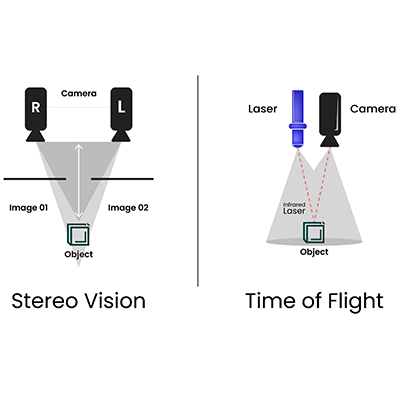
A TOF (Time-of-Flight) camera calculates distance by measuring the travel time of infrared light emitted from the camera and reflected from objects. The performance of this system depends heavily on the optical characteristics of the lens, especially wavelength compatibility, distortion control, and sensor matching.
Among different infrared wavelengths, 940nm has become a preferred choice for many depth sensing applications. This article explains why 940nm TOF lenses are widely adopted, compares 850nm and 940nm solutions, and provides a practical guide for selecting the right TOF lens.
Learn more about TOF optical solutions: TOF Lens for 3D Depth Sensing Cameras
What Is a 940nm TOF Lens?
A 940nm TOF lens is an optical lens specifically designed for Time-of-Flight cameras operating at a 940nm infrared wavelength.
Unlike standard imaging lenses, TOF lenses need to optimize infrared transmission and maintain accurate depth information. The lens must ensure that infrared signals emitted by the TOF illuminator can efficiently reach the target object and return to the sensor.
How Does a TOF Lens Work?
A typical TOF imaging system works through the following process:
- The infrared emitter sends 940nm light toward the target object.
- The infrared light reflects from the object surface.
- The TOF sensor captures the returned signal.
- The system calculates distance based on the light travel time.
Because the lens directly affects infrared transmission, image uniformity, and optical accuracy, selecting the correct TOF lens is critical for achieving reliable 3D depth measurement.
Key Optical Requirements for 940nm TOF Lenses
| Parameter | Importance |
|---|---|
| IR Transmission | Ensures efficient 940nm infrared signal transmission. |
| Low Distortion | Improves depth measurement accuracy and reduces geometric errors. |
| CRA Optimization | Helps match the lens with TOF sensor pixel structures. |
| Sensor Compatibility | Ensures the lens image circle matches different sensor sizes. |
Why Are 940nm TOF Lenses Becoming Popular?
1. Better Eye Safety for Human-Focused Applications
One of the biggest advantages of 940nm infrared technology is improved eye safety.
Compared with visible or shorter infrared wavelengths, 940nm light is almost invisible to the human eye, making it suitable for devices that operate close to people.
This advantage makes 940nm TOF lenses widely used in:
- Facial recognition systems
- Smart home devices
- Human-machine interaction systems
- Consumer 3D sensing equipment
2. Lower Interference From Ambient Light
Outdoor and industrial environments often contain complex lighting conditions. Strong visible light can affect depth sensing performance.
940nm TOF lenses provide better resistance against certain ambient light interference, helping systems maintain stable depth detection.
This makes them suitable for:
- Autonomous robots
- AMR navigation systems
- Outdoor monitoring equipment
- Industrial automation applications
3. Improved Integration With Compact Vision Systems
Modern vision systems require smaller optical modules with higher performance. Many 940nm TOF cameras use compact lens designs, including M12 mount configurations.
For compact embedded vision applications, engineers often select M12 lenses because they provide flexible integration, compact size, and compatibility with various sensors.
4. Strong Compatibility With AI Vision Applications
The growth of AI vision has increased demand for accurate depth information. TOF technology enables machines to understand distance, object location, and three-dimensional environments.
Typical applications include:
- Robot navigation
- 3D machine vision
- Smart security
- Biometric recognition
For industrial applications, TOF lenses must provide stable optical performance under different operating conditions.
Explore related optical solutions: Machine Vision Lens Solutions
940nm vs 850nm TOF Lenses: Which One Should You Choose?
When selecting a TOF lens, wavelength is one of the most important factors that affects system performance. Both 850nm and 940nm infrared lenses are widely used in depth sensing applications, but they have different advantages depending on the environment and application requirements.
Understanding the differences between 850nm and 940nm TOF lenses helps engineers choose the most suitable optical solution for their systems.
| Feature | 850nm TOF Lens | 940nm TOF Lens |
|---|---|---|
| Visibility | Slightly visible infrared wavelength | Almost invisible to human eyes |
| Eye Safety | Good | Excellent |
| Ambient Light Resistance | Good performance | Better outdoor adaptability |
| Transmission Efficiency | Generally higher | Requires optimized IR coating |
| Typical Applications | Indoor industrial applications | Consumer, outdoor and human-facing applications |
| System Integration | Suitable for short and medium distance sensing | Suitable for compact and safety-focused systems |
Which Wavelength Should You Choose?
The correct wavelength depends on the application environment, sensing distance, safety requirements, and system design.
| Application | Recommended Wavelength |
|---|---|
| Robot Navigation | 940nm |
| AMR / AGV Systems | 940nm |
| Face Recognition | 940nm |
| Indoor 3D Scanner | 850nm |
| Industrial Inspection | 850nm |
| Outdoor Depth Sensing | 940nm |
In general, 940nm TOF lenses are preferred when eye safety, environmental adaptability, and human interaction are important considerations.
For applications requiring higher infrared efficiency in controlled indoor environments, 850nm solutions may also be suitable.
Learn more about wavelength selection: 850nm and 940nm TOF Lens Solutions
Applications of 940nm TOF Lenses
The popularity of 940nm TOF lenses is closely related to the increasing demand for accurate 3D perception in intelligent systems.
TOF Lens for Robotics and AMR Navigation
Robots and autonomous mobile robots require reliable depth information to understand surrounding environments.
940nm TOF lenses enable robots to achieve:
- Obstacle detection
- SLAM navigation
- Autonomous movement
- Real-time depth perception
Wide field-of-view 940nm TOF lenses are commonly selected for navigation systems because they provide larger scene coverage and stable distance measurement.
TOF Lens for Face Recognition and Biometrics
Facial recognition systems require accurate depth information while operating safely near users.
Because 940nm infrared light is invisible to human eyes, it is widely adopted in:
- Face authentication terminals
- Access control systems
- Smart devices
TOF Lens for Industrial 3D Vision
Industrial automation systems use TOF cameras for:
- Object detection
- Robot picking
- 3D measurement
- Quality inspection
In these applications, optical parameters such as distortion, resolution, and sensor matching directly affect measurement accuracy.
Explore industrial optical solutions: Industrial Machine Vision Lens Solutions
How to Choose the Right 940nm TOF Lens?
Selecting a suitable 940nm TOF lens requires matching optical performance with the TOF sensor, application environment, and system requirements.
Engineers should consider the following key steps:
Step 1: Select the TOF Sensor
The first step is identifying the TOF sensor specification, including:
- Sensor size
- Pixel size
- Active area
- Infrared sensitivity
The lens image circle must fully cover the sensor area to avoid image quality degradation.
Step 2: Confirm 940nm Compatibility
A standard visible-light lens cannot always provide optimal performance for infrared TOF systems.
A dedicated 940nm TOF lens should include:
- IR optimized optical coating
- High infrared transmission efficiency
- Stable focus performance at 940nm wavelength
Step 3: Define Field of View (FOV)
The required FOV depends on the application.
| Application | Typical FOV Requirement |
|---|---|
| Robot Navigation | Wide FOV |
| 3D Measurement | Medium FOV |
| Precision Detection | Narrow FOV |
Step 4: Check Optical Performance
High-quality TOF systems require more than wavelength compatibility. Engineers should also evaluate:
- Distortion performance
- Relative illumination
- CRA matching
- MTF performance
These optical factors directly influence depth accuracy and 3D reconstruction quality.
Learn more about optical performance testing: TOF Lens Optical Performance Verification
Recommended 940nm TOF Lens Parameters
Different applications require different optical specifications. The following parameters represent common requirements for industrial and embedded TOF camera systems.
| Parameter | Typical Specification |
|---|---|
| Wavelength | 940nm Infrared |
| Mount | M12 × 0.5 |
| Sensor Compatibility | 1/4″, 1/3″, 1/2″ Sensor Formats |
| Field of View | 60° – 150° |
| Distortion | Low Distortion Design |
| Applications | Robotics, 3D Vision, AI Vision, Biometrics |
For customized requirements such as specific sensor matching, FOV design, or mechanical integration, professional optical manufacturers can provide OEM and ODM TOF lens solutions.
Why Choose TOWIN 940nm TOF Lenses?
Choosing the right TOF lens supplier is important for achieving reliable 3D depth sensing performance. A professional optical manufacturer can help engineers optimize wavelength compatibility, sensor matching, and system integration.
TOWIN provides customized TOF lens solutions designed for robotics, industrial automation, AI vision, and embedded depth sensing applications.
Optical Design Capability
TOF optical systems require precise control of infrared transmission, distortion, and image quality. TOWIN focuses on optical optimization to ensure stable performance for different TOF sensors and applications.
- 940nm infrared wavelength optimization
- Low distortion optical design
- Sensor and lens matching
- Optical simulation and performance verification
850nm / 940nm Infrared Optimization
Different TOF systems have different wavelength requirements. TOWIN develops optical designs optimized for both 850nm and 940nm infrared applications.
This allows customers to select the most suitable lens based on:
- Operating environment
- Sensor performance
- Detection distance
- Eye safety requirements
M12 Standard Mount Support
Many embedded TOF cameras require compact optical modules. M12 lenses provide flexible integration and are widely used in compact vision systems.
TOWIN supports M12 TOF lens designs for different sensor sizes and application requirements.
Explore: M12 Lens Solutions
OEM and ODM Customization
Every TOF application may require different optical specifications. TOWIN provides customized optical solutions including:
- Customized FOV design
- Sensor compatibility optimization
- Mechanical structure adjustment
- Prototype development and mass production support
From optical design to production validation, TOWIN helps customers develop reliable TOF imaging systems.
Frequently Asked Questions
1. Why are 940nm TOF lenses popular?
940nm TOF lenses are popular because they provide excellent eye safety, low visibility, and strong compatibility with human-facing and outdoor 3D sensing applications. They are widely used in robotics, biometric recognition, and AI vision systems.
2. What is the difference between 850nm and 940nm TOF lenses?
The main difference is wavelength performance. 850nm TOF lenses usually provide higher infrared efficiency, while 940nm TOF lenses offer better eye safety and lower visibility, making them suitable for more consumer and outdoor applications.
3. Are 940nm TOF lenses suitable for outdoor applications?
Yes. 940nm TOF lenses are commonly used in outdoor depth sensing systems because they provide good resistance to environmental light interference and support reliable distance measurement.
4. Can 940nm TOF lenses use M12 mounts?
Yes. Many compact TOF camera modules use M12 lens designs because they provide a small form factor and flexible integration with different sensor platforms.
5. How do I select the right TOF lens for my sensor?
The selection process should consider sensor size, wavelength, FOV, distortion, infrared transmission, and mechanical requirements. A professional TOF lens supplier can help optimize lens performance for specific applications.
6. Can TOWIN customize 940nm TOF lenses?
Yes. TOWIN provides OEM and ODM customization services for TOF lenses, including optical design optimization, sensor matching, and customized mechanical solutions.
Conclusion
As 3D sensing technology continues to expand into robotics, automation, AI vision, and smart devices, selecting the correct optical solution becomes increasingly important.
940nm TOF lenses have become a preferred choice because they combine excellent eye safety, reliable infrared performance, and strong adaptability for modern depth sensing systems.
When selecting a TOF lens, engineers should evaluate wavelength compatibility, sensor matching, field of view, distortion performance, and application requirements.
TOWIN provides professional TOF lens solutions with 850nm and 940nm optimization, M12 compatibility, optical customization, and production support for global customers.
Explore complete solutions: TOF Lens for 3D Depth Sensing Applications
With advanced optical design capabilities and customized engineering support, TOWIN helps customers develop high-performance 940nm TOF lenses for next-generation 3D vision systems.