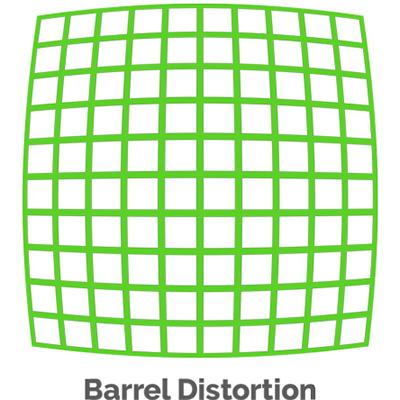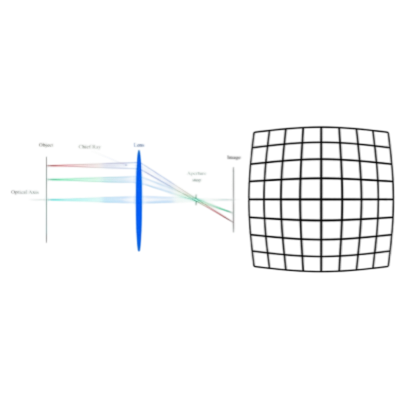



Does Focal Length Affect Distortion?
07/08/2026
How Does Sensor Size Affect Lens Selection?
07/10/2026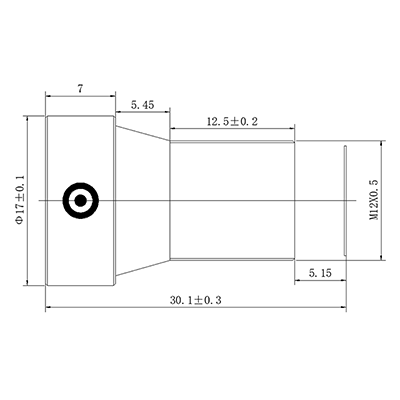
Low-distortion imaging is one of the most important requirements in modern machine vision, industrial inspection, robotics, and precision measurement systems. Unlike consumer photography, where slight image distortion is often acceptable, industrial imaging demands accurate geometry so that measurements, positioning, and inspection results remain reliable.
A well-designed low-distortion imaging system keeps straight lines straight, preserves object dimensions, and minimizes measurement errors across the entire image. Whether you’re building an AI vision system, an automated inspection line, or a robotic guidance solution, understanding low-distortion imaging helps you choose the right optical lens for your application.
In this guide, you’ll learn how low-distortion imaging works, why it matters, how distortion is measured, and how to select the right industrial lens for high-precision imaging.
If you’re new to optical distortion, we recommend first reading our Lens Distortion Guide, which explains distortion types, measurement methods, and correction techniques in detail.
Quick Answer: What Is Low-Distortion Imaging?
Low-distortion imaging refers to an optical imaging system that minimizes geometric deformation, allowing objects to maintain their true shape and dimensions throughout the captured image. By reducing barrel distortion, pincushion distortion, and other geometric errors, low-distortion imaging delivers higher measurement accuracy, improved camera calibration, and more reliable machine vision performance.
It is widely used in applications such as:
- Machine Vision
- Industrial Inspection
- Robot Guidance
- Medical Imaging
- ADAS and Intelligent Transportation
- Precision Measurement
Key Benefits of Low-Distortion Imaging
- ✔ Maintains accurate object dimensions
- ✔ Improves camera calibration accuracy
- ✔ Enhances machine vision inspection reliability
- ✔ Reduces measurement errors across the entire image
What Is Low-Distortion Imaging?
Low-distortion imaging is an imaging approach designed to minimize geometric distortion produced by the optical lens. The objective is simple: ensure that straight lines remain straight and that object dimensions are accurately reproduced from the center of the image to its edges.
Unlike standard consumer lenses that prioritize wide viewing angles or compact size, industrial low-distortion lenses are optimized for geometric accuracy. Optical engineers carefully design the lens structure, select premium optical glass, and incorporate aspherical elements to reduce distortion while maintaining high image quality.
This makes low-distortion imaging essential for systems where images are used for analysis rather than simply visual observation.
Typical industrial applications include:
- Dimensional measurement
- Automated optical inspection (AOI)
- Robot positioning
- PCB inspection
- Barcode and OCR reading
- Semiconductor inspection
In these applications, even a distortion of 1% may introduce unacceptable measurement errors, making low-distortion optics a critical component of the imaging system.
How Does Low-Distortion Imaging Work?
Low-distortion imaging is achieved through a combination of advanced optical design, precision manufacturing, and calibration techniques. Rather than relying on software alone, high-quality industrial lenses minimize distortion directly within the optical system.
The imaging process typically follows these steps:
↓
Lens
↓
Image Sensor
↓
Image Processing
↓
Accurate Image
Each stage contributes to reducing geometric errors and improving image fidelity.
1. Precision Optical Design
Industrial lenses are designed using advanced optical simulation software to balance distortion, resolution, field curvature, chromatic aberration, and illumination. Many low-distortion lenses incorporate multiple aspherical elements to improve image geometry without sacrificing sharpness.
2. High-Quality Lens Manufacturing
Manufacturing precision directly affects distortion performance. Tight tolerances in lens alignment and assembly help ensure that every optical element performs as designed.
3. Camera Calibration
Even with high-quality optics, most machine vision systems perform camera calibration to further reduce residual distortion. Calibration software measures geometric errors using checkerboard or grid targets and generates a correction model.
Learn more about distortion evaluation in our Lens Distortion Guide.
4. Image Correction
After calibration, image processing software applies distortion correction to produce accurate geometry for measurement, inspection, and positioning tasks.
Although software correction improves accuracy, it performs best when combined with a professionally designed low-distortion lens rather than compensating for severe optical distortion.
Low-Distortion Imaging vs. Standard Imaging
The difference between standard imaging and low-distortion imaging becomes particularly important in industrial environments where images are used for quantitative analysis rather than visual observation.
| Feature | Standard Imaging | Low-Distortion Imaging |
|---|---|---|
| Straight Lines | May appear curved | Remain straight |
| Measurement Accuracy | Moderate | High |
| Camera Calibration | More complex | More accurate |
| Machine Vision | General applications | Precision inspection |
| OCR & Barcode Reading | Good | Excellent |
| Robot Guidance | Acceptable | Highly reliable |
For industrial imaging systems, choosing a low-distortion lens not only improves image quality but also reduces measurement uncertainty and increases overall system reliability.
Why Is Low-Distortion Imaging Important?
In industrial imaging, the goal is not simply to capture a clear picture—it is to capture an image that accurately represents the real world. Even small amounts of geometric distortion can introduce measurement errors, reduce inspection accuracy, and affect the performance of machine vision algorithms.
Low-distortion imaging ensures that object dimensions remain consistent across the entire image, allowing vision systems to make reliable decisions based on accurate visual information.
The benefits become especially important in applications that rely on precise positioning, dimensional analysis, and automated inspection.
Machine Vision
Machine vision systems use images to perform measurements, defect detection, object positioning, and quality inspection. Distorted images can shift object locations and introduce dimensional errors, especially near the image edges. Low-distortion imaging ensures consistent geometric accuracy, resulting in more reliable inspection and higher production efficiency.
Industrial Measurement
For dimensional measurement, even a small distortion percentage can produce significant errors. Industrial manufacturers often require distortion below 0.1% to ensure repeatable measurement results throughout the entire field of view.
Camera Calibration
Accurate camera calibration depends on predictable image geometry. Low-distortion imaging simplifies calibration, reduces correction complexity, and improves the long-term stability of machine vision systems.
OCR and Barcode Reading
Optical Character Recognition (OCR) and barcode reading systems rely on accurately shaped characters and symbols. Geometric distortion can deform text and reduce recognition accuracy, particularly near image boundaries.
Robot Guidance
Autonomous robots and robotic arms depend on accurate object positioning. Low-distortion imaging improves coordinate mapping between the camera and robot, helping reduce positioning errors and improving operational precision.
Typical Distortion Levels Across Different Lens Types
Not all lenses are designed with the same distortion performance. Consumer lenses often prioritize compactness and wide viewing angles, while industrial lenses focus on maintaining accurate image geometry.
| Lens Type | Typical Distortion | Recommended Applications |
|---|---|---|
| Consumer Camera Lens | 2–5% | Photography, Consumer Electronics |
| Security Camera Lens | 1–3% | Video Surveillance |
| Machine Vision Lens | <0.5% | Industrial Inspection |
| Precision Low-Distortion Lens | <0.1% | Dimensional Measurement |
| Telecentric Lens | ≈0% | Metrology & Semiconductor Inspection |
Understanding acceptable distortion levels helps engineers choose the appropriate lens based on the accuracy requirements of their application.
To learn more about distortion specifications and measurement methods, visit our Lens Distortion Guide.
Real-World Benefits of Low-Distortion Imaging
The advantages of low-distortion imaging become much more apparent in real industrial environments. The following comparison demonstrates how reducing distortion directly improves measurement accuracy and system performance.
| Performance Metric | Standard Imaging | Low-Distortion Imaging |
|---|---|---|
| Typical Distortion | 2.3% | 0.1% |
| Measurement Error | 1.5 mm | 0.05 mm |
| OCR Recognition Accuracy | 95% | 99.8% |
| Camera Calibration Time | Longer | Shorter |
| Robot Positioning Accuracy | Moderate | High |
| Inspection Repeatability | Lower | Excellent |
Engineering InsightReducing distortion from 2% to below 0.1% can significantly improve measurement consistency, simplify camera calibration, and increase inspection reliability. For applications requiring dimensional accuracy, investing in a professionally designed low-distortion lens often provides greater long-term value than relying solely on software correction.
Industries That Benefit from Low-Distortion Imaging
Low-distortion imaging is widely adopted across industries where geometric accuracy directly affects system performance.
| Industry | Why Low-Distortion Imaging Matters |
|---|---|
| Machine Vision | Improves dimensional measurement and defect detection accuracy. |
| Factory Automation | Supports reliable inspection and automated quality control. |
| Medical Imaging | Maintains accurate anatomical representation for diagnosis and imaging devices. |
| ADAS & Smart Traffic | Improves object detection and camera calibration accuracy. |
| Robotics | Enhances navigation, positioning, and robotic guidance. |
| Drone Imaging | Produces more accurate aerial mapping and surveying data. |
Explore how industrial lenses are used in different applications:
How to Choose a Low-Distortion Lens
Selecting the right lens is essential for achieving true low-distortion imaging. While distortion specifications are important, they should be evaluated together with other optical parameters, including sensor size, focal length, working distance, resolution, and field of view.
Professional optical engineers typically follow a structured selection process to ensure the imaging system delivers the required measurement accuracy.
↓
Select Sensor Size
↓
Calculate Required FOV
↓
Determine Working Distance
↓
Choose Resolution & Distortion Requirement
↓
Select the Appropriate Lens
Step 1 – Determine the Application
Different applications have different distortion requirements. For example, a surveillance camera may tolerate 2% distortion, while a dimensional measurement system often requires distortion below 0.1%.
Step 2 – Match the Sensor Size
The image circle of the lens must fully cover the image sensor. Larger sensors generally require lenses with larger image circles and higher optical performance.
Read our Sensor Size Guide to understand sensor compatibility.
Step 3 – Calculate the Required Field of View
The required field of view determines the appropriate focal length. Selecting a focal length that is too short may increase distortion unnecessarily.
Use our Interactive FOV Calculator to estimate the correct focal length for your imaging system.
Step 4 – Evaluate Distortion Specifications
Instead of selecting lenses based solely on focal length or resolution, compare the published distortion specifications.
| Application | Recommended Distortion |
|---|---|
| General Surveillance | <3% |
| Robot Vision | <1% |
| OCR & Barcode Reading | <0.5% |
| Industrial Inspection | <0.3% |
| Precision Measurement | <0.1% |
| Metrology | ≈0% (Telecentric) |
Step 5 – Verify the Complete Optical System
Before finalizing the lens selection, verify that the optical system meets all performance requirements, including distortion, resolution, relative illumination, chief ray angle, and environmental reliability.
For a complete selection process, see our Industrial Lens Selection Guide.
Recommended Low-Distortion Lens Solutions
Different industrial applications require different lens designs. Choosing the appropriate lens family helps achieve the best balance between image quality, measurement accuracy, field of view, and installation space.
| Lens Type | Advantages | Typical Applications |
|---|---|---|
| M12 Low-Distortion Lens | Compact size, lightweight, distortion below 0.5% | Embedded Vision, AI Cameras, Robotics |
| C-Mount Machine Vision Lens | High resolution, excellent geometric accuracy | Industrial Inspection, Factory Automation |
| FA Lens | Designed for high-resolution industrial cameras | Machine Vision Systems |
| Telecentric Lens | Near-zero distortion and constant magnification | Precision Measurement & Metrology |
Explore our industrial imaging solutions:
Low-Distortion Imaging vs. Software Distortion Correction
| Feature | Low-Distortion Lens | Software Correction |
|---|---|---|
| Measurement Accuracy | ⭐⭐⭐⭐⭐ | ⭐⭐⭐ |
| Image Quality | Excellent | May Reduce Edge Resolution |
| Processing Speed | Real-Time | Additional Computation |
| Calibration Stability | High | Depends on Calibration |
| Best For | Industrial Vision | Consumer Imaging |
Common Mistakes When Choosing a Low-Distortion Lens
Many imaging systems fail to achieve their expected accuracy because engineers focus on only one optical parameter. Avoiding the following mistakes can significantly improve imaging performance.
| Common Mistake | Best Practice |
|---|---|
| Selecting a lens based only on focal length | Consider focal length together with distortion, sensor size, and working distance. |
| Ignoring the published distortion specification | Always compare distortion percentages when evaluating industrial lenses. |
| Choosing the widest possible field of view | Select only the field of view required by the application to reduce optical challenges. |
| Relying entirely on software correction | Use a low-distortion lens first, then apply calibration to achieve maximum accuracy. |
| Overlooking sensor compatibility | Ensure the lens image circle fully covers the sensor. |
| Ignoring calibration requirements | Perform camera calibration regularly for consistent long-term accuracy. |
Engineering RecommendationFor high-precision machine vision systems, the best results are achieved by combining a professionally designed low-distortion lens with proper sensor matching, accurate camera calibration, and regular system verification. This integrated approach delivers higher measurement accuracy, better repeatability, and more reliable long-term performance.
Related Resources
Continue learning about industrial optics and precision imaging with these resources:
- Lens Distortion Guide
- Does Focal Length Affect Distortion?
- Interactive FOV Calculator
- Sensor Size Guide
- Industrial Lens Selection Guide
Frequently Asked Questions
1. What is low-distortion imaging?
Low-distortion imaging is an imaging technique that minimizes geometric distortion so that objects maintain their true shape and dimensions throughout the image. It is widely used in machine vision, industrial inspection, robotics, medical imaging, and precision measurement applications where accurate geometry is essential.
2. Why is low-distortion imaging important?
Low-distortion imaging improves measurement accuracy, camera calibration, and image consistency. It reduces geometric errors that can affect object detection, dimensional inspection, OCR recognition, and robot positioning. For industrial vision systems, using a low-distortion lens helps ensure reliable and repeatable inspection results.
3. Can software completely correct lens distortion?
Camera calibration software can compensate for much of a lens’s geometric distortion, but it cannot fully recover image information lost because of poor optical quality. The most accurate results are achieved by combining a high-quality low-distortion lens with calibration software rather than relying on software correction alone.
4. Which industries benefit most from low-distortion imaging?
Low-distortion imaging is commonly used in machine vision, factory automation, robotics, medical imaging, semiconductor inspection, intelligent transportation, drone imaging, and metrology. Any application requiring accurate measurements or reliable image geometry benefits from low-distortion optical systems.
5. How is lens distortion measured?
Lens distortion is typically measured using a checkerboard or grid calibration target. Image processing software compares the captured image with the known geometry of the target and calculates the distortion percentage. Industrial machine vision systems often specify distortion values such as <0.5% or <0.1% depending on the application.
6. How do I choose the right low-distortion lens?
Choose a lens based on your application requirements, including sensor size, field of view, working distance, resolution, and required measurement accuracy. Comparing published distortion specifications and selecting a lens designed specifically for industrial imaging will deliver the most reliable performance.
Conclusion
Low-distortion imaging plays a critical role in modern machine vision, robotics, industrial inspection, and precision measurement systems. By minimizing geometric distortion, it preserves object dimensions, improves camera calibration, and enables more accurate image analysis across the entire field of view.
While software calibration can reduce residual distortion, the foundation of a reliable imaging system is a professionally designed low-distortion optical lens. Selecting the appropriate lens based on sensor size, focal length, working distance, and distortion specification ensures consistent performance and long-term measurement accuracy.
To continue learning about industrial optics, explore our Lens Distortion Guide, use the Interactive FOV Calculator, or read our Industrial Lens Selection Guide to choose the right lens for your application.
Understanding and implementing low-distortion imaging is one of the most effective ways to improve image quality, increase measurement accuracy, and build reliable industrial vision systems.