


Infrared Focus Shift Explained: Why IR Focus Matters in TOF and Machine Vision Lenses
06/09/2026
What Is Lens Distortion in Machine Vision?
06/10/2026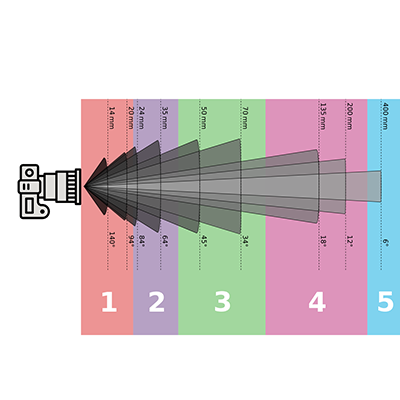
Calculating FOV for Industrial lens is a crucial step in designing precise machine vision systems.
the field of view determines how much of an object or scene a camera can capture, directly affecting image quality and accuracy.
This guide will walk you through the key parameters, step-by-step calculation, and lens selection tips to optimize your industrial imaging setup.
Key Parameters Affecting FOV
1. Sensor Size
The sensor size of your camera is one of the most important factors in calculating FOV for Industrial lens.
Both horizontal and vertical dimensions affect the overall field of view. A larger sensor captures a wider area, while a smaller sensor provides a narrower FOV.
2. Focal Length
Focal length determines the magnification and the portion of the scene captured. Shorter focal lengths produce a wider FOV,
while longer focal lengths narrow the view. For more details, check our Lens Basics guide on focal length.
3. Working Distance
Working distance is the space between the lens and the target object. The FOV increases as the working distance grows,
and decreases when the lens is closer to the object. Optimizing this distance is key to accurate imaging.
How to Calculate FOV for Industrial Lens
1. Horizontal and Vertical FOV Formulas
Use the following formulas to calculate horizontal and vertical FOV:
- Horizontal FOV = (Sensor Width × Working Distance) / Focal Length
- Vertical FOV = (Sensor Height × Working Distance) / Focal Length
In these formulas, sensor dimensions are in millimeters, focal length is in millimeters, and working distance is in the same units as desired FOV.
2. Step-by-Step Example
Example calculation for a 1/2″ sensor, 16mm focal length, and 500mm working distance:
| Parameter | Value |
|---|---|
| Sensor Width | 6.4 mm |
| Sensor Height | 4.8 mm |
| Focal Length | 16 mm |
| Working Distance | 500 mm |
| Horizontal FOV | (6.4 × 500)/16 = 200 mm |
| Vertical FOV | (4.8 × 500)/16 = 150 mm |
3. FOV Calculator Tool
For real-time calculations, use the FOV Calculator.
Enter sensor size, focal length, and working distance to instantly see horizontal and vertical FOV.
Parameter Comparisons and Lens Selection Guide
1. Comparing Sensor Sizes
Different sensor sizes significantly affect FOV. Larger sensors provide wider coverage, ideal for capturing bigger scenes,
while smaller sensors are suitable for focused inspections.
2. Focal Length Recommendations
Depending on your application, choose a suitable focal length:
- Wide FOV: 8–16mm (ideal for general machine vision)
- Medium FOV: 25–50mm (inspection tasks, robotics)
- Narrow FOV: 75–100mm (precision measurement, telecentric setups)
3. Lens Type Selection
Select lens types based on distortion and FOV needs:
- FA Lens – versatile industrial lens
- Low Distortion Lens – precision applications
- Telecentric Lens – consistent magnification and minimal distortion
FAQs
Q: What is FOV in industrial lenses?
A: FOV represents the observable area captured by a camera and lens system. Learn more in Lens Basics.
Q: How do I choose the right FOV for my camera system?
A: Consider sensor size, focal length, and working distance. Use the FOV Calculator for accuracy.
Q: Does working distance affect image quality?
A: Yes, it affects magnification and the FOV. Longer distance increases coverage but reduces detail.
Q: How do sensor size and focal length interact?
A: Larger sensors and shorter focal lengths increase FOV; smaller sensors and longer focal lengths reduce FOV. Detailed guide: Sensor Guide.
Conclusion
Understanding and calculating FOV for Industrial lens is essential for precision imaging in machine vision applications.
By considering sensor size, focal length, and working distance, and using tools like the FOV Calculator, you can ensure accurate coverage and optimal image quality. For more insights, explore our Lens Basics knowledge center.