


CMOS Sensor Size: Formats, Dimensions, Lens Matching & Selection Guide
05/28/2026
What Is Low Distortion Lens in Industrial Imaging?
05/30/2026
Introduction
Machine Vision Lens selection is one of the most important factors in building a reliable industrial imaging system. In many machine vision applications, the lens has a greater impact on image quality, measurement accuracy, and detection stability than the camera itself. Whether used for PCB inspection, robotics guidance, barcode recognition, smart traffic systems, or factory automation, choosing the correct lens directly affects the performance of the entire vision system.
A poorly matched lens may cause image distortion, blurred edges, inaccurate measurements, or unstable AI recognition results. On the other hand, a properly selected machine vision lens can significantly improve imaging precision, reduce inspection errors, and increase production efficiency.
This guide explains how to choose the right machine vision lens based on sensor size, focal length, field of view, working distance, resolution, and industrial application requirements. It also helps users understand how different optical parameters influence overall imaging performance.
What Is a Machine Vision Lens?
A machine vision lens is an industrial-grade optical lens specifically designed for imaging systems used in automation, inspection, robotics, and AI vision applications. Unlike consumer camera lenses, machine vision lenses are engineered for:
- High imaging precision
- Low distortion
- Stable optical performance
- Continuous industrial operation
- Accurate measurement capability
A typical machine vision system includes:
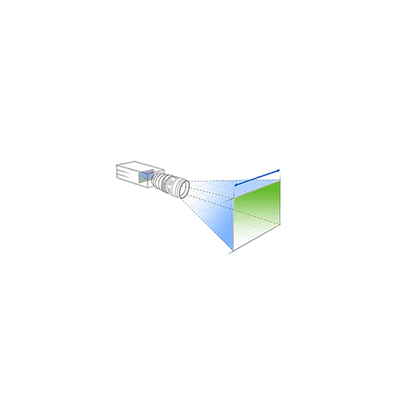
Object → Lens → Camera Sensor → Vision Software
In industrial environments, the lens controls how light reaches the image sensor. The optical quality of the lens directly affects image sharpness, contrast, field of view, and dimensional accuracy.
Key Factors in Choosing a Machine Vision Lens
1. Sensor Size Compatibility
The first step in machine vision lens selection is matching the lens to the camera sensor size.
The image circle produced by the lens must fully cover the camera sensor. If the sensor is larger than the lens image circle, dark corners or vignetting may appear in the image.
Common industrial sensor formats include:
| Sensor Format | Typical Application |
|---|---|
| 1/3″ | Compact systems |
| 1/2″ | Entry-level industrial vision |
| 2/3″ | Standard factory automation |
| 1″ | High-resolution inspection |
| APS-C | Large-format imaging |
Larger sensors typically provide:
- Better image detail
- Higher sensitivity
- Wider field of view
However, they also require higher-quality optics.
For further understanding of industrial sensor formats, users can reference the sensor-related resources inside the Towin Knowledge Center.
2. Focal Length and Field of View
Focal length determines how much of the scene appears in the image.
Short focal lengths create a wider field of view, while longer focal lengths provide higher magnification and a narrower viewing area.
| Focal Length | Imaging Effect |
|---|---|
| 4mm | Wide-angle view |
| 12mm | Medium field |
| 25mm | Narrower inspection area |
| 50mm | Long-distance imaging |
The relationship between field of view, sensor size, and focal length can be estimated using the following formula:
FOV =
Sensor Size × Working Distance
Focal Length
A wider field of view is suitable for:
- Warehouse automation
- Mobile robots
- Large-object inspection
A narrower field of view is better for:
- Precision measurement
- Semiconductor inspection
- OCR verification
To simplify focal length calculations, users can use the Towin FOV Calculator.
3. Resolution Matching
High-resolution cameras require lenses capable of resolving fine image details.
Using a low-quality lens with a high-megapixel camera may result in:
- Blurred edges
- Reduced sharpness
- Poor contrast
- Lower inspection accuracy
General recommendations include:
| Camera Resolution | Recommended Lens Type |
|---|---|
| 2MP | Standard FA lens |
| 5MP | High-resolution industrial lens |
| 12MP+ | Precision low-distortion optics |
When evaluating lens resolution, important parameters include:
- MTF performance
- Pixel size compatibility
- Corner sharpness consistency
In industrial inspection systems, proper resolution matching ensures accurate AI analysis and stable defect detection.
4. Working Distance
Working distance refers to the space between the lens and the object being inspected.
This parameter affects:
- Installation layout
- Magnification
- Field of view
- Lighting design
Examples include:
| Application | Typical Working Distance |
|---|---|
| PCB inspection | Short distance |
| Robotic guidance | Medium distance |
| Smart traffic monitoring | Long distance |
Shorter working distances often provide:
- Higher detail
- Better measurement precision
Longer distances are preferred when:
- Space is limited
- Safety barriers exist
- Large objects must be inspected
5. Distortion Control
Distortion is a critical factor in industrial imaging.
Common distortion types include:
- Barrel distortion
- Pincushion distortion
Excessive distortion may cause inaccurate measurements and unstable positioning results.
Low-distortion lenses are especially important for:
- Metrology
- Robotics
- Semiconductor inspection
- Precision automation
Industrial machine vision systems typically require far lower distortion than consumer imaging systems.
6. Depth of Field (DOF)
Depth of field determines how much of the object remains in focus.
A larger depth of field is important when inspecting:
- Uneven surfaces
- Three-dimensional objects
- Moving production lines
Depth of field is influenced by:
- Aperture
- Focal length
- Sensor size
- Working distance
Smaller apertures generally increase depth of field but reduce image brightness.
Balancing lighting conditions and optical settings is essential for stable imaging performance.
7. Lens Mount Compatibility
The lens mount must match the industrial camera interface.
Common mount types include:
| Mount Type | Typical Usage |
|---|---|
| C-mount | Most industrial systems |
| CS-mount | Compact cameras |
| M12 mount | Embedded vision systems |
C-mount lenses are widely used because of their flexibility and compatibility with industrial cameras.
Types of Machine Vision Lenses
Fixed focal lenses are commonly used in stable production lines where imaging conditions remain constant.
Advantages include:
- Simple structure
- Lower cost
- Stable optical performance
Telecentric Lenses
Telecentric lenses minimize perspective error and maintain consistent magnification.
They are ideal for:
- Precision measurement
- Semiconductor inspection
- Metrology applications
Telecentric optics are often used when dimensional accuracy is critical.
Macro Lenses
Macro lenses provide high magnification for small object inspection.
Applications include:
- PCB inspection
- Electronics manufacturing
- Medical imaging
Zoom lenses allow flexible focal length adjustment.
They are suitable for:
- Multi-product production lines
- Variable inspection distances
- Research environments
Wide-angle lenses capture larger scenes and improve environmental awareness.
Common applications include:
- Mobile robots
- Logistics automation
- Warehouse monitoring
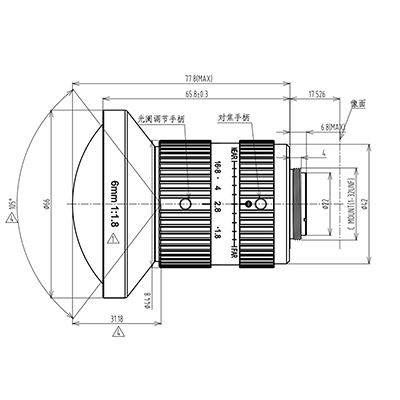
6mm Wide-angle C-Mount Machine Vision lens
Application-Based Lens Selection
PCB Inspection
Recommended features:
- High resolution
- Macro capability
- Low distortion
Robotics Vision
Robotics applications require:
- Fast image acquisition
- Compact design
- Stable positioning accuracy
Industrial robots depend heavily on accurate optical imaging for navigation and object recognition.
Smart Traffic Systems
Traffic imaging systems often require:
- Long focal lengths
- High contrast
- Weather-resistant optics
These systems must capture reliable images under changing outdoor conditions.
Medical Imaging
Medical imaging lenses require:
- Excellent sharpness
- Accurate color reproduction
- Stable optical consistency
Precision imaging is critical for diagnosis and inspection reliability.
Common Mistakes When Choosing a Machine Vision Lens
Many users focus only on focal length while ignoring other important parameters.
Common mistakes include:
- Ignoring sensor compatibility
- Using low-resolution optics with high-resolution cameras
- Overlooking distortion requirements
- Selecting inappropriate working distances
- Neglecting lighting conditions
A balanced optical design approach helps avoid unstable imaging performance.
Step-by-Step Machine Vision Lens Selection Process
Step 1: Determine Sensor Size
Identify the camera sensor format.
Step 2: Define Field of View
Calculate the inspection area size.
Step 3: Measure Working Distance
Determine installation constraints.
Step 4: Calculate Focal Length
Use optical formulas or an FOV calculator.
Step 5: Verify Resolution Compatibility
Ensure lens quality matches camera resolution.
Step 6: Check Distortion Requirements
Critical for measurement applications.
Step 7: Confirm Mount Compatibility
Verify mechanical integration.
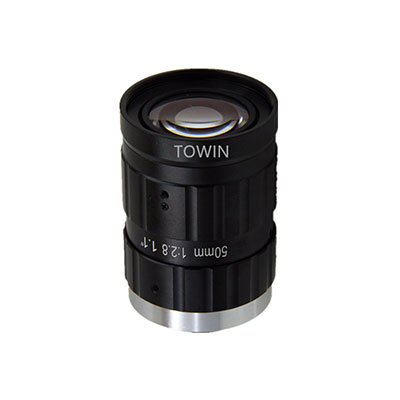
50mm-C-mount Machine Vision FA lens
Frequently Asked Questions
Q: What focal length is best for machine vision?
A: The best focal length depends on sensor size, working distance, and required field of view.
Q: Why is low distortion important?
A: Low distortion improves measurement accuracy and positioning precision in industrial systems.
Q: Can DSLR lenses be used for machine vision?
A: Consumer lenses may work in some cases, but industrial machine vision lenses provide better stability and accuracy.
Q: What is a telecentric lens used for?
A: Telecentric lenses are mainly used for precision measurement and dimensional inspection.
Q: How does sensor size affect lens selection?
A: Larger sensors require larger image circles and often higher-quality optics.
Conclusion
Selecting the correct Machine Vision Lens requires understanding how focal length, sensor size, field of view, resolution, working distance, and distortion interact within an industrial imaging system. Different applications demand different optical solutions, and choosing the proper lens can significantly improve inspection accuracy, automation reliability, and AI vision performance.
As industrial automation and smart manufacturing continue to evolve, high-quality machine vision optics play an increasingly important role in ensuring stable and accurate image acquisition. Engineers and system integrators should carefully evaluate both optical parameters and application requirements before finalizing a lens solution.
To learn more about industrial imaging, optical design, and machine vision applications, visit the Towin Knowledge Center and explore additional resources related to machine vision systems and industrial optics.