


Focal Length Calculation for Machine Vision & Industrial Lens Selection
05/25/2026
Optical Zoom Lens: Complete Guide to Types, Applications & Lens Selection
05/27/2026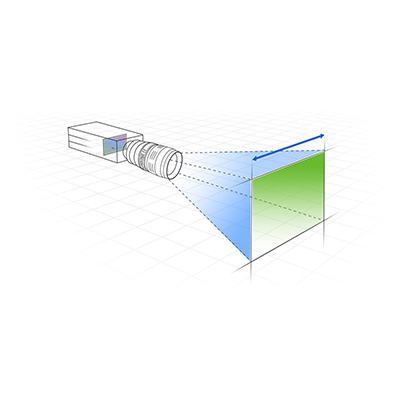
Introduction
Field of View Formula is one of the most important concepts in industrial imaging and machine vision system design. It helps engineers determine how much of a target area can be captured by a camera and lens combination while ensuring sufficient image detail for inspection, measurement, and AI recognition tasks.
Incorrect FOV calculation may lead to incomplete object capture, reduced inspection accuracy, or poor imaging performance in automation systems. Whether you are designing a factory inspection system, robotics vision platform, ADAS camera solution, or intelligent traffic monitoring system, understanding the correct Field of View Formula is essential for selecting the right industrial lens.
This guide explains the Field of View Formula, key calculation parameters, focal length relationships, industrial application examples, and how to choose the right industrial imaging lens for machine vision systems.
What Is Field of View?
Field of view (FOV) refers to the visible area captured by a camera imaging system. In machine vision applications, FOV determines how much of the inspection target can be seen within a single image frame.
A properly designed field of view ensures:
- Complete object coverage
- Accurate defect detection
- Stable AI recognition
- Reliable measurement performance
- Improved inspection efficiency
In industrial vision systems, the field of view is affected by:
- Sensor size
- Focal length
- Working distance
- Lens distortion
- Resolution requirements
Why Field of View Matters in Machine Vision
Field of view directly affects machine vision system performance.
If the FOV is too large:
- Small defects may become difficult to detect
- Resolution density may decrease
- Measurement accuracy may be reduced
If the FOV is too small:
- The target object may not fit inside the image
- Multiple cameras may be required
- Inspection efficiency may decrease
Accurate use of the Field of View Formula helps engineers optimize:
- Industrial inspection
- OCR systems
- Barcode reading
- Robotics navigation
- Intelligent transportation systems
- AI imaging platforms
Learn more about industrial imaging applications from the TOWIN Solutions Center:
- https://www.towinlens.com/solutions/machine-vision
- https://www.towinlens.com/solutions/robotics-vision
- https://www.towinlens.com/solutions/adas
- https://www.towinlens.com/solutions/smart-traffic
Field of View Formula
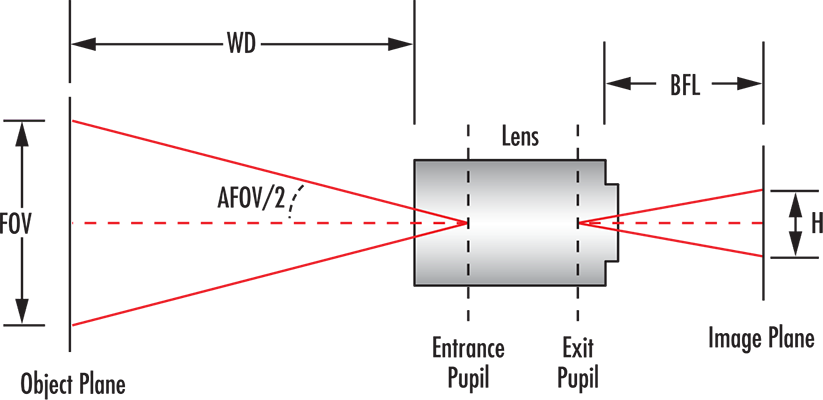
The standard Field of View Formula used in machine vision systems is:
Field of View =
Sensor Size × Working Distance
Focal Length
Where:
| Parameter | Description |
|---|---|
| Field of View | Visible inspection area |
| Sensor Size | Camera sensor dimension |
| Working Distance | Distance between camera and object |
| Focal Length | Lens focal length |
This Field of View Formula helps engineers estimate the visible inspection area for different industrial imaging configurations.
Understanding the Parameters in the Field of View Formula
1. Sensor Size
Sensor size plays a major role in FOV calculation.
Larger sensors generally produce wider fields of view under the same focal length and working distance conditions.
Common industrial sensor formats include:
| Sensor Format | Typical Application |
|---|---|
| 1/4″ | Embedded Vision |
| 1/2.8″ | Smart Security |
| 1/1.8″ | Machine Vision |
| 1″ | High-Resolution Inspection |
Related Reading:
2. Focal Length
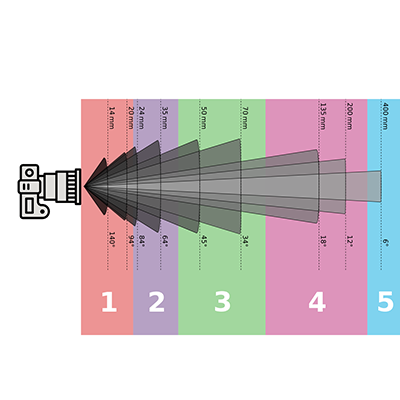
Focal length determines the viewing angle of the imaging system.
- Short focal length → Wider FOV
- Long focal length → Narrower FOV
For example:
| Focal Length | Typical FOV |
|---|---|
| 2.8mm | Ultra Wide |
| 6mm | Wide |
| 12mm | Medium |
| 25mm | Narrow |
| 50mm | Telephoto |
Related Reading:
3. Working Distance
Working distance refers to the distance between the camera and the target object.
Increasing the working distance generally increases the visible field of view for the same focal length.
For example:
- Close-range inspection → Smaller FOV
- Long-distance monitoring → Larger FOV
Relationship Between Focal Length and Field of View
Understanding the relationship between focal length and FOV is essential in machine vision system design.
| Focal Length | FOV Result | Typical Application |
|---|---|---|
| Shorter | Wider FOV | Robotics / Security |
| Medium | Balanced FOV | Machine Vision |
| Longer | Narrower FOV | ITS / Inspection |
Short focal lengths are commonly used in:
- Robotics vision
- Embedded AI cameras
- Surveillance systems
Long focal lengths are commonly used in:
- Traffic monitoring
- Industrial inspection
- Long-distance imaging
- ANPR systems
The Field of View Formula becomes especially important when balancing image coverage and image detail.
Horizontal vs Vertical Field of View
Machine vision systems typically use three types of FOV measurements:
Horizontal FOV
The visible width captured by the camera.
Vertical FOV
The visible height captured by the camera.
Diagonal FOV
The visible diagonal coverage of the imaging system.
Different industrial applications may prioritize different FOV dimensions depending on target shape and inspection requirements.
Use the TOWIN FOV Calculator
To simplify industrial imaging design, TOWIN provides an online FOV Calculator that helps engineers quickly estimate field of view, focal length, and working distance relationships.
Recommended Tool
TOWIN FOV Calculator
The calculator can help you:
- Estimate required focal length
- Calculate visible inspection area
- Match lenses with sensor sizes
- Improve machine vision lens selection efficiency
The TOWIN FOV Calculator is especially useful for:
- Factory automation
- Robotics vision
- ITS systems
- Embedded AI imaging
- ADAS camera development
FOV Calculation
Real Industrial Application Examples
Machine Vision Inspection
Machine vision inspection systems require optimized field of view settings for accurate defect detection and measurement.
Typical applications include:
- PCB inspection
- Semiconductor inspection
- Surface inspection
- Barcode reading
Recommended lenses:
- FA Lens
- Low Distortion Lens
Related Solution:
Robotics Vision
Robotic vision systems often require wide-angle imaging for navigation and object recognition.
Typical applications include:
- AMR robots
- Warehouse automation
- AI navigation
- Picking robots
Recommended lenses:
- M12 Lens
- Embedded Vision Lens
Related Solution:
Smart Traffic Systems
ITS systems often require long-distance imaging and optimized FOV configuration.
Typical applications include:
- ANPR
- Highway monitoring
- Speed enforcement
- Smart traffic analysis
Recommended lenses:
- ITS Lens
- Telephoto Lens
Related Solution:
ADAS Imaging
ADAS systems require carefully optimized field of view performance for automotive safety applications.
Typical applications include:
- Lane detection
- Surround view
- Driver monitoring
- Autonomous driving
Recommended lenses:
- ADAS Lens
- Automotive Lens
Related Solution:
How to Choose the Right Lens for Field of View Requirements
Selecting the correct industrial lens depends on several important factors:
Sensor Compatibility
The lens must support the sensor size of the industrial camera.
FOV Requirements
Large-area inspection may require shorter focal lengths, while precision inspection may require longer focal lengths.
Distortion Control
Low distortion lenses are important for measurement accuracy.
Related Reading:
Resolution Requirements
High-resolution sensors require high-performance industrial optics.
Environmental Conditions
Lighting, vibration, and temperature conditions may also affect lens selection.

FOV Calculation
Recommended TOWIN Industrial Lenses
Suitable for:
- Machine vision inspection
- Precision measurement
- Industrial automation
Suitable for:
- Embedded vision
- Robotics systems
- AI smart cameras
Suitable for:
- Traffic monitoring
- Intelligent transportation
- Long-distance imaging
Suitable for:
- Precision inspection
- AI recognition
- Measurement systems
Common Field of View Calculation Mistakes
Ignoring Sensor Size
The same focal length produces different FOV results on different sensor formats.
Focusing Only on Focal Length
FOV calculation also depends on working distance and sensor dimensions.
Ignoring Lens Distortion
Distortion may affect measurement accuracy and visible coverage.
Incorrect Working Distance Assumptions
Improper installation distance may significantly change the actual field of view.
FAQs
Q: What is field of view in machine vision?
A: Field of view refers to the visible area captured by a camera and lens imaging system.
Q: How do you calculate field of view?
A: The Field of View Formula uses sensor size, focal length, and working distance to estimate the visible inspection area.
Q: How does focal length affect field of view?
A: Short focal lengths create wider viewing angles, while longer focal lengths create narrower viewing angles with higher magnification.
Q: Does sensor size affect field of view?
A: Yes. Larger sensors generally produce larger fields of view under the same imaging conditions.
Q: What is the best FOV for industrial inspection?
A: The ideal field of view depends on target size, resolution requirements, working distance, and inspection accuracy.
Q: Can TOWIN provide custom industrial lens solutions?
A: Yes. TOWIN provides custom industrial lens solutions for machine vision, robotics, intelligent transportation, ADAS, and embedded AI imaging systems.
Conclusion
Field of View Formula is a critical part of industrial imaging and machine vision system design. Accurate FOV calculation helps engineers optimize object coverage, inspection precision, and overall imaging efficiency.
Understanding the relationship between sensor size, focal length, and working distance allows engineers to build more reliable and efficient machine vision systems. Whether you are developing factory automation equipment, robotics platforms, ADAS systems, or intelligent transportation applications, the correct use of the Field of View Formula is essential for selecting the right industrial lens.
To simplify machine vision lens selection and FOV calculation, TOWIN also provides a professional online FOV Calculator:
TOWIN FOV Calculator
TOWIN provides professional industrial lens solutions for machine vision, robotics, ADAS, smart security, intelligent transportation, and embedded vision applications.