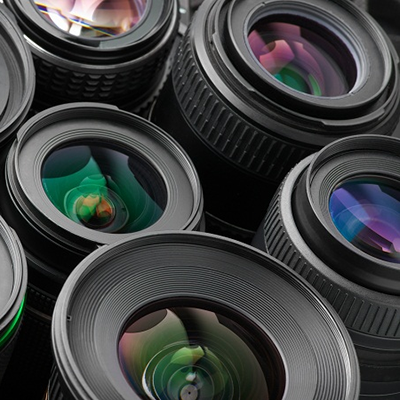



Low distortion wide angle 85° M12 mount lens
10/29/2025
Best Fisheye Lens Types for Landscape
10/30/2025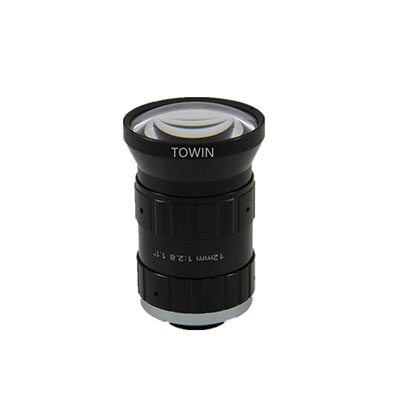
The industrial automation landscape demands precision, reliability, and adaptability. Among the critical components driving this revolution, the 6mm FA Lens stands out as a cornerstone for high-performance imaging systems. Designed for machine vision, robotics, and quality control applications, this lens combines compact design with exceptional optical clarity, enabling deep focus capabilities that redefine automation efficiency.
Why the 6mm FA Lens Matters in Automation
In industrial settings, the ability to capture sharp, distortion-free images across varying distances is non-negotiable. The 6mm FA Lens excels here, offering a fixed focal length that balances versatility and precision. Its deep focus range ensures objects at different depths remain in sharp relief, reducing the need for constant adjustments. This makes it ideal for:
- Robotic guidance systems: Tracking parts on assembly lines with sub-millimeter accuracy.
- Quality inspection: Detecting defects in fast-moving production environments.
- 3D scanning: Creating detailed models for reverse engineering or prototyping.
Compared to zoom lenses, the 6mm FA Lens’s fixed design minimizes mechanical complexity, enhancing durability in harsh conditions like dust, vibrations, or temperature fluctuations.
Key Features of the 6mm FA Lens
- 1. Compact & Lightweight: Its small form factor simplifies integration into space-constrained automation setups.
- 2. High Optical Resolution: Sharp imagery even at the edges of the frame, critical for defect detection.
- 3. Low Distortion: Minimizes geometric errors, ensuring accurate measurements.
- 4. Wide Aperture Compatibility: Works seamlessly with sensors requiring high light throughput.
- 5. Cost-Effective: Offers professional-grade performance without the premium price of specialized lenses.
For example, a car manufacturer using the 6mm FA Lens in its welding robots reported a 30% reduction in calibration time, thanks to the lens’s consistent focus across varying workpiece heights.
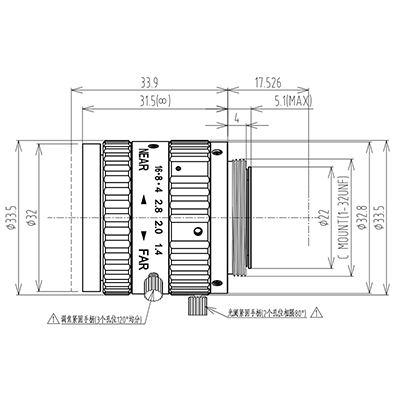
16mm FA Industrial Lens
Applications of the 6mm FA Lens in Industrial Automation
1. Machine Vision Systems
Machine vision relies on cameras to “see” and interpret the environment. The 6mm FA Lens’s deep focus ensures barcodes, text, or surface defects remain legible even when objects vary in size or position. A food packaging plant, for instance, uses it to verify label placement on irregularly shaped bottles, achieving 99.8% accuracy.
2. Robotics & Pick-and-Place Operations
Robots handling small parts (e.g., electronics components) need precise vision to avoid collisions or misplacements. The 6mm FA Lens provides the clarity required for grippers to align with micro-sized connectors, reducing downtime caused by errors.
3. Quality Control & Inspection
In semiconductor manufacturing, even minor defects can render chips unusable. The 6mm FA Lens’s low-distortion optics enable inspectors to spot cracks or contaminants as small as 5 microns, ensuring only flawless products reach the market.
How to Choose the Right 6mm FA Lens
Selecting the optimal 6mm FA Lens involves evaluating:
- Sensor Compatibility: Ensure the lens matches your camera’s sensor size (e.g., 1/2”, 2/3”).
- Mount Type: C-mount lenses are common in industrial settings, but check for compatibility with your camera.
- Lighting Conditions: For low-light environments, choose a lens with a wider aperture (e.g., f/1.4).
- Environmental Resistance: Opt for lenses with IP67 ratings if exposed to dust or moisture.
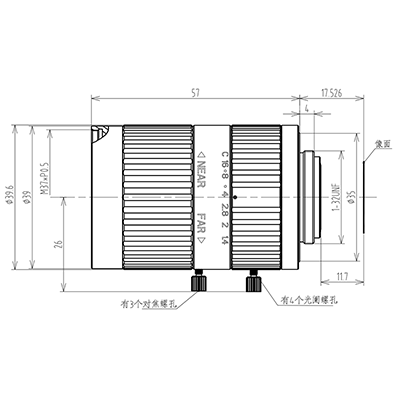
Industrial lens 50mm C-mount FA lens
FAQs
1. What is the difference between an FA lens and a standard lens?
FA (Fixed Aperture) lenses maintain a consistent aperture across all focal lengths, ensuring uniform exposure. Standard lenses may adjust aperture dynamically, which can complicate automation workflows.
2. Can the 6mm FA Lenses be used for outdoor applications?
Yes, but ensure it has weatherproofing (e.g., IP67) to withstand rain, dust, or extreme temperatures.
3. How does focal length affect depth of field in automation?
Shorter focal lengths (like 6mm) provide wider depth of field, keeping more of the scene in focus. This is critical for applications where objects vary in distance from the camera.
4. Is the 6mm FA Lenses suitable for high-speed applications?
Absolutely. Its fixed design reduces moving parts, making it ideal for high-speed conveyor systems or rapid robotic movements.
5. What maintenance does the 6mm FA Lenses require?
Regular cleaning of the lens surface and checks for condensation or debris are recommended. Avoid touching the glass directly; use a blower brush or lens tissue.
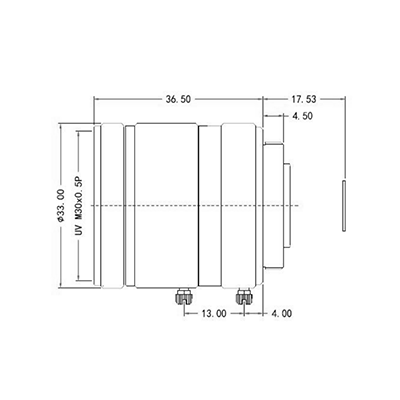
CCTV FA lens 16mm
Conclusion
The 6mm FA Lens is not just a tool—it’s a powerful catalyst for groundbreaking innovation in industrial automation. Its ability to deliver deep focus, durability, and precision positions it as a must-have for businesses aiming to streamline operations, reduce errors, and stay competitive. As automation technologies evolve, the demand for reliable, high-performance optics like the 6mm FA Lens will only grow.