


6mm FA Lens: Deep Focus for Automation
10/30/2025
Top 5 Benefits of Using Low-Distortion Lens
10/30/2025
Landscape photography thrives on capturing vast, immersive scenes that transport viewers into the frame. While traditional wide-angle lenses excel at this, the Best Fisheye Lens Types for Landscape photography offer a unique twist—literally. With their extreme 180-degree field of view and signature distortion, Fisheye lenses create surreal, dynamic images that redefine how we perceive natural and urban environments.
Why Choose a Fisheye Lens for Landscape Photography?
The Best Fisheye Lens Types for Landscape photography are designed to push boundaries. Unlike standard wide-angle lenses, Fisheye lenses produce pronounced barrel distortion, curving straight lines into dramatic arcs. This effect can transform mundane scenes into abstract masterpieces or emphasize the scale of expansive landscapes. For photographers seeking to add a bold, artistic edge to their portfolio, a Fisheye Lens is indispensable.
Key advantages include:
- 1. Ultra-wide perspective: Capture entire scenes in a single frame, from foreground to horizon.
- 2. Creative distortion: Use intentional warping to highlight textures, patterns, or symmetry.
- 3. Compact size: Many Fisheye lenses are lightweight and portable, ideal for travel.
- 4. Low-light performance: Some models feature fast apertures (e.g., f/2.8) for shooting stars or auroras.
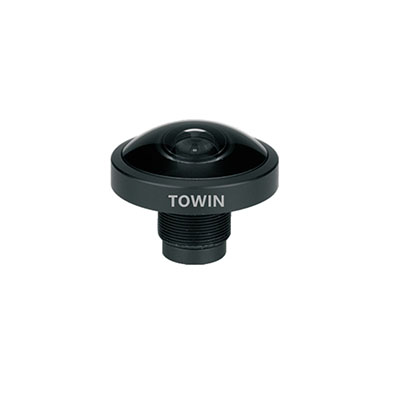
8-Megapixel F2.0 M12 mount Fisheye Lens
Best Fisheye Lens Types for Landscape: Top Picks
Not all Fisheye lenses are created equal. Here are the most popular types, categorized by sensor compatibility and design:
1. Full-Frame Circular Fisheye Lenses
Circular Fisheye lenses project a full 180-degree view onto the sensor, creating a circular image surrounded by black vignetting. These lenses are ideal for photographers who want to emphasize the Fisheye effect’s abstract, almost otherworldly quality.
Best for:
- Artistic landscapes with strong geometric shapes (e.g., rock formations, tree branches).
- Astrophotography, where the curved horizon enhances star trails.
2. Full-Frame Diagonal Fisheye Lenses
Diagonal Fisheye lenses fill the entire frame with a 180-degree view, stretching the image diagonally from corner to corner. This design reduces vignetting and produces a more “natural” ultra-wide composition, making it versatile for landscapes.
Best for:
- Traditional landscape shots where you want to retain more of the scene’s context.
- Architectural photography with exaggerated perspectives.
3. Crop-Sensor Fisheye Lenses
Crop-sensor (APS-C) cameras have a smaller sensor size, which affects the lens’s effective focal length. A Fisheye Lens designed for crop sensors will have a narrower field of view compared to full-frame counterparts but remains a cost-effective option for beginners.
Best for:
- Budget-conscious photographers or those using entry-level DSLRs/mirrorless cameras.
- Shooting tighter compositions where extreme distortion is less desirable.
4. Mirrorless Fisheye Lenses
Mirrorless systems have embraced Fisheye lenses with compact, lightweight designs. These lenses often feature advanced autofocus and weather sealing, making them suitable for outdoor shoots.
Best for:
- Travel and adventure photographers who need portability without sacrificing image quality.
- Videographers looking for unique angles in vlogging or time-lapses.
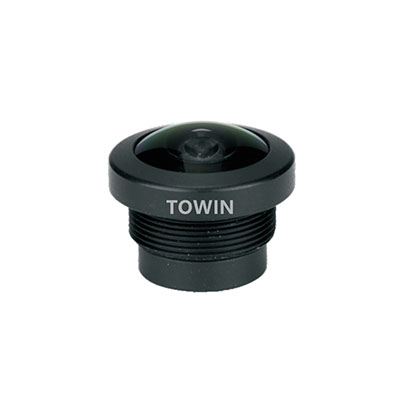
4-Megapixel F2.4 M12 mount fisheye lens
How to Choose the Right Fisheye Lens for Landscape
Selecting the Best Fisheye Lens Types for Landscape depends on your camera system, budget, and creative goals. Consider these factors:
- Sensor size: Full-frame lenses work on crop sensors but may not utilize their full potential. Crop-specific lenses are optimized for smaller sensors.
- Focal length: Shorter focal lengths (e.g., 8mm) offer more distortion, while longer ones (e.g., 15mm) provide a subtler effect.
- Aperture: Faster lenses (f/2.8) perform better in low light but are bulkier and pricier.
- Build quality: Weather-sealed lenses are worth the investment if you shoot in harsh conditions.
Tips for Shooting Landscapes with a Fisheye Lens
To maximize the impact of your Best Fisheye Lens Types for Landscape photography, follow these tips:
- Get close to your subject: Fisheye lenses exaggerate proximity, so experiment with foreground elements like rocks, flowers, or water.
- Use a tripod: The extreme depth of field makes it easy to keep everything sharp, but a tripod ensures stability for long exposures.
- Embrace distortion: Instead of fighting the Fisheye effect, use it creatively to highlight patterns or leading lines.
- Shoot vertically: Turn your camera 90 degrees to capture tall subjects (e.g., trees, cliffs) with dramatic curvature.
- Post-process with care: Correct perspective distortion in software like Lightroom if you want a more conventional look, but preserve the Fisheye effect for artistic shots.
FAQs
1. What is the difference between a circular and diagonal Fisheye Lens?
A circular Fisheye Lens creates a circular image with black borders, while a diagonal Fisheye Lens fills the entire frame with a stretched 180-degree view.
2. Can I use a full-frame Fisheye Lens on a crop-sensor camera?
Yes, but the effective focal length will increase, reducing the field of view. For example, a 16mm full-frame Fisheye becomes roughly 24mm on an APS-C sensor.
3. Are Fisheye lenses good for astrophotography?
Absolutely! Their ultra-wide view and ability to capture star trails make them ideal for shooting the night sky.
4. Do Fisheye lenses work with autofocus?
Most modern Fisheye lenses support autofocus, though manual focus is often preferred for precise control over depth of field.
5. How do I reduce distortion in Fisheye Lens photos?
Use post-processing tools like Lightroom’s “Lens Corrections” panel to minimize distortion, but remember that some distortion is part of the Fisheye aesthetic.

1.1mm Waterproof Fisheye Lens
Final Thoughts
The Best Fisheye Lens Types for Landscape photography aren’t just about capturing scenes—they’re about reimagining them. Whether you’re drawn to the abstract circular compositions of full-frame Fisheye lenses or the versatile diagonal views of crop-sensor options, these lenses offer a fresh perspective on the world.