


F5.6 Sunlight-Resistant Lens
10/14/2025
IR-Compatible FA Lens
10/14/2025
In the realm of modern surveillance and security, technological innovation has paved the way for unprecedented accuracy and reliability. Among these advancements, the Thermal Imaging ITS Lens (LWIR) stands out as a game-changer.
Designed to operate in the Long-Wave Infrared (LWIR) spectrum, this lens provides unparalleled clarity in low-light and no-light environments, making it an essential tool for Intelligent Transportation Systems (ITS), border security, and industrial monitoring.
Understanding the Thermal Imaging ITS Lens (LWIR)
The Thermal Imaging ITS Lens (LWIR) operates by detecting heat emitted from objects, rather than relying on visible light. This capability allows it to function effectively in complete darkness, fog, smoke, and other challenging conditions where traditional cameras fail. The LWIR spectrum, ranging from 8 to 14 micrometers, is particularly suited for thermal imaging due to its ability to capture subtle temperature variations.
Key Parameters
- 1. Focal Length: Ranging from 15mm to 100mm, the focal length determines the field of view and magnification. Shorter focal lengths offer wider views, ideal for monitoring large areas, while longer lengths provide detailed images of distant objects.
- 2. Aperture Size (F-number): A lower F-number (e.g., f/1.0) indicates a larger aperture, allowing more infrared radiation to reach the sensor. This enhances sensitivity and image quality, especially in low-contrast scenarios.
- 3. Resolution: Measured in pixels, higher resolution lenses (e.g., 640×480) deliver sharper images, crucial for identifying small details or distinguishing between closely spaced objects.
- 4. Spectral Range: Operating within the 8-14µm LWIR band ensures optimal thermal sensitivity, minimizing interference from atmospheric elements.
- 5. Material: Constructed from advanced materials like germanium or chalcogenide glass, these lenses offer high transmittance and durability, essential for outdoor applications.
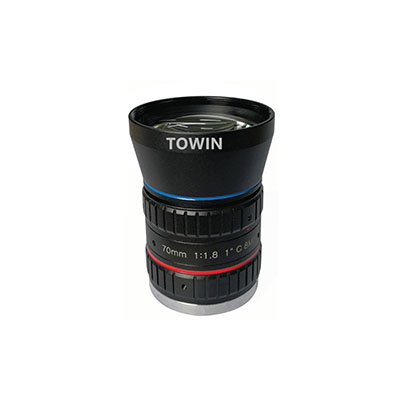
70mm C-mount Telephoto CCTV Lens
Towin’s Thermal Imaging ITS Lens (LWIR): A Cut Above the Rest
Towin, a leader in optical solutions, has engineered a range of Thermal Imaging ITS Lens (LWIR) products tailored to meet diverse needs. Their lenses boast several distinguishing features:
- High Thermal Sensitivity: With NETD (Noise Equivalent Temperature Difference) values as low as <50mK, Towin’s lenses detect minute temperature differences, ensuring superior image contrast.
- Athermal Design: Engineered to maintain focus across varying temperatures, eliminating the need for manual adjustments and ensuring consistent performance.
- Compact & Lightweight: Despite their robust build, Towin’s lenses are designed for easy integration into existing systems without adding excessive weight.
- Customization Options: Recognizing that every application is unique, Towin offers bespoke solutions, adjusting parameters like focal length and aperture to suit specific requirements.
Applications of Thermal Imaging ITS Lens (LWIR)
- Intelligent Transportation Systems (ITS): Enhances traffic monitoring, detecting pedestrians and vehicles in all weather conditions, thus improving road safety.
- Border & Perimeter Security: Provides round-the-clock surveillance, identifying intruders even in complete darkness or adverse weather.
- Industrial Automation: Monitors equipment temperatures, preventing overheating and potential failures, thereby optimizing operational efficiency.
- Wildlife Monitoring: Enables researchers to track animals without disturbing their natural habitats, contributing to conservation efforts.
FAQs
1. What makes LWIR suitable for thermal imaging?
The LWIR spectrum (8-14µm) captures the peak thermal emissions from most objects at room temperature, offering excellent sensitivity and contrast.
2. Can ITS Lens see through walls?
No, thermal imaging cannot penetrate solid objects like walls. It detects surface temperatures, making it ideal for outdoor and open-space surveillance.
3. How does weather affect the performance of ITS Lens?
Unlike visible light cameras, thermal lenses perform exceptionally well in fog, rain, and dust, as these conditions have minimal impact on infrared radiation.
4. Are there any limitations to using ITS Lens?
While highly effective, thermal imaging cannot distinguish colors and may struggle with very hot or cold backgrounds that mask target temperatures.
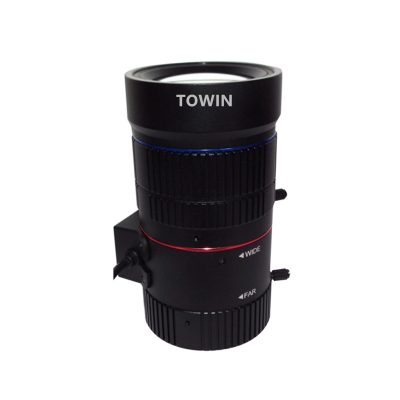
70mm C-mount ITS traffic road CCTV lens
Conclusion
The Thermal Imaging ITS Lens (LWIR) represents a significant leap forward in surveillance technology, offering unmatched reliability and performance in challenging environments. Towin’s commitment to innovation and customization ensures that their lenses not only meet but exceed industry standards, making them the preferred choice for professionals across various sectors.