


Premium CCTV Lens
09/11/2025
Fisheye Lens Time-Lapse
09/11/2025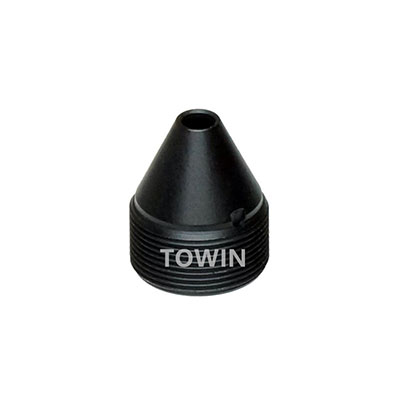
When it comes to covert surveillance, pinhole lenses often spark curiosity—and controversy. These ultra-compact lenses, smaller than a pencil eraser, are designed to hide in plain sight, making them ideal for discreet monitoring. Yet, misconceptions about their performance, legality, and practicality persist. In this guide, Pinhole Lens Myths Debunked, we’ll dismantle common falsehoods and reveal why these tiny tools are indispensable for modern security.
Myth #1: Pinhole Lenses Produce Poor Image Quality
Truth: While older models struggled with low resolution, modern pinhole lenses leverage advanced optics to deliver sharp, high-definition footage. For example, a 2.8mm pinhole lens with an f/2.0 aperture can capture 1080p or even 4K video, depending on the camera sensor. The key lies in their minimalistic design, which reduces internal reflections and distortion.
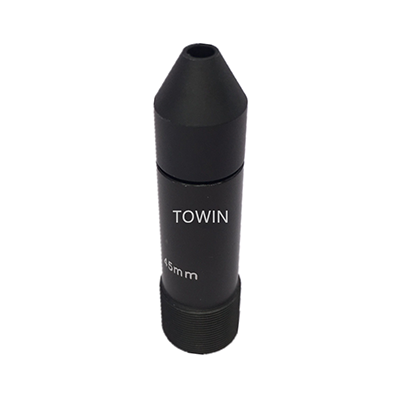
45mm F1.6 high temperature Low-Distortion pinhole lens
Myth #2: Pinhole Lenses Are Illegal
Truth: Legality depends on how and where they’re used, not the lens itself. Pinhole lenses are legal for legitimate security purposes, such as monitoring retail stores, offices, or homes. However, using them to invade privacy (e.g., in bathrooms or dressing rooms) violates laws like the U.S. Video Voyeurism Prevention Act. Always check local regulations and install cameras in public or consented areas only.
Myth #3: They’re Fragile and Short-Lived
Truth: Pinhole lenses are engineered for durability. Constructed from materials like stainless steel or reinforced plastic, they withstand temperatures from -20°C to 60°C and resist dust and moisture (IP67 rating). Many models also feature vandal-resistant designs, making them suitable for high-risk environments like prisons or banks.
Myth #4: Pinhole Lenses Only Work in Bright Light
Truth: While their small aperture limits light intake, modern pinhole lenses compensate with low-light optimization. Features like wide dynamic range (WDR) and infrared (IR) compatibility ensure clear imaging in dimly lit spaces. For instance, a pinhole lens paired with an IR-cut filter can operate in near-total darkness, making it perfect for nighttime surveillance.
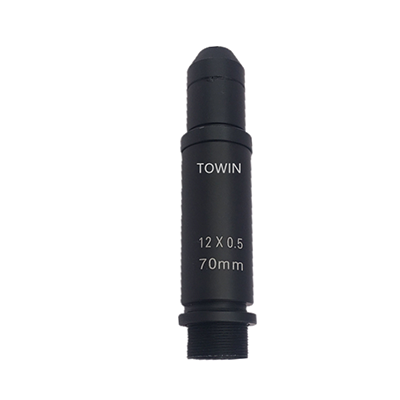
70mm pinhole M12 S-mount CCTV lens
Myth #5: Installation is Overly Complex
Truth: Pinhole lenses are designed for simplicity. Their compact size allows them to fit into tight spaces—behind walls, inside fake smoke detectors, or even within everyday objects like clocks. Most models use standard C/CS mounts, ensuring compatibility with existing CCTV systems. No specialized tools or expertise are required.
Why Pinhole Lenses Matter
In an age where security must balance effectiveness with discretion, pinhole lenses offer a powerful solution. By debunking these myths, we hope to highlight their versatility, reliability, and legal compliance. Whether you’re protecting a business, home, or public space, these tiny lenses provide peace of mind without drawing attention.