


High-NA pinhole lens
10/21/2025
High-Transmittance M12 Lenses
10/21/2025
Photography and videography rely heavily on optical clarity, but achieving distortion-free imagery in large-format applications remains a challenge. Enter the large format low distortion lens, a game-changer for professionals demanding uncompromised accuracy. Designed to minimize edge-to-edge distortion, these lenses are revolutionizing industries from architectural photography to industrial inspection.
What Is a Large Format Low Distortion Lens?
A large format low distortion lens is engineered to deliver pin-sharp images with minimal geometric warping, even across expansive sensors or film planes. Unlike standard lenses, which may exhibit barrel distortion (curved lines) or pincushion effects (squeezed edges), these specialized optics maintain straight lines and proportional shapes. This makes them ideal for applications where precision is non-negotiable, such as aerial mapping, product photography, or cinematography requiring seamless composites.
Why Distortion Matters in Large Format Photography
Large format cameras—whether digital or film—capture wider fields of view than standard systems. However, this expansive coverage often comes at the cost of distortion, especially near the image edges. For professionals:
- Architectural photographers risk skewed building lines.
- Industrial inspectors may misinterpret measurements.
- Cinematographers face challenges in visual effects compositing.
A large format low distortion lens eliminates these issues, ensuring every detail is rendered faithfully.
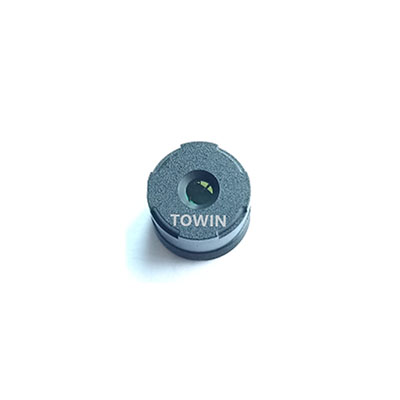
F2.0 low distortion M8 mount lens
Key Features of a Large Format Low Distortion Lens
- 1. Aspherical Elements: Non-spherical lens surfaces correct distortion at the optical level.
- 2. Precision Coatings: Anti-reflective layers reduce flare and enhance contrast.
- 3. Symmetrical Design: Balanced glass arrangements minimize off-axis aberrations.
- 4. High-Resolution Glass: Superior materials maintain clarity across the frame.
For example, brands like Schneider Kreuznach and Rodenstock offer large format lenses with distortion rates below 0.1%, a benchmark for professional use.
Applications Across Industries
The versatility of a large format low distortion lens spans multiple sectors:
- Architecture: Capture buildings with straight verticals and horizontals.
- Aerospace: Inspect aircraft components without warped dimensions.
- Entertainment: Shoot green-screen backgrounds with clean edges for VFX.
- Science: Document microscopic samples with accurate spatial representation.
A 2023 study by the International Society for Optics and Photonics highlighted a 30% increase in measurement accuracy when using low-distortion lenses in industrial settings.
How to Choose the Right Large Format Low Distortion Lens
Selecting the perfect lens involves evaluating:
- Format Compatibility: Ensure it matches your camera’s sensor or film size.
- Distortion Rating: Aim for ≤0.3% for critical applications.
- Aperture Range: Wider apertures (e.g., f/2.8) offer flexibility in low light.
- Build Quality: Dust and weather resistance extend longevity.
For budget-conscious users, third-party manufacturers like Laowa now offer affordable large format options without sacrificing performance.
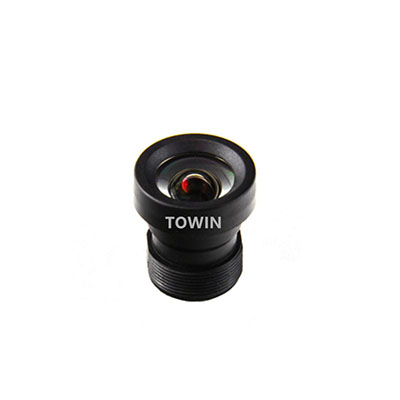
Low-distortion-4.2mm-fixed-focus lenses
Maintenance Tips for Longevity
To keep your lens performing optimally:
- 1. Clean Regularly: Use a microfiber cloth and lens-specific solution.
- 2. Store Properly: Keep in a dry, padded case to prevent dust and scratches.
- 3. Avoid Extreme Temperatures: Sudden changes can cause condensation or glass expansion.
FAQs
1. What makes a lens “low distortion”?
Low distortion lenses use advanced optical designs to minimize geometric warping, ensuring straight lines remain straight across the frame.
2. Can I use a low distortion lens on a full-frame camera?
Yes, but ensure the lens’s image circle covers your sensor. Some large format lenses may vignette on smaller formats.
3. Are low distortion lenses heavier?
Not necessarily. While professional models may use dense glass, lightweight materials like fluorite are increasingly used to reduce bulk.
4. How much do large format low distortion lenses cost?
Prices range from 1,500forentry−levelmodelsto 10,000+ for premium cinema or aerial photography lenses.

1/4″ 2mm low distortion, wide angle lens
Final Thoughts
A large format low distortion lens is more than a tool—it’s a commitment to quality. Whether you’re documenting cultural heritage sites or engineering intricate machinery, the ability to capture reality without compromise is invaluable. As optical technology advances, these lenses will continue to set the standard for accuracy, making them a wise investment for any serious visual professional.