


CCTV Lens for Traffic Monitoring
11/07/2025
Snow-resistant Automotive lens
11/07/2025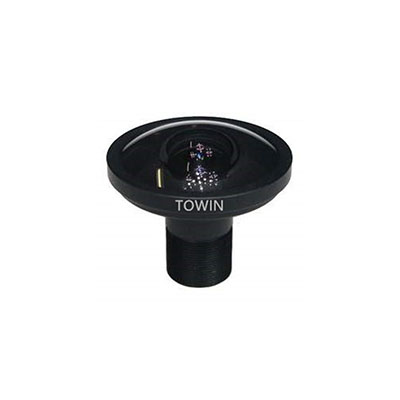
Fisheye lens are a staple for photographers and videographers seeking dramatic, ultra-wide perspectives. But understanding Fisheye Lens Focal Length Explained is crucial to mastering their unique visual effects. Whether you’re capturing sweeping landscapes, immersive action shots, or abstract art, the focal length of your Fisheye Lens dictates the degree of distortion, field of view, and creative possibilities.
What Is a Fisheye Lens Focal Length?
Fisheye Lens Focal Length Explained begins with a simple truth: these lenses are designed to capture an extremely wide angle of view, often exceeding 180 degrees. Unlike standard wide-angle lenses, Fisheye Lenses produce intentional distortion, curving straight lines into dramatic arcs. This effect is achieved through a short focal length, typically ranging from 4mm to 16mm for circular Fisheye Lenses and 8mm to 15mm for full-frame (diagonal) Fisheye Lenses.
The shorter the focal length, the more pronounced the distortion and the wider the field of view. For example, a 4mm Fisheye Lens on a full-frame camera might capture a full 180-degree hemisphere, while a 15mm Fisheye Lens offers a slightly narrower but still highly distorted perspective. Towin’s Fisheye Lenses are engineered to balance distortion control with image clarity, ensuring vibrant, high-contrast results even in challenging lighting conditions.
Key Characteristics of Towin Fisheye Lenses
Towin’s Fisheye Lenses stand out for their precision engineering and versatility. Here’s what sets them apart:
- 1. Ultra-Wide Field of View: Towin’s Fisheye Lenses deliver angles of view up to 220 degrees (circular) or 180 degrees (diagonal), ideal for immersive storytelling.
- 2. Multi-Layer Coating: Anti-reflective coatings minimize flare and ghosting, enhancing color accuracy and contrast.
- 3. Durable Build: Constructed with lightweight aluminum alloys and weather-sealed designs, Towin lenses withstand professional use in harsh environments.
- 4. Manual Focus Control: Precision manual focus rings allow for fine-tuned adjustments, critical for macro or creative distortion effects.
- 5. Compatibility: Towin offers Fisheye Lenses for multiple mounts, including Canon EF, Nikon F, Sony E, and MFT, ensuring seamless integration with your gear.
For instance, the Towin 8mm f/3.5 Fisheye Lens features a circular image circle and a compact design, making it perfect for drone photography or vlogging. Meanwhile, the Towin 15mm f/2.8 Fisheye Lens offers a full-frame diagonal view with minimal vignetting, ideal for architectural shoots.

Fisheye IR Cut Filter S-Mount Lens
How Focal Length Affects Fisheye Lens Performance
Fisheye Lens Focal Length Explained further involves understanding how focal length impacts three core aspects:
- Distortion: Shorter focal lengths (e.g., 4mm) create more extreme barrel distortion, bending lines into circular patterns. Longer focal lengths (e.g., 15mm) reduce distortion for a more natural, albeit still wide, perspective.
- Depth of Field: Fisheye Lenses inherently have deep depth of field, but shorter focal lengths exaggerate this effect, keeping nearly everything in focus from foreground to background.
- Image Circle: Circular Fisheye Lenses project a hemispherical image onto the sensor, while full-frame Fisheye Lenses fill the frame with a distorted rectangle. Towin’s lenses clearly label their image circle type to avoid confusion.
Choosing the Right Towin Fisheye Lens for Your Needs
Selecting a Fisheye Lens depends on your creative goals and camera system. Here’s a quick guide:
- Circular Fisheye (4–8mm): Best for abstract art, 360-degree panoramas, or underwater photography. Try the Towin 4.5mm f/2.8 Circular Fisheye for APS-C cameras.
- Full-Frame Fisheye (8–15mm): Ideal for landscapes, action sports, or vlogging. The Towin 12mm f/4 Fisheye offers a balance of portability and performance.
- Low-Light Performance: Opt for lenses with wider apertures (e.g., f/2.8) like the Towin 15mm f/2.8 Fisheye to shoot in dim environments.
FAQs
1. Can I use a Fisheye Lens for portraits?
Yes! While Fisheye Lenses distort facial features, they can create playful, artistic portraits when used creatively. Position your subject close to the center of the frame to minimize distortion.
2. What’s the difference between a Fisheye Lens and a regular wide-angle lens?
Fisheye Lenses prioritize extreme distortion and ultra-wide angles, while wide-angle lenses (e.g., 24mm) aim for minimal distortion and natural perspectives.
3. Are Fisheye Lenses good for video?
Absolutely! Their unique distortion adds energy to action sequences, music videos, or vlogs. Towin’s lightweight Fisheye Lenses are particularly popular among YouTubers and filmmakers.
4. Do I need a Fisheye Lens if I can correct distortion in post-processing?
While software can reduce distortion, it often compromises image quality. A Fisheye Lens lets you embrace distortion as a creative tool, saving time in editing.
5. Are Towin Fisheye Lenses compatible with mirrorless cameras?
Yes! Towin offers Fisheye Lenses for mirrorless systems like Sony E and MFT, ensuring compatibility with modern cameras.
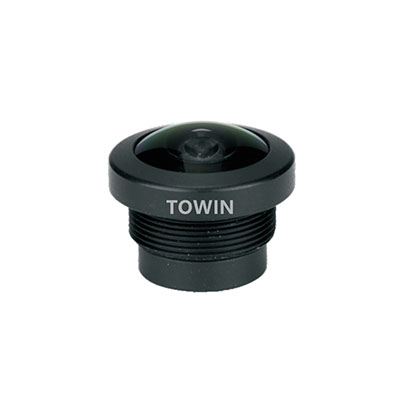
4-Megapixel F2.4 M12 mount fisheye lens
Final Thoughts
Fisheye Lens Focal Length Explained reveals that these lenses are more than just novelty tools—they’re gateways to uncharted creative territories. With Towin’s precision-engineered Fisheye Lenses, you can push the boundaries of perspective, whether you’re shooting starry skies, bustling cityscapes, or surreal self-portraits.