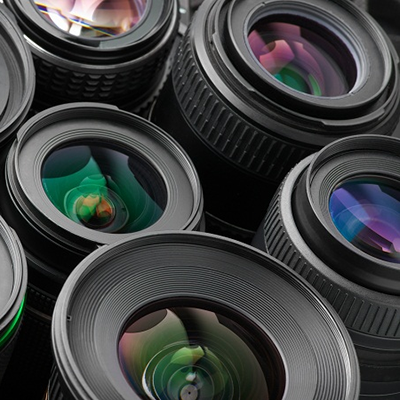



IR-cut CS-Mount lenses for night vision
11/25/2025
Low distortion wide angle 110° M12 mount lens
11/25/2025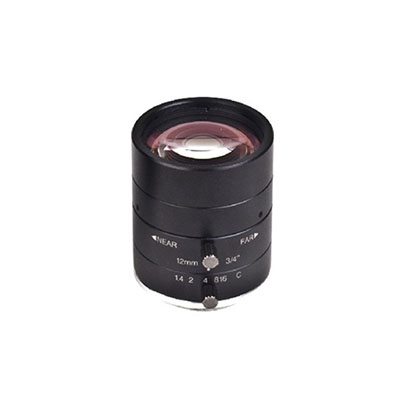
When it comes to precision imaging and optical systems, C-Mount lenses have become an industry standard for various applications. Understanding the different types and standards associated with C-Mount lenses is essential for professionals in the fields of photography, microscopy, machine vision, and industrial imaging.
What Are C-Mount Lenses?
C-Mount lenses are a type of lens mount used primarily in imaging devices like cameras, microscopes, and machine vision systems. These lenses have a thread that measures 1 inch (25.4mm) in diameter with 32 threads per inch (TPI), making them compatible with a wide variety of imaging devices. They excel in versatility, finding widespread application in both industrial and consumer-level imaging equipment.
The Evolution of C-Mount Lenses: A Brief History
The concept of C-Mount lenses dates back to the 1950s when they were first introduced for use in motion picture cameras. Over time, these lenses established themselves as essential tools in industrial and scientific fields, particularly where high-quality imaging was critical. Today, C-Mount lenses are an indispensable part of imaging systems worldwide. Their ability to deliver sharp, high-resolution images has cemented their role in industries ranging from medical imaging to security systems.

40mm C mount IR corrected machine vision lenses
C-Mount Lenses Mount Types and Standards: Different Varieties
C-Mount lenses are not a one-size-fits-all solution. There are several different C-Mount lenses mount types and standards that cater to various needs. Understanding these different types is key to selecting the right lens for your application.
- 1. Standard C-Mount: The most common type, this mount has a thread size of 1 inch (25.4mm) and a flange distance of 17.526mm. It is compatible with a variety of camera sensors and imaging systems, making it the go-to choice for general-purpose imaging.
- 2. CS-Mount: Often used in smaller cameras, the CS-mount has a shorter flange distance of 12.5mm. The shorter flange allows for more compact camera designs. However, due to their shorter flange distance, CS-Mount lenses cannot directly attach to standard C-Mount cameras without an adapter.
- 3. B4-Mount: This is a more specialized mount, commonly found in broadcast video cameras. The B4-Mount features a larger thread size and a larger flange distance, typically designed for professional-grade imaging equipment.
- 4. M42-Mount: While less common, the M42 mount is sometimes used with C-Mount lenses. The M42 thread measures slightly larger at 42mm and commonly appears in vintage cameras and certain film cameras. Adapters are available for using M42 lenses with C-Mount cameras, though the compatibility is not perfect.
- 5. Micro Four Thirds (MFT) Mount: A more modern lens mount, the MFT is designed for mirrorless cameras. MFT cameras can use C-Mount lenses with an appropriate adapter. However, the user may need to adjust the lens to achieve proper focus because of the difference in flange distances.
C-Mount Lenses Mount Types and Standards: Key Features and Specifications
- Thread Size: As mentioned, the standard C-Mount has a 1-inch thread size (25.4mm) with 32 threads per inch. This ensures compatibility with most cameras that use C-Mount lenses.
- Flange Distance: Flange distance refers to the distance from the lens mount to the image sensor. For C-Mount lenses, this is typically 17.526mm for standard C-Mount lenses and 12.5mm for CS-Mount lenses.
- Compatibility: C-Mount lenses can be used with a variety of sensors and cameras, but it’s important to check the flange distance and sensor size before purchasing a lens. Some cameras require an adapter to use C-Mount lenses.
- Image Circle: The image circle refers to the size of the image that the lens projects onto the sensor. Larger image circles are required for cameras with larger sensors. For most C-Mount lenses, the image circle is ideal for sensors that are 2/3 inches or smaller.
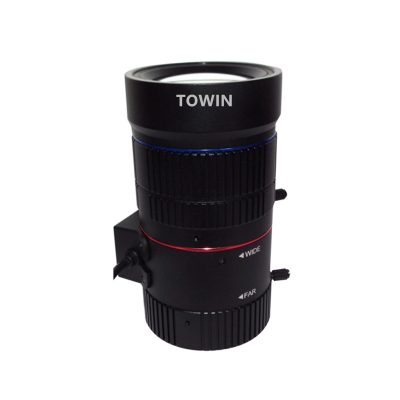
70mm C-mount ITS traffic road CCTV lens
Choosing the Right C-Mount Lens for Your Camera
Choosing the right C-Mount lens involves understanding your camera’s specifications. For instance, the size of the sensor in your camera, the type of application you’re using the camera for, and the required image quality will all influence your choice.
- Sensor Size: If you are using a camera with a larger sensor, you will need a lens with a larger image circle. Standard C-Mount lenses are ideal for sensors up to 2/3 inches, but larger sensors may require specialized lenses.
- Application: Different applications, such as machine vision, microscopy, or surveillance, will have different lens requirements. For example, a microscope may require a lens with a very small focal length, while a surveillance camera may need a lens with a longer focal length.
- Field of View: The field of view (FOV) refers to how much of the scene the lens can capture. For C-Mount lenses, this is determined by the focal length, the image circle, and the sensor size. A wide FOV is ideal for surveillance applications, while a narrower FOV may be better suited for industrial inspections.
FAQs
What is the difference between C-Mount and CS-Mount lenses?
C-Mount lenses have a flange distance of 17.526mm, while CS-Mount lenses have a shorter flange distance of 12.5mm. This difference affects the compatibility of the lenses with different camera types. CS-Mount lenses are generally more compact and used with smaller cameras, while C-Mount lenses are more versatile.
Can C-Mount lenses be used on cameras with a larger sensor size?
Yes, but only if the C-Mount lens has a sufficiently large image circle. For cameras with sensors larger than 2/3 inches, you may need a lens with a larger image circle or use an adapter.
Are C-Mount lenses suitable for high-resolution imaging?
Yes, C-Mount lenses are commonly used in high-resolution imaging applications such as machine vision, microscopy, and industrial cameras. Their ability to deliver sharp, high-quality images makes them ideal for precise imaging.
Can I use a C-Mount lens with a Micro Four Thirds camera?
Yes, with the appropriate adapter. The Micro Four Thirds mount has a smaller flange distance than the C-Mount, but adapters are available to make them compatible.
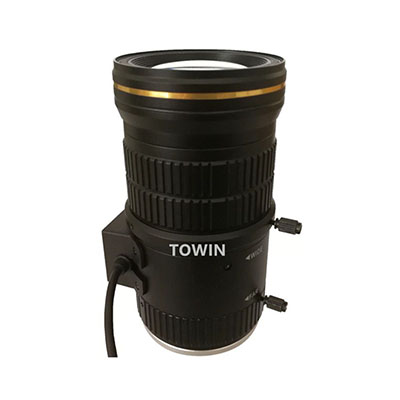
IR-corrected-ITS-traffic-C-mount-CCTV-lens
Conclusion
C-Mount lenses mount types and standards are a vital aspect of selecting the right lens for your imaging needs. Whether you’re involved in professional video production, industrial machine vision, or scientific research, understanding these lenses’ different types, specifications, and standards is essential for achieving optimal image quality.