


Embedded Biometric Camera Lens: Complete Selection Guide for AI Authentication Systems
08/03/2026
What Is Field of View in Machine Vision? Definition, Calculation & Lens Selection
08/11/2026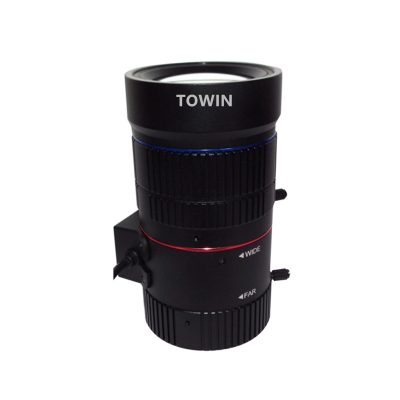
What lenses are used for ANPR systems? ANPR (Automatic Number Plate Recognition) systems typically use high-resolution optical lenses designed for accurate license plate capture, vehicle identification, and reliable recognition in different traffic environments. These lenses are optimized for low distortion, long-distance imaging, infrared performance, and compatibility with modern traffic cameras.
As intelligent transportation systems continue to develop, selecting the right ANPR lens has become critical for highway monitoring, electronic toll collection, speed enforcement, smart parking, and AI-powered traffic management. Smart Traffic Lens Solutions from TOWIN provide specialized optical designs that support demanding outdoor traffic applications.
What Is an ANPR System?
ANPR, also known as Automatic Number Plate Recognition, is an intelligent imaging technology that uses cameras and AI algorithms to automatically identify vehicle license plates. These systems are widely used in traffic management, law enforcement, parking control, and smart city infrastructure.
A typical ANPR imaging system includes several key components:
- Traffic Camera
- ANPR Lens
- Image Sensor
- AI Recognition Algorithm
- Traffic Management Platform
Among these components, the lens plays a critical role because image quality directly affects recognition accuracy. A high-performance ANPR lens must capture clear plate details while handling changing distances, lighting conditions, and outdoor environments.
What Lenses Are Used for ANPR Systems?
ANPR systems usually use specialized traffic camera lenses rather than standard surveillance lenses. The most common lens types include fixed focal length lenses, telephoto lenses, low distortion lenses, and IR corrected lenses.
1. Fixed Focal Length Lenses
Fixed focal length lenses are widely used in ANPR applications because they provide stable optical performance and consistent image quality. They are commonly installed on traffic cameras for highway monitoring, toll collection, and vehicle recognition systems.
Compared with variable-focus lenses, fixed focal length designs offer better optical optimization, higher resolution performance, and improved reliability for continuous outdoor operation.
2. Telephoto Lenses for Long-Distance Recognition
Telephoto lenses are often selected for ANPR applications that require vehicle identification from longer distances. They provide narrow fields of view and allow cameras to capture detailed license plate information on highways, entrances, and speed enforcement systems.
The suitable focal length depends on factors such as camera installation height, recognition distance, lane coverage, and sensor size.
3. Low Distortion Lenses
Low distortion lenses are essential for ANPR systems because license plate recognition requires accurate geometric information. Excessive optical distortion can deform characters and reduce AI recognition accuracy.
A professional Low Distortion Lens solution maintains image accuracy from the center to the edge, ensuring reliable performance for intelligent transportation applications.
4. IR Corrected Lenses for Night-Time ANPR
Many ANPR systems operate continuously during both daytime and nighttime. IR corrected lenses are designed to maintain focus consistency when cameras switch between visible light and infrared illumination.
These lenses support wavelengths such as 850nm and 940nm, enabling clear license plate imaging in low-light environments, tunnels, parking areas, and nighttime traffic monitoring.
Key Optical Requirements for ANPR Lenses
The performance of an ANPR system depends heavily on the optical characteristics of the lens. Several important parameters determine whether a lens can meet traffic recognition requirements.
High Resolution Imaging
ANPR cameras need high-resolution lenses to capture small details such as license plate characters, vehicle markings, and road signs. Higher optical resolution improves recognition accuracy and supports advanced AI vision algorithms.
Modern ANPR lenses typically support multi-megapixel cameras, including 2MP, 5MP, 8MP, and 12MP imaging systems.
Low Distortion Performance
Distortion is one of the most important optical factors in license plate recognition. A low distortion lens keeps the captured image close to the real object, allowing AI algorithms to analyze characters accurately.
For ANPR applications, distortion levels below 1% are commonly preferred, especially for systems requiring accurate measurement and vehicle identification.
Suitable Focal Length Selection
Choosing the correct focal length is essential because ANPR cameras are installed in different environments. A highway camera may require a longer focal length, while a parking entrance camera may use a shorter lens.
| Application Distance | Recommended Focal Length |
|---|---|
| Short Distance Recognition | 4mm – 8mm |
| Medium Distance Monitoring | 8mm – 25mm |
| Long Distance ANPR | 25mm – 50mm |
IR Performance for Day and Night Operation
Outdoor traffic systems must operate reliably under different lighting conditions. IR corrected ANPR lenses help maintain sharp images when infrared lighting is activated at night.
This capability is especially important for:
- Night-time license plate recognition
- Speed enforcement cameras
- Tunnel monitoring
- Parking management systems
Sensor Compatibility
The lens must match the camera sensor size to achieve the expected image quality and field of view. Common ANPR camera sensors include 1/3 inch, 1/2.8 inch, 1/2.5 inch, and larger formats.
For compact traffic cameras, M12 lenses are commonly selected because they provide compact mechanical design, flexible focal lengths, and compatibility with embedded vision systems.
ANPR Lens Parameter Comparison Table
Selecting the correct lens specification is essential for achieving reliable license plate recognition performance. Different traffic environments require different combinations of resolution, focal length, sensor compatibility, and optical performance.
| Parameter | Recommended Specification |
|---|---|
| Resolution | 2MP – 12MP |
| Sensor Size | 1/3″ – 1″ |
| Focal Length | 4mm – 50mm |
| Distortion | <1% |
| Field of View | Customized according to installation distance |
| Mount Type | M12 / CS Mount / C Mount |
| IR Correction | 850nm / 940nm Support |
| MTF Performance | High Resolution Optical Design |
| CRA (Chief Ray Angle) | Sensor Optimized |
| Relative Illumination | >80% |
| Operating Temperature | -40℃ ~ +85℃ |
| Environmental Protection | IP67 / IP69K Available |
How to Choose the Right ANPR Lens?
Choosing the right ANPR lens requires evaluating several system factors, including application type, recognition distance, camera sensor, and lighting conditions. A suitable lens ensures that the camera captures enough detail for accurate license plate recognition.
Step 1: Define the Application
The first step is identifying the traffic scenario. Different applications require different optical characteristics.
- Highway monitoring
- Electronic toll collection
- Speed enforcement
- Parking entrance recognition
- Smart intersection monitoring
Step 2: Determine Recognition Distance
The installation distance between the camera and vehicle directly affects focal length selection. Long-distance applications generally require telephoto lenses, while short-range systems may use wider angle designs.
Step 3: Match the Camera Sensor Size
The lens image circle must match the camera sensor. Incorrect matching may cause reduced image quality, vignetting, or an unsuitable field of view.
Step 4: Select the Appropriate Focal Length
Focal length determines how much detail the camera can capture from a specific distance. Traffic engineers typically select focal lengths based on lane width, camera position, and recognition requirements.
Step 5: Consider Field of View (FOV)
The field of view must cover the target area while maintaining sufficient resolution on the license plate. A wider FOV covers more lanes, while a narrower FOV provides better long-distance detail.
Step 6: Evaluate Night Vision Requirements
For 24-hour ANPR operation, choose lenses with IR correction and strong low-light performance. This ensures stable imaging when infrared illumination is used.
Step 7: Select the Final ANPR Lens Solution
After evaluating application requirements, distance, sensor size, and optical performance, the optimal lens can be selected for the traffic imaging system.
Recommended Lens Types for ANPR Systems
M12 Lenses for Compact ANPR Cameras
M12 lenses are widely used in embedded vision systems because of their compact size and flexible optical design. They are suitable for small traffic cameras, parking systems, and AI vision devices where space efficiency is important.
TOWIN provides customized M12 Lens solutions with different focal lengths, sensor compatibility, and optical performance requirements.
Low Distortion Lenses for AI Recognition
Low distortion lenses are designed for applications where image accuracy is critical. They minimize geometric errors and improve the reliability of AI-based recognition algorithms.
Telephoto Lenses for Long Distance Traffic Monitoring
Telephoto lenses are ideal for highway surveillance, speed detection, and long-distance vehicle recognition. Their narrow viewing angle allows cameras to capture detailed license plate information from farther distances.
ANPR Lens Applications in Smart Traffic Systems
ANPR technology is an important part of modern intelligent transportation systems. High-performance lenses enable accurate imaging for various traffic applications.
Highway Monitoring
Highway ANPR cameras require long-distance imaging capability, high resolution, and stable outdoor performance. Specialized traffic lenses help capture vehicle information at high speeds.
Electronic Toll Collection
Toll systems require accurate vehicle identification under different lighting conditions. ANPR lenses with high resolution and IR capability support reliable license plate recognition at toll stations.
Speed Enforcement Systems
Speed monitoring applications require sharp imaging and accurate object capture. Low distortion and high MTF performance help maintain image quality for vehicle analysis.
Smart Parking Systems
Parking recognition systems usually require compact lenses with reliable performance. M12 lenses are commonly used in space-limited parking cameras.
Smart Intersections
Smart intersections combine multiple vision technologies, including vehicle detection, traffic analysis, and AI recognition. Wide-angle and high-resolution lenses support comprehensive traffic monitoring.
Why Choose TOWIN for ANPR Lens Solutions?
Choosing a reliable optical partner is important for the long-term performance of intelligent transportation systems. TOWIN specializes in the development and manufacturing of industrial optical lenses for traffic imaging, AI vision, and embedded camera applications.
Our ANPR lens solutions are designed to meet demanding transportation requirements, including high-resolution imaging, low distortion performance, infrared correction, and environmental reliability.
- Customized focal length design
- M12, CS mount, and C mount support
- Sensor compatibility optimization
- IR 850nm / 940nm correction
- Mass production capability
- OEM and ODM optical solutions
With experience across industrial imaging applications, TOWIN supports customers developing next-generation traffic cameras, intelligent transportation systems, and AI-powered vision solutions.
For complete application information, visit our Smart Traffic Lens Solutions page.
Frequently Asked Questions
What focal length is best for ANPR cameras?
The best focal length depends on the recognition distance, camera installation position, and required field of view. Short-range parking systems often use shorter focal lengths, while highway and speed enforcement applications usually require longer focal lengths such as 25mm or above.
Are M12 lenses suitable for ANPR systems?
Yes. M12 lenses are suitable for compact ANPR cameras and embedded vision systems. They provide flexible focal length options, compact mechanical designs, and compatibility with many industrial camera platforms.
Learn more about M12 lens applications for embedded imaging systems.
Why is distortion important in license plate recognition?
Low distortion is important because ANPR algorithms rely on accurate image geometry. Excessive distortion may change character shapes and reduce recognition accuracy. Low distortion lenses help maintain reliable plate identification.
Do ANPR lenses work at night?
Yes. Many professional ANPR lenses support infrared correction, allowing cameras to maintain focus and image clarity when using 850nm or 940nm infrared illumination during nighttime operation.
Can TOWIN customize ANPR lenses?
Yes. TOWIN provides OEM and ODM optical customization services, including focal length adjustment, sensor matching, IR optimization, mechanical design, and production support for specific ANPR projects.
Conclusion: Choosing the Right Lens for ANPR Systems
Selecting the correct optical lens is one of the most important factors for achieving accurate automatic number plate recognition. ANPR systems typically require high-resolution lenses with low distortion, suitable focal lengths, IR correction, and reliable outdoor performance.
From compact embedded cameras to highway traffic monitoring systems, the right lens design improves recognition accuracy and system reliability. When evaluating what lenses are used for ANPR systems, engineers should consider application requirements, recognition distance, sensor compatibility, and environmental conditions.
TOWIN provides professional traffic lens solutions for ANPR, ITS cameras, and intelligent transportation systems, helping customers develop reliable imaging systems for smarter and safer transportation.