


How Do I Choose a Low Distortion Lens?
07/11/2026
Why Is Optical Design Important for Industrial Lenses?
07/13/2026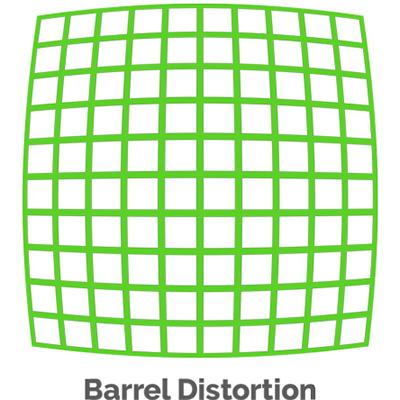
Barrel distortion is one of the most common types of optical distortion found in wide-angle lenses and industrial imaging systems. It occurs when straight lines near the edge of an image appear to curve outward, creating geometric deformation compared with the original scene.
Although distortion may be acceptable in photography, it can significantly affect industrial applications where image accuracy, measurement precision, and object recognition are critical.
Understanding the causes, effects, and correction methods of distortion helps engineers select suitable optical solutions for machine vision systems.
For a complete overview of different distortion types, visit our Optical Distortion Guide .
What Is Barrel Distortion?
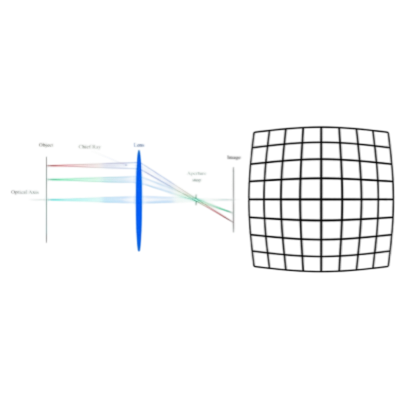
Barrel distortion is a type of optical distortion where image magnification decreases toward the edges of the frame. As a result, straight lines appear to bend outward from the center of the image, similar to the shape of a barrel.
This distortion happens because the lens cannot perfectly project a three-dimensional scene onto a flat image sensor. Light rays passing through different areas of the lens experience different levels of magnification, causing geometric displacement.
A simple example can be seen below:
- Original image: straight lines remain straight.
- Image with barrel distortion: straight lines curve outward near the edges.
In industrial vision systems, even small amounts of distortion can introduce measurement errors and reduce the reliability of automated inspection.
What Causes Barrel Distortion?
Barrel distortion is mainly caused by optical design characteristics, especially in lenses with wide fields of view. Several factors influence distortion performance.
Wide-Angle Lens Design
Wide-angle lenses are designed to capture a larger viewing area. To achieve this, optical elements must bend incoming light more aggressively, which increases the possibility of geometric distortion.
When selecting a lens, engineers should evaluate the relationship between focal length and field of view.
Use our FOV Calculator to estimate the required imaging coverage and select a suitable lens configuration.
Optical Element Structure
The arrangement and shape of optical elements directly influence distortion control. Lens designers use multiple optical elements, aspherical components, and advanced simulation methods to reduce geometric errors.
Learn more about optical engineering principles in our Optical Design Guide .
Lens Projection Characteristics
Different lens designs use different projection methods. Wide-angle systems often experience stronger edge deformation because objects near the edge of the image pass through different optical paths compared with objects near the center.
How Barrel Distortion Changes an Image
The main characteristic of barrel distortion is outward bending of straight lines. The effect becomes more noticeable toward the image edges.
| Image Area | Effect of Barrel Distortion |
|---|---|
| Image Center | Usually maintains better geometric accuracy |
| Middle Area | Minor deformation may appear |
| Image Edge | Lines curve outward and objects may appear stretched |
For applications such as measurement, inspection, and calibration, this geometric deformation can affect system accuracy.
Barrel Distortion vs Other Lens Distortions
Barrel distortion is only one category of optical distortion. Other common distortion types include pincushion distortion and mustache distortion.
| Distortion Type | Image Effect | Common Cause |
|---|---|---|
| Barrel Distortion | Lines curve outward | Wide-angle lens design |
| Pincushion Distortion | Lines curve inward | Telephoto optical design |
| Mustache Distortion | Mixed deformation pattern | Complex optical characteristics |
Explore more distortion concepts in our Optical Distortion Guide .
How Barrel Distortion Affects Machine Vision Applications
In industrial imaging, lens distortion is not only an image quality issue. It directly affects system accuracy and performance.
Machine Vision Inspection
Automated inspection systems rely on accurate image geometry. This distortion may cause incorrect measurements, inaccurate defect detection, and calibration difficulties.
Learn more about: Machine Vision Solutions .
Robotics Vision
Robotic systems require accurate object positioning and depth information. Excessive distortion may reduce recognition accuracy and affect motion control.
Explore: Robotics Vision Solutions .
Smart Security Cameras
Wide-angle security cameras often use lenses with large fields of view. Controlling distortion helps maintain accurate object shapes and improve recognition performance.
Learn more: Smart Security Solutions .
Medical Imaging
Medical imaging applications require reliable image representation. Excessive distortion may influence analysis accuracy and measurement results.
Explore: Medical Imaging Solutions .
How Is Barrel Distortion Measured?
Engineers use several methods to evaluate barrel distortion performance.
| Measurement Method | Description |
|---|---|
| TV Distortion | Measures geometric deviation using standard test patterns |
| Radial Distortion Analysis | Evaluates displacement from ideal projection lines |
| Calibration Testing | Uses reference grids to calculate distortion values |
Distortion measurement is especially important in precision applications where image geometry directly affects inspection results.
How to Reduce or Correct Barrel Distortion
There are two common methods to control this distortion: optical correction and software correction.
Optical Correction
- Uses optimized optical design
- Maintains original image resolution
- Provides better accuracy for industrial applications
- Reduces dependence on calibration algorithms
Software Correction
- Uses image processing algorithms
- Can compensate existing distortion
- Requires additional processing resources
- May affect image quality
| Optical Correction | Software Correction | |
|---|---|---|
| Accuracy | High | Medium |
| Processing Requirement | Low | Higher |
| Image Quality | Maintained | May decrease |
How to Choose a Low Distortion Lens
Selecting the right lens is essential when barrel distortion affects system accuracy. Engineers should evaluate several parameters before choosing a lens.
- Define the application requirements.
- Select the correct sensor size.
- Calculate the required field of view.
- Determine working distance.
- Set acceptable distortion limits.
- Choose the appropriate lens type.
Review our Sensor Guide and Lens Selection Guide for detailed selection methods.
Lens Type Comparison
| Lens Type | Distortion Control | Application |
|---|---|---|
| Standard M12 Lens | Medium | General embedded imaging |
| Low Distortion M12 Lens | High | Compact machine vision systems |
| FA Lens | Very High | Industrial inspection |
| Telecentric Lens | Excellent | Precision measurement |
For applications requiring improved geometric accuracy, explore our Low Distortion Lens solutions.
Frequently Asked Questions
What is barrel distortion?
Barrel distortion is an optical distortion where straight lines appear to curve outward from the center of an image.
What causes barrel distortion?
It is mainly caused by wide-angle lens designs, optical element arrangement, and projection characteristics.
Is barrel distortion common in wide-angle lenses?
Yes. Wide-angle lenses usually have a higher risk of this distortion because they capture larger fields of view.
How does lens distortion affect machine vision?
It can reduce measurement accuracy, affect object recognition, and increase calibration requirements.
Can lens distortion be corrected?
Yes. It can be reduced through optical design improvements or corrected through software calibration.
Which lens has less barrel distortion?
Low distortion lenses, FA lenses, and telecentric lenses usually provide better distortion control.
Conclusion
Understanding barrel distortion helps engineers evaluate optical performance and select suitable lenses for industrial imaging applications.
Although barrel distortion is a natural limitation of many wide-angle optical systems, proper lens selection, sensor matching, and optical design can significantly reduce its impact.
For machine vision systems that require accurate measurement and reliable imaging, choosing a low distortion lens is essential for achieving consistent results.
Need Help Choosing a Low Distortion Lens?
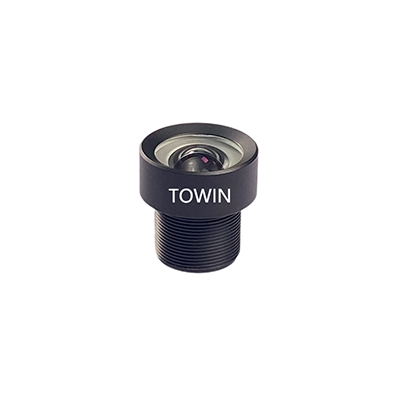
TOWIN provides industrial optical solutions including low distortion lenses, M12 lenses, FA lenses, and customized optical designs.
- Sensor and lens matching
- Distortion evaluation
- FOV analysis
- Custom optical design support