What Lens Is Best for Aerial Mapping Drones?
06/18/2026
What lens is best for machine vision?
06/18/2026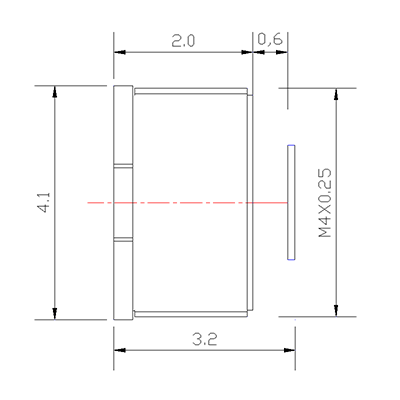
Medical imaging devices play a critical role in modern healthcare, supporting applications such as endoscopy, surgical imaging, microscopy, dental diagnostics, and AI-assisted medical analysis. While image sensors and optical performance often receive the most attention, lens mount selection is equally important because it affects system size, image quality, sensor compatibility, and long-term reliability.
Today, several lens mount standards are used across the medical industry, including miniature mounts (M3.5–M8), M12 mounts, C-Mount lenses, and custom optical interfaces. The most suitable option depends on the specific medical application, available installation space, sensor format, and imaging requirements.
This guide explains the most common lens mounts used in medical imaging systems and how to choose the right solution for your device.
Why Lens Mount Selection Matters in Medical Imaging
Medical imaging equipment often operates in environments where image accuracy, compact design, and reliability are essential. The lens mount determines how the lens integrates with the camera module and can directly influence optical performance.
In modern Medical Imaging Lens Solutions, engineers typically evaluate lens mounts based on:
- Sensor compatibility
- Available installation space
- Image resolution requirements
- Sterilization and durability needs
- Mechanical stability
- Future upgrade flexibility
Common Lens Mount Types Used in Medical Imaging Devices
1. Miniature Lens Mounts (M3.5, M5, M6, M7, M8)
Miniature lens mounts have become increasingly important in modern medical imaging devices, especially as medical equipment continues to become smaller and more portable.
These compact optical mounts are widely used in:
- Medical endoscopes
- Disposable endoscopes
- Capsule cameras
- Catheter imaging systems
- Miniature inspection cameras
Their small size allows optical engineers to integrate high-quality imaging systems into extremely compact medical devices without sacrificing performance.
Advantages include:
- Ultra-compact design
- Lightweight construction
- Ideal for minimally invasive procedures
- Suitable for custom medical optical assemblies
Explore our Small Mount Lenses (M3.5-M8) for miniature medical imaging applications.
2. M12 Lens Mount
The M12 mount, also known as the S-Mount lens standard, is one of the most widely used lens interfaces for compact camera modules.
In medical applications, M12 lenses are commonly found in:
- Portable diagnostic devices
- Dental imaging systems
- Compact medical cameras
- Handheld imaging equipment
Benefits of M12 lenses include:
- Compact size
- Cost-effective integration
- Wide focal length selection
- Compatibility with many modern sensors
Learn more about our M12 Lens Solutions.
3. C-Mount Lens
C-Mount remains one of the most established optical standards in professional imaging systems. Compared with miniature mounts and M12 lenses, C-Mount optics support larger sensors and typically deliver higher image quality.
Common medical applications include:
- Surgical imaging systems
- Medical microscopy
- Laboratory imaging equipment
- Diagnostic imaging systems
Advantages of C-Mount lenses include:
- Excellent image quality
- Large sensor support
- High optical precision
- Wide range of professional optics
However, C-Mount systems generally require more installation space and are less suitable for miniature medical devices.
4. Custom Medical Lens Mounts
Many advanced medical systems use custom optical interfaces rather than standardized mounts.
Custom lens designs are especially common in:
- High-end endoscope systems
- Surgical robotics
- AI-assisted diagnostic equipment
- Specialized biomedical imaging devices
Custom optical assemblies allow engineers to optimize image quality, size, illumination, and mechanical integration for a specific medical application.
Lens Mount Comparison for Medical Imaging Devices
| Lens Mount | Size | Sensor Support | Image Quality | Typical Applications |
|---|---|---|---|---|
| M3.5-M8 | Ultra Compact | Small Sensors | Good | Endoscopes, Capsule Cameras |
| M12 | Compact | Small-Medium Sensors | Good | Dental Cameras, Portable Devices |
| C-Mount | Larger | Medium-Large Sensors | Excellent | Surgical Imaging, Microscopy |
| Custom Mount | Customizable | Any Format | Optimized | Advanced Medical Systems |
Which Lens Mount Is Most Common in Modern Medical Imaging Devices?
The answer depends on the application.
Endoscope Systems
Modern endoscopes increasingly rely on miniature optical mounts such as M3.5, M5, M6, M7, and M8 because these systems must fit into extremely limited spaces.
For related information, see: Medical Endoscope Micro Lenses for Minimally Invasive Surgery.
Portable Diagnostic Devices
Portable imaging equipment commonly uses M8 and M12 lens mounts because they provide a balance between compact size and image quality.
Surgical Imaging Systems
Surgical cameras typically use C-Mount optics because they require larger sensors and high-resolution imaging performance.
Medical Microscopy
Microscopy systems continue to rely heavily on C-Mount lenses due to their optical precision and compatibility with professional imaging sensors.
As medical technology evolves, many medical imaging devices are shifting toward smaller optical assemblies while maintaining increasingly demanding image quality requirements.
How to Choose the Right Lens Mount
Step 1: Determine Sensor Size
Sensor format is one of the most important factors when selecting a lens mount.
Read our Sensor Guide to learn more.
Step 2: Define Field of View Requirements
Field of view affects focal length selection and overall optical design.
Use our FOV Calculator to estimate viewing angles.
Step 3: Evaluate Device Size Constraints
Smaller devices often benefit from miniature mounts or M12 lenses.
Step 4: Consider Resolution Requirements
High-resolution imaging systems generally require higher-performance optics and larger image circles.
Step 5: Work with an Optical Lens Manufacturer
For specialized medical projects, custom optical design often delivers the best results.
Related Medical Imaging Resources
- Medical Imaging Lens Solutions
- Small Mount Lenses (M3.5-M8)
- M12 Lens Solutions
- Medical Endoscope Micro Lenses
- Machine Vision Lenses Used in Medical Imaging
- Lens Selection Guide
- Sensor Guide
- FOV Calculator
Frequently Asked Questions
Q: What lens mount is most commonly used in endoscopes?
A: Miniature mounts such as M3.5, M5, M6, M7, and M8 are commonly used in modern endoscope systems.
Q: Are M12 lenses used in medical imaging?
A: Yes. M12 lenses are widely used in dental cameras, portable diagnostic devices, and compact medical imaging systems.
Q: Why are C-Mount lenses used in surgical imaging?
A: C-Mount lenses support larger sensors and provide high image quality for demanding surgical applications.
Q: Can medical imaging devices use custom lens mounts?
A: Yes. Many advanced medical systems use customized optical assemblies to meet specific design requirements.
Q: How do I choose between a miniature mount and M12?
A: The decision depends on available space, sensor size, and imaging requirements.
Conclusion
The most common lens mounts used in modern medical imaging applications include miniature mounts (M3.5-M8), M12 mounts, C-Mount lenses, and custom optical interfaces. Each solution offers unique advantages depending on the imaging system, sensor format, and device size.
For endoscopes and minimally invasive imaging systems, miniature mounts are increasingly preferred because of their compact size. Portable medical cameras often use M12 lenses, while surgical imaging and microscopy systems continue to rely on C-Mount optics.
Understanding what lens mount is commonly used in medical imaging devices helps engineers and OEM manufacturers select the optimal optical solution for image quality, reliability, and long-term product success.