


How to Calculate FOV for Machine Vision: FOV Calculation
03/16/2026
Low distortion wide angle 4mm M12 mount lens
03/18/2026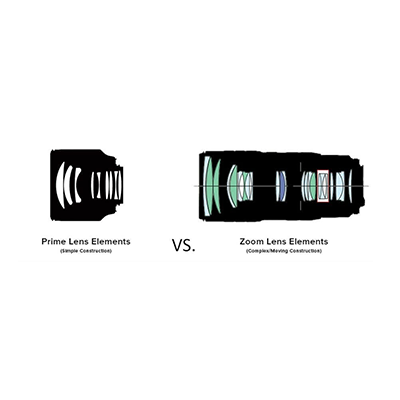
Table of Contents
Key Takeaways
- Fixed focal lenses: Fixed angle of view, simpler structure, sharper image, better low-light performance, lower cost, ideal for fixed scenes.
- Varifocal lenses: Adjustable angle of view, flexible for unknown or changing scenes, supports wide-to-telephoto switching, better for long-distance detail capture.
- Selection logic: Fixed for stable scenes & budget projects; varifocal for flexible monitoring & long-range needs.
- TOWIN offers high-quality fixed & varifocal lenses with IR correction, large apertures, and megapixel resolution for day/night surveillance.
Introduction
For CCTV, IP camera, and machine vision projects, choosing between fixed focal and varifocal lenses directly affects image quality, field of view, installation flexibility, and total cost.
This guide compares core performance, applicable scenarios, and provides TOWIN’s recommended models to help you make the right choice quickly.
Core Differences
What Is a Fixed Focal Length Lens?
- Single, unchangeable focal length
- Fixed horizontal/vertical/diagonal field of view
- Simple optical structure, fewer lenses
- Generally sharper, lower distortion, better light throughput
- Lower price, easier installation & maintenance
What Is a Varifocal Lens?
- Adjustable focal length within a range (e.g., 6–15mm, 10–50mm)
- Field of view changes with focal length
- More complex optical design
- Supports wide overview + telephoto detail
- Higher flexibility, suitable for unknown or changing scenes
Full Comparison: Fixed vs Varifocal Lenses
| Parameter | Fixed Focal Length | Varifocal |
| Focal length | Fixed | Adjustable within range |
| Field of view | Fixed | Variable |
| Image sharpness | Higher, more stable | Good but slightly lower at extremes |
| Low-light performance | Better (larger relative aperture) | Good |
| Distortion | Lower | Slightly higher |
| Size & weight | Smaller, lighter | Larger, heavier |
| Price | Lower | Higher |
| Installation | One-time setup | Needs zoom/focus adjustment |
| Best for | Fixed scenes, mass deployment | Flexible scenes, long-distance monitoring |
Advantages of Fixed Focal Lenses
- Superior image clarity and consistency
- Better low-light sensitivity with large apertures
- Compact size for space-limited installs
- Lower cost for large-scale projects
- Stable performance, less maintenance
Advantages of Varifocal Lenses
- One lens covers multiple viewing angles
- Adaptable to unknown or changing scenes
- Ideal for long-distance detail identification
- Reduces on-site lens replacement
- Perfect for traffic, perimeter, and large-area monitoring
Best Application Scenarios
Choose Fixed Focal Length If
- Scene size and camera position are fixed
- You need wide angle for small spaces (elevators, rooms, shops)
- Budget is limited for mass deployment
- Prioritize sharpness and low-light performance
- Installation requires compact size
Choose Varifocal Lenses If
- Scene size is unknown or may change
- Need both wide overview and long-distance detail
- Monitoring roads, parking lots, warehouses, perimeters
- Want to reduce on-site adjustment time
- Need high flexibility for industrial/machine vision
TOWIN Recommended Fixed Focal Lenses
1. CCL1306MMP
- Sensor: 1/3″
- Focal length: 6mm
- Aperture: F1.2
- Mount: CS
- Iris: Manual
- IR corrected: Yes
- HFOV: 45°
- Features: Low light, day/night surveillance
2. CS02512712F3
- Sensor: 1/2.7″
- Focal length: 2.5mm
- Resolution: 3MP
- Aperture: F1.2
- Mount: CS
- Iris: Fixed
- HFOV: 109°
- Features: Super wide angle, low light sensitive
3. CS05511812F3
- Sensor: 1/1.8″
- Focal length: 5.5mm
- Resolution: 3MP
- Aperture: F1.2
- Mount: CS
- Iris: Fixed
- HFOV: 83°
- Features: IR correct, low distortion
4. CS06012505618
- Sensor: 1/2.5″
- Focal length: 6mm
- Resolution: 3MP
- Aperture: F1.8
- Mount: CS
- Iris: Fixed
- HFOV: 56°
- Features: IR corrected, compact TTL 22.23mm
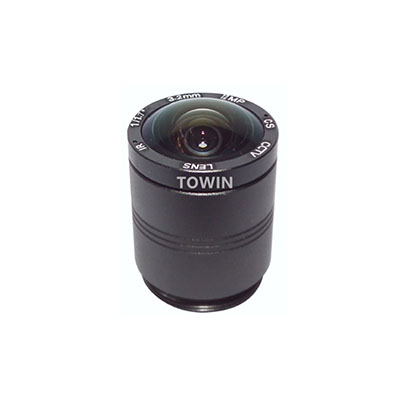
IR-corrected CS-mount Fixed Focal lens
TOWIN Recommended Varifocal Lenses
1. CCTV-lens-C1212011818M3
- Sensor: 1/1.8″
- Focal length: 12–120mm
- Resolution: 3MP
- Aperture: F1.8–16
- Mount: C
- Iris: Manual
- HFOV: 40°~2.9°
- Features: Ultra low distortion (<0.1%)
2. CCTV-lens-C105011820M8
- Sensor: 1/1.8″
- Focal length: 10–50mm
- Resolution: 8MP
- Aperture: F2.0–16
- Mount: C
- Iris: Manual
- HFOV: 39.5°~8°
- Features: Low distortion, high resolution
3. 6-15 CCTV-lens-C06152314A3
- Sensor: 2/3″
- Focal length: 6–15mm
- Resolution: 3MP
- Aperture: F1.4
- Mount: C
- Iris: Auto DC
- HFOV: 77°~34°
- Features: Auto iris, IR corrected, traffic monitoring
4. CCL1184518MMPCR2
- Sensor: 1/1.8″
- Focal length: 4.5–18mm
- Resolution: 3MP
- Aperture: F1.4
- Mount: C
- Iris: Manual
- HFOV: 104°~23°
- Features: IR corrected, low light surveillance
CCTV lens 2.8-12mm manual zoom Lens
TOWIN Fixed vs Varifocal Lens Comparison Table
| Model | Type | Sensor | Focal Length | Aperture | Mount | Resolution | Iris | HFOV | Key Feature |
| CCL1306MMP | Fixed | 1/3″ | 6mm | F1.2 | CS | MP | Manual | 45° | Low light, IR corrected |
| CS02512712F3 | Fixed | 1/2.7″ | 2.5mm | F1.2 | CS | 3MP | Fixed | 109° | Super wide angle |
| CS05511812F3 | Fixed | 1/1.8″ | 5.5mm | F1.2 | CS | 3MP | Fixed | 83° | IR correct, low distortion |
| CS06012505618 | Fixed | 1/2.5″ | 6mm | F1.8 | CS | 3MP | Fixed | 56° | Compact, IR corrected |
| C1212011818M3 | Varifocal | 1/1.8″ | 12–120mm | F1.8–16 | C | 3MP | Manual | 40°~2.9° | Ultra low distortion |
| C105011820M8 | Varifocal | 1/1.8″ | 10–50mm | F2.0–16 | C | 8MP | Manual | 39.5°~8° | 8MP high resolution |
| C06152314A3 | Varifocal | 2/3″ | 6–15mm | F1.4 | C | 3MP | Auto | 77°~34° | Auto iris, traffic |
| CCL1184518MMPCR2 | Varifocal | 1/1.8″ | 4.5–18mm | F1.4 | C | 3MP | Manual | 104°~23° | F1.4 low light |
Quick Selection Flowchart
- 1. Is your scene fixed or changing?
- Fixed → Go to 2
- Changing → Choose Varifocal
- 2. Do you need wide angle or standard view?
- Wide → CS02512712F3 (2.5mm)
- Standard → CCL1306MMP / CS06012505618
- 3. Sensor size?
- 1/3″ → CCL1306MMP
- 1/2.7″ → CS02512712F3
- 1/2.5″ → CS06012505618
- 1/1.8″ → CS05511812F3 (fixed) / C105011820M8 / CCL1184518MMPCR2 (varifocal)
- 2/3″ → C06152314A3
- 4. Low light priority?
- Yes → F1.2/F1.4 models
- No → Standard aperture
- 5. Budget?
- Tight → Fixed focal
- Flexible → Varifocal
FAQs
Q1: Are varifocal lenses worse in low light?
A: Not necessarily. TOWIN varifocals use F1.4/F1.8 for strong low-light performance, close to fixed lenses.
Q2: Can I use C-mount lenses on CS-mount cameras?
A: Usually requires a 5mm adapter ring. TOWIN provides clear mount compatibility.
Q3: Which is more durable?
A: Both are industrial-grade. Fixed has fewer moving parts, so slightly higher stability.
Q4: Do I need IR correction?
A: For day/night surveillance, yes. TOWIN IR-corrected lenses maintain focus across visible and IR spectra.
Q5: How to choose focal length?
- – Short (2.5–6mm): Wide view for small areas
- – Medium (6–15mm): Balanced view
- – Long (12–120mm): Long distance detail
Conclusion
- – Fixed focal length: Best for fixed scenes, cost efficiency, sharpness, and low light.
- – Varifocal: Best for flexibility, long-distance monitoring, and unknown environments.
TOWIN provides professional fixed and varifocal lenses with high resolution, large apertures, IR correction, and reliable quality for global surveillance and machine vision projects.