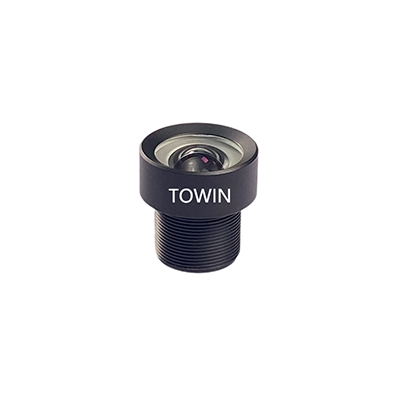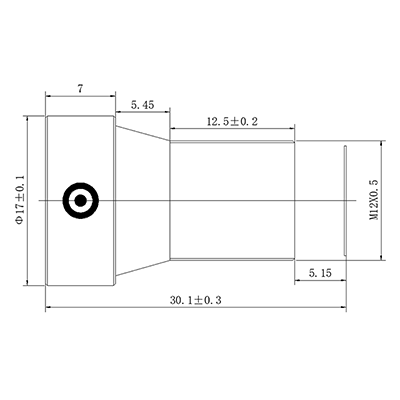



6mm 3-Megapixel M12 CCTV lens
12/18/2025
1/2.5″ 7.6mm M12 Low distortion lens
12/19/2025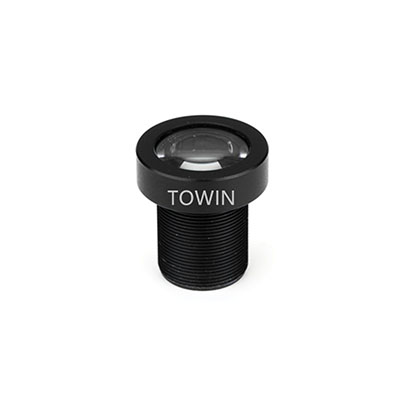
Table of Contents
- Introduction: The Charm and Value of Low-Distortion Lenses
- What is a Low-Distortion Lens?
- Working Principle of Low-Distortion Lenses
- Technical Background of Low-Distortion Lenses
- Six Key Features of Low-Distortion Lenses
- Low Distortion Lens Specifications Analysis
- Who Should Buy Low-Distortion Lenses?
- FAQs
- Conclusion
Introduction: The Charm and Value of Low-Distortion Lenses
A Low-distortion lens is not just a traditional lens that simply records images; it’s a visual art tool integrating innovative design and cutting-edge technology. Inspired by the pursuit of visual realism and a deep understanding of multi-scenario applications, low-distortion lenses utilize optimized combinations of multiple aspherical lenses, ultra-low dispersion glass, and nanoscale optical coating processes to provide a distortion-free, high-fidelity, and ultra-clear visual experience across all scenarios.
Combining advanced optical coating and precision manufacturing technologies, low-distortion lenses are among the few precision optical devices on the market that can be both a powerful assistant in professional image acquisition and truly achieve high-precision, zero-error imaging. It’s not just a lens; it’s a key driving force propelling optical technology to new heights, providing solid and reliable visual support for fields with stringent image quality requirements, such as scientific research and industrial inspection.
If you think a lens is merely a simple optical component, a low-distortion lens will definitely change your perception of what it means to “integrate cutting-edge technology to achieve a precision paradigm of ultimate imaging.”
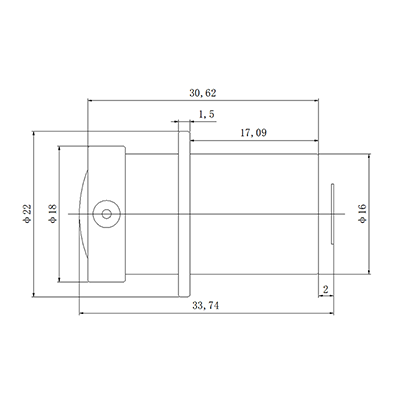
Low Distortion IP6K5 Waterproof Automotive Lens
What is a Low-Distortion Lens?
A low-distortion lens is a precision optical device designed to minimize image distortion and maximize the reproduction of realistic scenes. Unlike traditional lenses that focus on basic image recording, it achieves a triple advantage through core technology optimization: distortion-free shape, high color fidelity, and high detail clarity. Its core value lies in breaking through the performance limitations of traditional lenses in professional scenarios. It can meet the stringent requirements for realism in professional image creation, and also adapt to the quantitative standards of imaging accuracy in fields such as industrial inspection and scientific research. It is a key optical carrier connecting “visual presentation” and “precise data.”
Working Principle of Low-Distortion Lenses
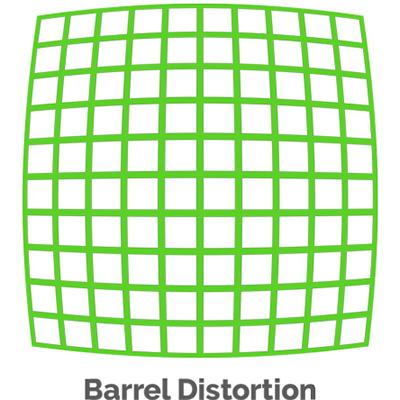
- 1. Distortion Correction Principle: Employing a multi-group aspherical lens design, and through precise calculation of the curvature of special surfaces, it corrects the “barrel distortion” and “pincushion distortion” caused by traditional spherical lenses. When light passes through the aspherical lens, the refraction paths of edge rays and center rays are precisely calibrated, ensuring that straight lines in the image remain straight and the proportions of objects are completely consistent with the real scene, thus avoiding shape distortion at its source.
- 2. Color Reproduction Principle: The core material uses ultra-low dispersion (ED) glass. Utilizing its consistent refractive index for different wavelengths of light (red, green, and blue), it eliminates the “edge chromatic aberration” and “color shift” problems caused by chromatic aberration in traditional lenses. This ensures that the colors in all areas of the image are identical to the real scene, making it particularly suitable for scientific research and industrial scenarios requiring quantitative color analysis.
- 3. Principle of Clarity and Stability: Utilizing nanoscale optical coating technology, light reflection and scattering losses are reduced, improving light transmittance while isolating ambient light interference. Combined with micron-level precision manufacturing and assembly technology, the lens group’s positioning accuracy is ensured, achieving uniform resolution from the center to the edge of the image, avoiding edge blurring and detail loss, ultimately outputting a high-precision imaging effect with “full-frame, no blind spots.”
Technical Background of Low-Distortion Lenses
- 1. Demand Side: Industry 4.0, professional imaging, scientific research and testing, and other fields have placed quantitative demands on imaging accuracy and realism. Traditional lenses’ distortion and chromatic aberration problems are difficult to meet, forcing technological upgrades.
- 2. Technology Side: Mature core technologies such as aspherical lens design, ultra-low dispersion glass materials, and nanoscale coating, combined with precision manufacturing and AI optimization algorithms, have enabled the transition from design to mass production.
- 3. Application Side: From early niche scenarios such as aerial surveying and high-end medical applications, it has gradually expanded to diverse fields such as industrial inspection, consumer electronics, and AR/VR, becoming a standard configuration for professional scenarios.
Six Key Features of Low-Distortion Lenses
| Serial Number | Core Feature | Technical Support | Practical Application Value |
| 1 | Distortion-Free Imaging | Collaborative correction with multiple aspherical lens groups | Restores the true proportions of objects, avoids barrel/pincushion distortion, and is suitable for architectural photography and industrial dimension measurement |
| 2 | High Color Fidelity | Ultra-low dispersion (ED) glass material | Eliminates chromatic aberration, accurately restores scene colors, and meets the needs of professional image creation and scientific research data collection |
| 3 | High Light Transmittance & Anti-Interference | Nano-level anti-reflective coating technology | Improves light transmittance (≥98%), resists reflection and stray light, and ensures pure image quality in low/complex light environments |
| 4 | Sub-Pixel Level Precision | Micron-level precision manufacturing and assembly | Imaging error ≤ 0.1%, supporting scenarios with quantitative precision requirements such as industrial measurement and medical imaging |
| 5 | Full-Scenario Compatibility | Multi-interface/full-frame adaptive design | Compatible with cameras, industrial cameras, UAVs and other equipment, covering professional creation, automated inspection, and aerial surveying and mapping |
| 6 | Harsh Environment Resistance | Dustproof and waterproof (IP67) + temperature change resistant design | Adapts to working temperatures from -40℃ to 85℃, withstands extreme conditions such as humidity and vibration, and ensures long-term stable operation |
Function Overview (Core Advantages at a Glance)
Through a triple upgrade of “optical design + materials technology + structural optimization,” low-distortion lenses achieve core competitiveness in “distortion-free, high-fidelity, high-precision, strong adaptability, and environmental adaptability.” They not only solve the performance shortcomings of traditional lenses in professional scenarios but also meet the diverse needs of multiple fields such as image creation, industrial inspection, and scientific research and exploration, making them a key component for improving the visual output quality and data reliability in professional fields.
Low Distortion Lens Specifications Analysis
1. Distortion Rate
- Definition: The percentage of geometric deviation between the image and the real scene. It is primarily divided into barrel distortion and pincushion distortion. Low distortion lenses rely on “native optical correction” (not algorithmic correction).
- Key Indicators: Industrial Grade Standard: ≤0.2% (e.g., Zoomlion TM5528MP5 lens); High-Precision Grade: ≤0.1% (e.g., Long Walkway FS1605A lens); Top-Tier Grade: ≤0.04% (e.g., ZLKC FM-MP5 series lenses, meeting sub-pixel level measurement requirements).
- Technical Significance: Directly affects the accuracy of dimensional measurement and positioning detection. 0.04% distortion corresponds to a pixel offset of <0.0004mm per millimeter of imaging height.
- Application Compatibility: AOI inspection and 3D reconstruction: ≤0.1%; Architectural photography/general industrial inspection: ≤0.2%.
2. Image Sensor Size
- Definition: The effective area of the image sensor that the lens can cover, determining the field of view and edge imaging quality.
- Mainstream Specifications: 1/3″, 1/2″, 2/3″, 1/1.8″, 1.2″, 4/3″ (e.g., the VS-LLD series supports a large 4/3″ sensor size)
- Technical Significance: Large sensor size lenses require a larger image circle to avoid edge brightness attenuation (e.g., a 1.2-inch sensor size lens achieves 92%±1.5% edge brightness uniformity).
- Compatibility Principle: Lens sensor size ≥ sensor sensor size; otherwise, “black corners” or edge blurring will occur (e.g., a 1.2-inch lens is compatible with a 25MP Sony IMX540 sensor).
3. Focal Length
- Definition: The distance from the center of the lens to the focal point, determining the field of view and magnification.
- Common Industrial Range: 10mm-55mm (e.g., VS-LLD10/12.5/55) Series, Zoomlion 55mm lens)
- Related Parameters: Focal length is inversely proportional to field of view (e.g., 25mm focal length corresponds to a 1/1.2″ sensor field of view ≈ 72mm × 54mm)
- Application Adaptation: Short focal length (10-16mm) for close-range detection, medium focal length (25-55mm) for high-precision measurement
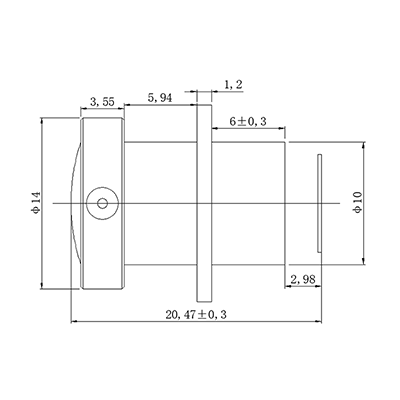
6mm Low Distortion Industrial Lens
4. Resolution
- Definition: The lens’s ability to reproduce details, measured in line pairs per millimeter (lp/mm)
- Key Indicators: Industrial grade: ≥100lp/mm; High resolution grade: ≥200lp/mm (e.g., Zoomlion TM5528MP5 lens)
- Auxiliary Evaluation: MTF curve (modulation transfer function), edge MTF ≥ 0.35@100lp/mm (F2.4) is an excellent standard (e.g., ZLKC FM-MP5) Lens)
- Technical significance: 200 lp/mm allows for clear differentiation of minute defects (such as 0201 resistance solder bridging).
5. Optical Structure and Special Technologies
- Aspherical Lens Configuration: Reduces distortion and aberrations (e.g., ZLKC uses a four-group, seven-element structure, including high-precision aspherical glass molded elements)
- Floating System Configuration: Independent focusing lens group, reducing macro imaging aberrations (VS-LLD series exclusive technology)
- Ultra-low Dispersion Glass Configuration: Eliminates chromatic aberration (e.g., application of K9+SF2 hybrid material)
- Coating Process: Nanoscale anti-reflective coating (increases light transmittance ≥98%), broadband anti-reflective coating (enhances anti-interference capability)
6. Working Distance (Minimum Object Distance, MOD)
- Definition: The minimum sharp focusing distance from the lens to the subject.
- Common Range: 0.1m-∞ (e.g., FS1605A MOD=0.1m, Zoomlion TM5528MP5 MOD=0.12m)
- Special Design: Macro lenses support 0.05x-0.3x Optical Magnification (e.g., VS-LLD series)
- Application Compatibility: For close-range inspection, select MOD≤0.15m; for long-range monitoring, select MOD≥0.5m.
7. F-Number
- Definition: The aperture size that controls the amount of light entering the camera, affecting depth of field and low-light imaging.
- Common Industrial Range: F2.0-F2.8 (e.g., VS-LLD15/20 series F2.0, long-walkway FS1605A F2.8)
- Technical Significance: Smaller apertures (larger F-numbers) increase depth of field, suitable for static inspection; larger apertures (F2.0-F2.4) are suitable for low-light environments.
8. Environmental Adaptability Specifications
- Operating Temperature: Standard Grade: -20℃~60℃ (e.g., Zoomlion TM5528MP5); Wide Temperature Grade: -40℃~85℃ (suitable for extreme industrial environments)
- Protection Rating: IP67 Dust and water resistant (some industrial-grade lenses)
- Mechanical characteristics: Compact design (e.g., the Longwalk FS1605A, dimensions φ14*13.784mm, weight 3.7g), shockproof design
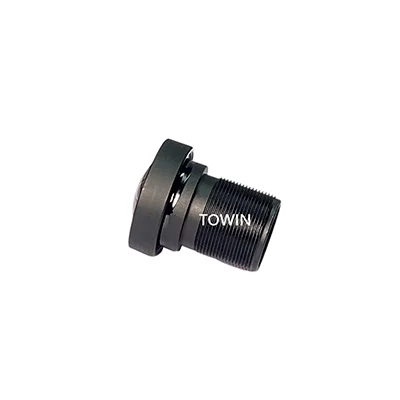
Low distortion lens 12-Megapixel M12 F2.2 CCTV lens
9. Mount Type
- M12 mount (small lenses, such as the Longwalk FS1605A M12×P0.5)
- C-Mount (commonly used in industrial applications, such as Zoomlion TM5528MP5, ZLKC FM-MP5 series)
Compatible devices: Industrial cameras, drones, action cameras, surveillance equipment (interface protocol matching required)
10. Filter Thread
- Definition: The thread specification at the front of the lens for mounting filters (e.g., Zoomlion TM5528MP5 is…) M43x0.75mm)
- Application Value: Compatible with polarizing filters and neutral density filters, enhancing imaging effects in specific scenarios.
Specification Selection Decision Matrix
| Application Scenarios | Distortion Rate Requirement | Image Sensor Size | Focal Length Range | Resolution Requirement | Operating Temperature |
| AOI Inspection | ≤0.1% | ≥1.2″ | 25-55mm | ≥150lp/mm | -20℃~60℃ |
| Architectural Photography | ≤0.2% | ≥1/1.8″ | 16-25mm | ≥100lp/mm | 0℃~40℃ |
| Macro Measurement | ≤0.1% | ≥2/3″ | 10-18mm | ≥200lp/mm | -20℃~60℃ |
| Extreme Environment Detection | ≤0.2% | ≥1/2″ | 16-35mm | ≥100lp/mm | -40℃~85℃ |
| 3D Reconstruction | ≤0.05% | ≥4/3″ | 25-50mm | ≥150lp/mm | -20℃~60℃ |
Who Should Buy Low-Distortion Lenses?
From the perspective of matching core needs, we have compiled a list of 8 target groups for low-distortion lenses. Let’s see which group you belong to:
| Target Audience | Core Needs/Pain Points | Product Advantages | Typical Scenarios |
| Industrial Inspection Engineers | 1. Sub-pixel dimensional measurement accuracy | 1. Distortion ≤0.1%, imaging error <0.0004mm | AOI inspection, SMT defect identification, component dimension verification |
| 2. Production line stability (temperature/vibration) | 2. IP67 + wide temp (-40℃~85℃) | ||
| 3. Compatibility with industrial equipment | 3. Multi-interface (C-Mount/M12) | ||
| Scientific Research Experimenters | 1. Unbiased data visualization (microscopic imaging) | 1. Ultra-low dispersion + nano-coating | Biomedical imaging, material microstructure observation, experiment data collection |
| 2. Long-term stable imaging repeatability | 2. Micron-level precision & consistency | ||
| 3. Compatibility with scientific instruments | 3. Multi-sensor size adaptation | ||
| UAV Surveying Practitioners | 1. Large-area distortion-free imaging | 1. Full-frame coverage + edge clarity | Urban mapping, farmland remote sensing, disaster site investigation |
| 2. Strong light/complex weather resistance | 2. Light transmittance ≥98% + anti-stray light | ||
| 3. Lightweight for UAV payloads | 3. Compact (≤100g) | ||
| Medical Imaging Technicians | 1. Distortion-free diagnostic imaging (endoscopes/microscopes) | 1. Distortion ≤0.05% | Endoscopic exams, pathological observation, medical equipment supporting imaging |
| 2. High-resolution medical equipment compatibility | 2. Resolution ≥200lp/mm | ||
| 3. Sterile/stable operation compliance | 3. Dustproof/waterproof/corrosion-resistant | ||
| AR/VR Content Creators | 1. Dizziness-free visual experience (eye strain reduction) | 1. Low distortion + ≥60fps adaptation | VR architectural roaming, AR industrial training, virtual exhibition creation |
| 2. Accurate real-virtual integration | 2. High color/detail restoration | ||
| 3. Adaptation to high-refresh VR devices | 3. Lightweight for head-mounted devices |
FAQs
1. What is a low-distortion lens?
A low-distortion lens is a specially designed optical device designed to minimize distortion in an image. These lenses use high-quality optical materials and precise manufacturing processes to ensure that the captured image is as close to the real scene as possible.
2. What is the difference between a low-distortion lens and a regular lens?
Low-distortion lens typically use more advanced optical designs and materials, effectively reducing barrel or pincushion distortion, while regular lenses may produce significant image distortion at certain focal lengths. Furthermore, low-distortion lens generally perform better in color reproduction and sharpness.
3. What application scenarios are suitable for low-distortion lens?
These lenses are widely used in professional photography, filmmaking, virtual reality, architectural photography, scientific research, and industrial inspection—fields requiring high image quality. They are particularly suitable for situations requiring accurate reproduction of details.
4. Are special photography skills required to use low-distortion lens?
While low-distortion lens are designed to reduce distortion, users still need to master basic photography skills such as composition, focus, and exposure. Understanding the lens’s characteristics can help users better leverage its advantages.
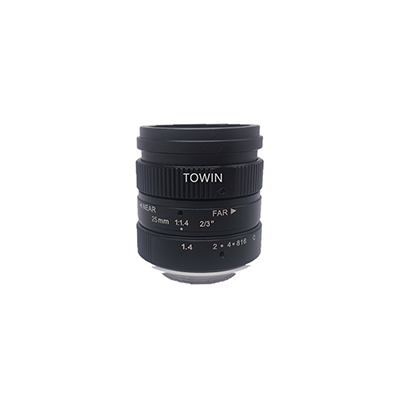
25mm Low Distortion Machine Vision Lens
Conclusion
Low-distortion lenses combine the precision of professional imaging, the flexibility of multi-scene adaptation, and the stability of long-term operation. They are not just small lenses, but solutions covering the entire chain of professional vision needs, from precise measurement and accurate reproduction to interference-resistant operation. In the future, low-distortion lenses will develop towards higher precision, lighter weight, and wider compatibility, continuously empowering various professional fields and becoming the core optical carrier connecting visual presentation and precise data.