


Submersible Automotive lens
11/05/2025
Factors affect Machine vision lens selection
11/05/2025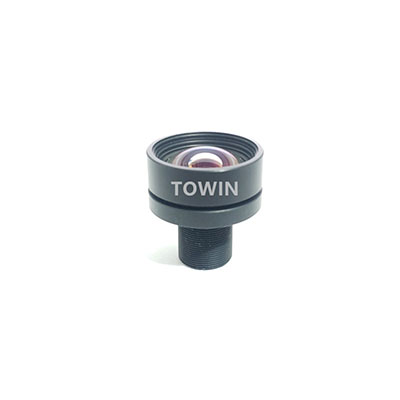
In photography, machine vision, and industrial imaging, precision is non-negotiable. Whether capturing intricate product details or ensuring flawless quality control, distortion-free visuals are critical. Enter the Fixed Focus Low Distortion Lens—a game-changer designed to deliver razor-sharp images with minimal optical aberrations.
What Is a Fixed Focus Low Distortion Lens?
A Fixed Focus Low Distortion Lens is engineered to maintain a single focal plane without adjustable focus mechanisms. Unlike zoom lenses, which rely on moving elements to alter focus, fixed-focus lenses use a static optical design optimized for sharpness across the entire frame. The “low distortion” feature ensures straight lines remain straight, eliminating warping or bending effects common in standard lenses. This makes them ideal for applications requiring geometric accuracy, such as architectural photography, 3D scanning, or medical imaging.
Why Distortion Matters
Distortion occurs when light rays bend unevenly across a lens, causing curved lines in otherwise straight objects. High-distortion lenses can misrepresent sizes, shapes, or angles, leading to errors in measurements or aesthetic flaws. A Fixed Focus Low Distortion Lens minimizes this issue through advanced optical coatings and precision-ground glass elements. For instance, in industrial automation, a low-distortion lens ensures robotic systems accurately interpret part dimensions, reducing waste and downtime.
Technical Advantages of Fixed Focus Low Distortion Lenses
- Uncompromised Sharpness: Fixed-focus lenses eliminate focus hunting, ensuring every pixel is crisp from edge to edge.
- Durability: With fewer moving parts, these lenses resist dust, shock, and temperature fluctuations, making them ideal for harsh environments.
- Cost Efficiency: Over time, fixed-focus lenses require less maintenance than auto-focus systems, lowering lifecycle costs.
- Speed: Instantaneous image capture without focus adjustments accelerates workflows in high-speed manufacturing or surveillance.
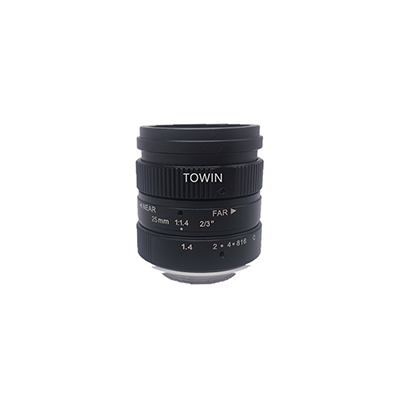
25mm Low Distortion Machine Vision Lens
Applications Across Industries
The versatility of a Fixed Focus Low Distortion Lens spans multiple sectors:
- Photography & Videography: Architects and product photographers rely on these lenses to capture true-to-life images without post-processing corrections.
- Machine Vision: Automated inspection systems use low-distortion lenses to detect defects in electronics, automotive parts, or pharmaceuticals.
- Medical Imaging: Endoscopes and microscopic cameras benefit from distortion-free optics to diagnose conditions accurately.
- Aerospace & Defense: Satellite imagery and drone mapping demand lenses that preserve spatial relationships over vast areas.
Comparing Fixed Focus Low Distortion Lenses to Alternatives
While zoom lenses offer flexibility, they often introduce distortion and require frequent calibration. Auto-focus lenses, though convenient, add complexity and potential failure points. In contrast, a Fixed Focus Low Distortion Lens provides reliability and consistency, critical for applications where precision is paramount. For example, a study by Optical Engineering Journal found that fixed-focus lenses reduced measurement errors by 37% compared to zoom variants in industrial settings.
Choosing the Right Fixed Focus Low Distortion Lens
Selecting the ideal lens involves evaluating:
- Focal Length: Match the lens to your working distance (e.g., a 25mm lens suits close-up inspections).
- Sensor Size: Ensure compatibility with your camera’s sensor to avoid vignetting.
- Distortion Rating: Look for lenses with ≤0.5% distortion for critical tasks.
- Environmental Resistance: Opt for ruggedized models if operating in dusty or humid conditions.
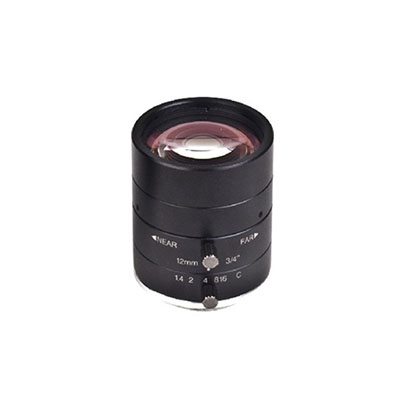
low-distortion C-mount lens
FAQs
1. How does a fixed focus low distortion lens differ from a prime lens?
While both have fixed focal lengths, a Fixed Focus Low Distortion Lens prioritizes minimizing geometric aberrations, whereas prime lenses may prioritize aperture size or portability.
2. Are fixed focus low distortion lenses more expensive?
Initial costs may be higher due to precision engineering, but their durability and low maintenance often result in long-term savings.
3. What industries benefit most from these lenses?
Manufacturing, healthcare, aerospace, and professional photography see the greatest ROI from reduced errors and enhanced image quality.
4. Can distortion be corrected in post-processing?
Software can mitigate minor distortion, but severe warping requires reshooting. A Fixed Focus Low Distortion Lenses avoids this hassle entirely.
5. Do fixed focus low distortion lenses support infrared imaging?
Some models do—check for “IR-compatible” coatings if working with thermal or night-vision systems.
6. Are fixed focus low distortion lenses heavy?
Most are lightweight due to their simple design, though ruggedized versions may add slight weight.
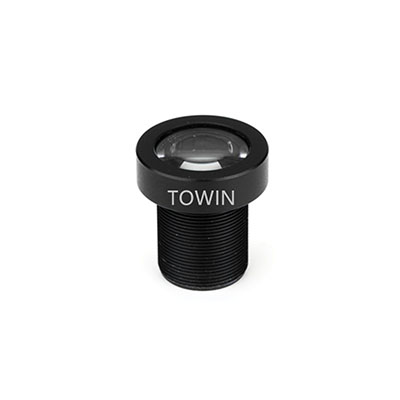
M12 fixed-focus CCTV industrial lens
Conclusion
The Fixed Focus Low Distortion Lens represents a paradigm shift in optical technology, merging simplicity with unparalleled accuracy. By eliminating focus adjustments and distortion, these lenses empower industries to achieve results that are not just good, but perfect.