


Best Fisheye Lens Types for Landscape
10/30/2025
Multi-coated Automotive lens
10/30/2025
In the world of photography, videography, and even industrial imaging, precision and clarity are non-negotiable. Whether you’re capturing a breathtaking landscape, filming a high-stakes commercial, or inspecting intricate machinery, the quality of your lens can make or break the result. Enter the Low-Distortion Lens—a revolutionary tool designed to minimize optical aberrations and deliver stunningly accurate visuals.
But what exactly makes a Low-Distortion Lens so special? And why should professionals across industries consider integrating them into their workflow? Let’s dive into the Top 5 Benefits of Using Low-Distortion Lens and uncover how these lenses are transforming visual storytelling and technical precision.
1. Unmatched Image Clarity and Sharpness
One of the most significant advantages of a Low-Distortion Lens is its ability to produce images with exceptional clarity and sharpness. Traditional lenses often suffer from optical distortions like barrel distortion (where straight lines appear curved outward) or pincushion distortion (where lines curve inward). These imperfections can distort the true representation of a scene, making it difficult to achieve professional-grade results.
A Low-Distortion Lens, however, is engineered to correct these issues. By using advanced optical designs and precision-ground glass elements, these lenses ensure that straight lines remain straight and details are rendered with pinpoint accuracy. This level of clarity is invaluable for architectural photographers, product shooters, and anyone who relies on precise visuals.
2. Reduced Post-Processing Workload
In an era where time is money, efficiency matters. One of the Top 5 Benefits of Using Low-Distortion Lens is the reduction in post-processing time. When you shoot with a lens that introduces minimal distortion, you spend less time correcting warped lines or adjusting perspective in editing software like Adobe Photoshop or Lightroom.
This not only speeds up your workflow but also ensures that your final image retains its natural integrity. For commercial photographers and videographers, this means faster turnaround times and happier clients. For industrial applications, such as quality control or 3D scanning, reduced distortion means more accurate data collection and analysis.
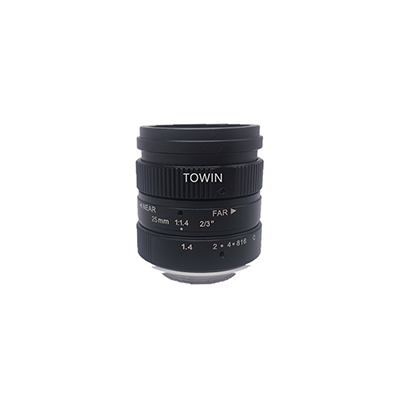
25mm Low Distortion Machine Vision Lens
3. Enhanced Professional Credibility
In competitive industries like advertising, filmmaking, and scientific research, credibility is everything. Using a Low-Distortion Lens signals to clients, collaborators, and peers that you prioritize quality and precision. Whether you’re pitching a high-budget ad campaign or submitting research findings, the use of a Low-Distortion Lens can set you apart as a professional who doesn’t compromise on visual fidelity.
For example, a real estate photographer using a Low-Distortion Lens can showcase properties without misleading curvature, building trust with potential buyers. Similarly, a filmmaker can ensure that their cinematic shots are free from unintended warping, maintaining the director’s intended vision.
4. Versatility Across Industries
The benefits of a Low-Distortion Lens extend far beyond photography and videography. Industries such as aerospace, automotive manufacturing, and medical imaging rely heavily on precise optical tools for inspection, measurement, and analysis. A Low-Distortion Lens ensures that these processes are carried out with the highest degree of accuracy.
For instance, in automotive design, engineers use Low-Distortion Lenses to inspect prototypes for defects without the interference of optical aberrations. In medical endoscopy, these lenses provide clearer views of internal organs, aiding in diagnosis and treatment. The versatility of a Low-Distortion Lens makes it a valuable asset in any field where visual precision is critical.
5. Cost-Effective Long-Term Investment
While Low-Distortion Lenses may come with a higher initial cost compared to standard lenses, their long-term benefits far outweigh the upfront investment. By reducing the need for frequent replacements (due to wear or subpar performance) and minimizing post-processing expenses, these lenses prove to be a cost-effective choice for professionals.
Moreover, the superior image quality they deliver can lead to higher client satisfaction, repeat business, and even premium pricing for your services. For companies and freelancers alike, investing in a Low-Distortion Lens is a strategic move that pays dividends over time.
Why Choose a Low-Distortion Lens Over Standard Options?
The answer lies in the combination of optical excellence and practical efficiency. Standard lenses, while affordable, often compromise on distortion control, leading to subpar results in professional settings. A Low-Distortion Lens, on the other hand, is built to meet the demands of high-stakes environments where every detail matters.
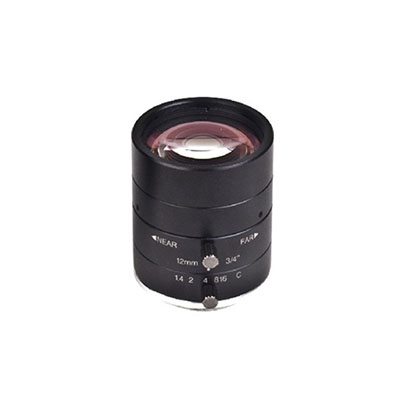
low-distortion C-mount lens
FAQs
1. What is a Low-Distortion Lens?
A Low-Distortion Lens is an optical lens designed to minimize geometric distortions such as barrel and pincushion effects, ensuring that straight lines in a scene appear straight in the captured image.
2. Who should use a Low-Distortion Lens?
Professionals in photography, videography, industrial inspection, and scientific research who require precise and accurate visuals should consider using a Low-Distortion Lens.
3. Are Low-Distortion Lenses more expensive?
Yes, Low-Distortion Lenses typically cost more than standard lenses due to their advanced optical designs and precision manufacturing. However, their long-term benefits justify the investment.
4. Can a Low-Distortion Lens be used for portrait photography?
Absolutely! While Low-Distortion Lenses are often associated with architectural and product photography, they can also enhance portrait work by preventing facial distortion, especially in wide-angle shots.
Final Thoughts
The Top 5 Benefits of Using Low-Distortion Lens highlight why these optical tools are becoming indispensable in professional settings. From delivering crystal-clear images to streamlining workflows, the advantages are clear. As technology continues to evolve, we can expect Low-Distortion Lenses to play an even bigger role in shaping the future of visual storytelling and technical innovation.