


Vari-focal CS mount lenses for smart traffic
03/01/2026
4.2mm 1/3″ CCTV M12 Pinhole lens
03/03/2026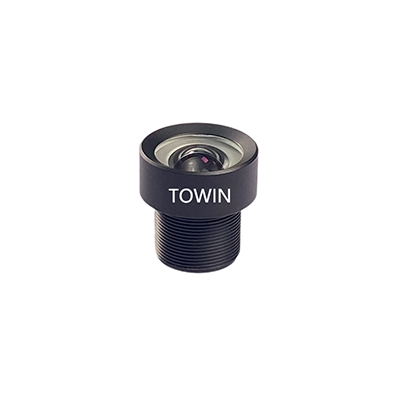
Table of Contents
Introduction
In the world of high-precision metrology and automated inspection, optical distortion is the enemy of accuracy. Whether you are developing a PCB inspection system or a high-end document scanner, selecting a lens with <0.1% distortion is critical to reducing software compensation complexity and ensuring edge-to-edge clarity.
However, with hundreds of optics manufacturers globally, finding a partner that balances optical performance, lead times, and cost is a challenge. To simplify your procurement process, we have evaluated the Top 7 Low Distortion Lens Suppliers based on their technical specifications, customization capabilities, and industry reputation.
What Is Considered Low Distortion?
In industrial vision, <0.1% distortion is widely defined as ultra-low distortion, while <0.05% is required for high-precision metrology, 2D code reading, and geometric measurement.
2026 Key Trends:
- Rising demand for M12/S-mount low distortion lenses in compact vision systems
- Higher resolution sensors (5MP–24MP) driving stricter distortion control
- OEM/ODM customization replacing pure off-the-shelf for mass production
The Comparison Framework
1. Edmund Optics (USA) – The Industry Benchmark
Edmund Optics
- Best for: R&D, laboratory prototyping, and high-end scientific applications.
- Pros: Massive off-the-shelf (OTS) inventory, world-class technical support, and comprehensive MTF data.
- Cons: Premium pricing; may not be cost-effective for large-scale commercial production.
2. Kowa Optimed (Japan) – The Precision Master
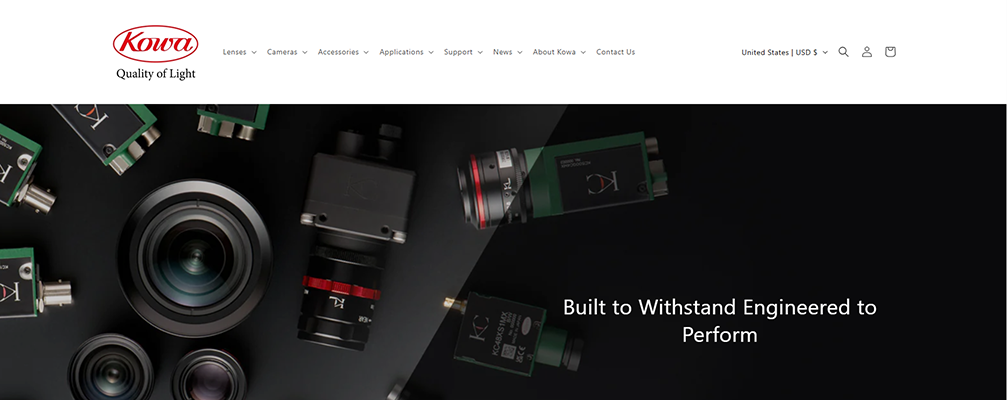
Kowa Optimed
- Best for: High-resolution industrial automation and high-speed inspection.
- Pros: Renowned for their ruggedized low-distortion series; exceptional mechanical stability.
- Cons: Long lead times for certain specialized models; rigid customization terms.
3. TowinLens (China) – Best for Customization & High ROI
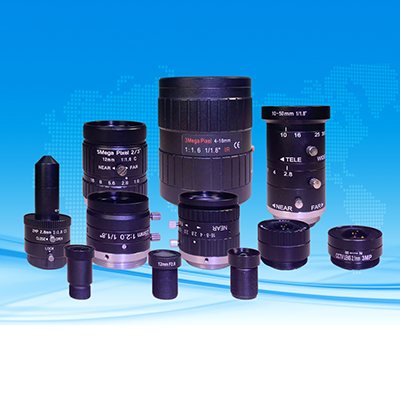
TOWIN lens
- Best for: Embedded vision, drone integration, and mid-to-large scale OEM projects.
- Pros: Specialist in Low Distortion M12 (S-Mount) Lenses; highly flexible OEM/ODM services with rapid prototyping (15-21 days); direct-from-factory pricing; typical distortion ranges from <0.05% to <0.1%; M12 series covers 4–25mm focal length; in-house optical design & manufacturing capabilities.
- Cons: Smaller off-the-shelf catalog compared to global giants like Edmund.
4. Basler AG (Germany) – The System Integration Leader
Basler AG Low Distortion Lens
- Best for: Users already utilizing Basler cameras for a seamless ecosystem.
- Pros: Perfect compatibility with Basler PGI software; excellent quality control.
- Cons: Portfolio is primarily focused on C-mount, limited M12 options.
5. Fujinon (Japan) – The Compact High-Resolution Expert
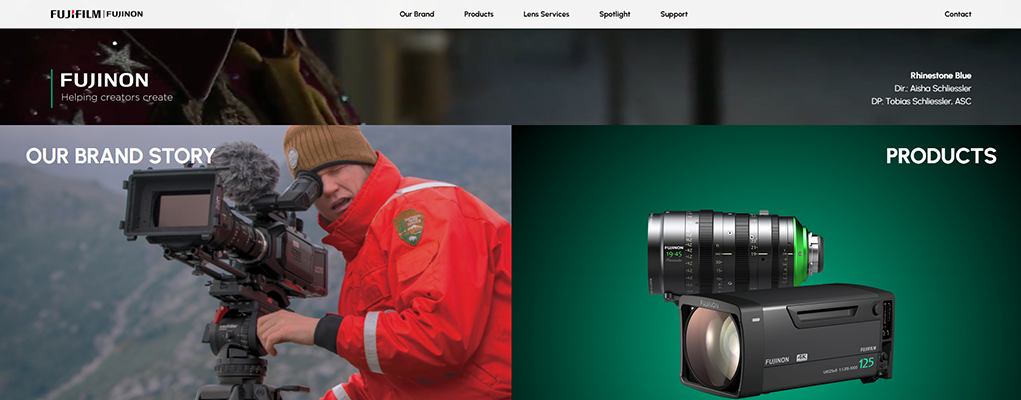
Fujinon
- Best for: Compact industrial vision systems, 12MP+ high-resolution inspection, and vibration-prone environments (e.g., factory automation, portable metrology).
- Pros: Renowned for ultra-compact design (33mm diameter for most models) while maintaining ultra-low distortion; HF-12M series offers <0.1% distortion, 2.1μm pixel pitch performance, and anti-shock/vibration design compliant with IEC 60068-2-6; MK series caters to cinema production with low distortion across the entire zoom range; compatible with 2/3″ to 1.1″ image sensors; focus and iris locking holes for stable long-term use.
- Cons: Limited budget-friendly options; customization lead times (2–4 weeks) longer than regional manufacturers like TowinLens; primarily focused on C-mount lenses with few M12 offerings.
6. Tamron (Japan) – The Versatile Performer
Tamron
- Best for: Multi-scenario industrial applications, including architecture inspection, landscape imaging, and mid-range precision automation (e.g., 3D scanning, document digitization).
- Pros: Exceptional versatility with both fixed and zoom low-distortion lenses; 11-20mm F/2.8 series features ultra-low distortion even at the wide end, with LD (low dispersion) and XLD (extra low dispersion) elements to suppress chromatic aberrations; compact and lightweight design (335g for 11-20mm model) for easy integration; solid build quality with weather resistance; competitive pricing for mid-range performance.
- Cons: Distortion performance (typically 0.08%–0.12%) slightly lower than dedicated industrial giants like Kowa or Fujinon; limited specialized models for high-precision metrology (<0.05% distortion); manual focus can be overly sensitive on some models.
7. Computar (Japan) – The Ultra-High Resolution Specialist
Computar Low Distortion Lens
- Best for: High-megapixel industrial inspection (up to 45MP), factory automation, and wide-area surveillance requiring edge-to-edge clarity.
- Pros: Industry-leading ultra-low distortion (down to <0.03% for MPT series) compatible with large-format sensors (up to 1.4″); MPY series offers the smallest 1.1″ format 12MP lens in the industry, with locking screws for focus and iris stability; MPZ series supports 20MP sensors and ruggedized design (vibration resistance up to 5g); comprehensive C-mount lineup with focal lengths from 8mm to 50mm; compliant with JIIA standard 5MP A-rank for quality assurance.
- Cons: High price point for ultra-high resolution models; limited OTS inventory for specialized 45MP lenses; customization terms are less flexible than TowinLens.
Comparison Matrix Table
| Manufacturer | Distortion Rate | Mount Types | Customization Support | Customization | Best Application |
| Edmund Optics (USA) | <0.05%–0.1% | C/CS/M12 | Limited | Low | R&D, laboratory prototyping |
| Kowa Optimed (Japan) | <0.05%–0.1% | C/CS | Rigid terms | Medium | High-speed industrial automation |
| TowinLens (China) | <0.05%–0.1% | M12 (S-Mount), C/CS-mount | Highly flexible (OEM/ODM) | Very High | Embedded vision, drone integration, OEM projects |
| Basler AG (Germany) | <0.08%–0.12% | C-mount (limited M12) | Basic | Low | Basler camera ecosystem integration |
| Fujinon (Japan) | <0.07%–0.1% | C-mount | Moderate | Medium | Compact vision systems, vibration-prone environments |
| Tamron (Japan) | 0.08%–0.12% | C-mount, E-mount, RF-mount | Basic | Low | Multi-scenario inspection, 3D scanning |
| Computar (Japan) | <0.03%–0.1% | C-mount | Moderate | Medium | High-megapixel inspection, factory automation |
Buyer’s Guide: How to Choose the Best Low Distortion Lens Manufacturer
- 1. Clarify distortion requirements: <0.1% for general inspection, <0.05% for high-precision metrology and geometric measurement.
- 2. Determine mount type: C-mount for high-resolution industrial systems, M12/S-mount for compact embedded or drone vision.
- 3. Evaluate OTS vs. custom needs: Off-the-shelf for small-scale projects (R&D, lab), OEM/ODM for mass production.
- 4. Consider volume and lead time: Prioritize manufacturers with rapid prototyping (e.g., TowinLens) for time-sensitive OEM projects.
- 5. Calculate total cost: Include not just unit price, but also technical support, maintenance, and delivery costs.
Conclusion & CTA
Choosing the “best” supplier depends entirely on your project’s scale and technical requirements. If you need a single lens for a lab experiment, Edmund Optics is hard to beat. However, if your goal is to develop a proprietary vision product that requires a custom Low Distortion Lens at a competitive unit price, TowinLens offers the ideal balance of engineering expertise and manufacturing agility.
Ready to optimize your vision system? Contact our optical engineers for a free design consultation or request a sample of our low-distortion M12 series.