



Are Medical Imaging Lenses Suitable for Low-Light Environments?
08/02/2026
What Lenses Are Used for ANPR Systems?
08/04/2026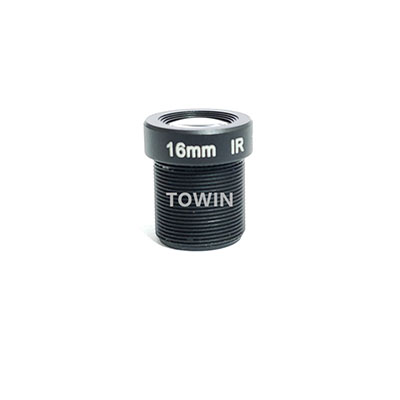
Embedded Biometric Camera Lens technology has become one of the most important optical foundations behind modern AI authentication systems. From facial recognition terminals and iris scanners to smart locks, financial payment devices, access control systems, and AI security equipment, the performance of the camera lens directly influences image quality, recognition accuracy, and long-term system reliability.
Unlike conventional imaging lenses, an embedded biometric camera lens is specifically designed for compact embedded vision devices where optical precision, infrared compatibility, low distortion, and stable performance are essential. Selecting the right lens helps manufacturers improve facial feature extraction, iris recognition accuracy, reduce false acceptance rates, and deliver a better user experience.
As an experienced optical manufacturer, TOWIN develops customized biometric imaging optics for embedded AI vision systems. Our solutions support high-resolution image sensors, M12 and C-Mount interfaces, infrared correction, and OEM/ODM customization for various biometric applications.
If you are looking for complete biometric optical solutions, visit our Biometric Recognition Lens Solutions page to explore our products and engineering capabilities.
What Is an Embedded Biometric Camera Lens?
An Embedded Biometric Camera Lens is a compact optical lens specifically engineered for embedded biometric imaging devices. It captures high-quality facial, iris, palm, or fingerprint images and delivers them to an image sensor, allowing AI algorithms to perform identity verification accurately and efficiently.
Compared with consumer camera lenses, biometric lenses are optimized for precision recognition rather than photography. They emphasize low optical distortion, high modulation transfer function (MTF), infrared transmission, stable focus, and compatibility with embedded camera modules.
These lenses are commonly integrated into:
- Facial recognition terminals
- Iris recognition cameras
- Smart access control devices
- AI attendance systems
- Financial payment terminals
- Self-service kiosks
- Embedded AI vision modules
Because biometric recognition relies on extracting precise facial or iris features, even small optical imperfections can significantly reduce recognition accuracy. High-quality embedded biometric lenses therefore play a critical role in overall system performance.
How Does an Embedded Biometric Camera Lens Work?
The optical imaging process inside an embedded biometric system follows a simple but highly optimized workflow. Every optical component contributes to the final recognition accuracy.
| System Stage | Function |
|---|---|
| Target Object | User face, iris, palm or biometric feature |
| Embedded Biometric Camera Lens | Collects and focuses light with minimal distortion |
| Image Sensor | Converts optical information into digital signals |
| ISP Processing | Noise reduction, HDR, color optimization and image enhancement |
| AI Recognition Algorithm | Extracts biometric features for authentication |
| Authentication Result | Identity verification and secure access |
The optical quality of the embedded biometric camera lens directly affects every downstream stage. High-resolution optics with low distortion and optimized infrared transmission provide cleaner image data for AI recognition algorithms, improving both speed and recognition accuracy.
Why Embedded Optical Design Matters
Modern biometric devices continue becoming smaller while demanding higher performance. Engineers must integrate cameras into increasingly compact housings without sacrificing optical quality.
An embedded biometric camera lens is therefore designed with several engineering priorities:
- Compact mechanical dimensions for embedded camera modules.
- Support for high-resolution CMOS sensors from 2MP to 12MP.
- Low distortion to improve facial landmark positioning.
- Infrared correction for both 850nm and 940nm illumination.
- Reliable performance across industrial operating temperatures.
- Stable optical performance under continuous operation.
Unlike general-purpose camera lenses, embedded biometric optics must maintain image consistency over millions of authentication cycles. This stability is particularly important for smart cities, transportation, financial security, and industrial access control.
Embedded Biometric Imaging Architecture
The following diagram illustrates the overall optical workflow inside a biometric authentication device.
| Stage | Description |
|---|---|
| User | Face, iris or biometric target enters imaging area |
| Embedded Biometric Camera Lens | Captures high-quality optical image |
| CMOS Image Sensor | Converts light into digital image data |
| Image Signal Processor (ISP) | Enhances brightness, contrast and sharpness |
| AI Processor | Extracts biometric features using deep learning |
| Recognition Result | Identity authentication completed |
Each component depends on the optical quality delivered by the camera lens. Selecting the correct lens helps maximize recognition reliability while minimizing image artifacts.
Why Optical Performance Is More Important Than Camera Resolution
Many engineers initially focus on image sensor resolution. While high-resolution sensors certainly improve detail, optical quality ultimately determines how much useful information reaches the sensor.
A poor-quality lens may introduce distortion, chromatic aberration, uneven illumination, or reduced contrast. These issues cannot be fully corrected by software and often reduce the effectiveness of AI recognition algorithms.
For this reason, professional biometric systems typically prioritize:
- High MTF performance
- Low distortion imaging
- Excellent infrared transmission
- Uniform edge-to-edge sharpness
- Stable optical alignment
- Reliable environmental durability
TOWIN designs optical systems specifically for embedded AI imaging applications, helping customers balance image quality, compact size, production cost, and manufacturing efficiency.
To better understand biometric optical technology, you may also read What Is a Biometric Recognition Lens?, which explains the optical principles behind AI authentication systems.
Where Are Embedded Biometric Camera Lens Used?
The application range of an Embedded Biometric Camera Lens continues expanding as AI authentication becomes increasingly common across consumer electronics, smart cities, finance, industrial automation, and intelligent transportation.
Each biometric application has unique optical requirements. Choosing the correct lens depends on recognition distance, sensor size, infrared illumination, resolution, and environmental conditions.
| Application | Primary Optical Requirement | Recommended Lens |
|---|---|---|
| Facial Recognition Terminal | Low distortion, high resolution | M12 Low Distortion Lens |
| Iris Recognition System | 850nm / 940nm IR correction | IR Corrected Lens |
| Smart Access Control | Wide viewing angle | Wide Angle Lens |
| Mobile Biometric Device | Miniature structure | Compact M12 Lens |
| Financial Payment Terminal | High contrast imaging | High Resolution Lens |
| AI Security Equipment | Excellent low-light performance | Low Distortion Lens |
Application-Specific Optical Requirements
Facial Recognition Systems
Facial recognition systems require consistent edge-to-edge sharpness and minimal distortion so that AI algorithms can accurately detect facial landmarks. High-resolution optics also improve recognition accuracy at varying distances.
Recommended Lens: Low Distortion M12 Lens
| Typical Specification | Value |
|---|---|
| Resolution | 5MP–12MP |
| Sensor Size | 1/3″–1/1.8″ |
| IR Support | 850nm / 940nm |
| FOV | 60°–120° |
| Distortion | <0.5% |
Iris Recognition Systems
Iris imaging requires exceptional infrared transmission and precise focus because recognition algorithms analyze very fine texture patterns. IR-corrected optics ensure image consistency under near-infrared illumination.
Recommended Lens: IR Corrected Lens
Smart Access Control Devices
Access control terminals often operate in confined spaces where users stand at different positions. Wide-angle lenses provide sufficient coverage while maintaining reliable recognition performance.
Recommended Lens: Wide Angle M12 Lens
Mobile Biometric Devices
Portable biometric equipment requires extremely compact optics with lightweight mechanical structures. Miniature embedded lenses reduce module size while maintaining excellent optical performance.
Recommended Lens: Compact Embedded Vision Lens
Financial Payment Verification
Payment authentication systems require highly reliable imaging under various indoor lighting environments. Low distortion and excellent contrast improve both recognition speed and transaction security.
Why the Camera Lens Is Critical in Embedded Biometric Systems
Artificial intelligence can only analyze the information captured by the optical system. If the incoming image contains distortion, blur, poor contrast, or uneven illumination, recognition accuracy decreases regardless of software capability.
The optical lens influences every stage of biometric authentication:
- Image clarity
- Feature extraction accuracy
- False Acceptance Rate (FAR)
- False Rejection Rate (FRR)
- Recognition speed
- User experience
Professional biometric lenses therefore emphasize optical consistency rather than simply increasing megapixels.
Key Parameters to Consider When Choosing an Embedded Biometric Camera Lens
| Parameter | Recommended Range | Why It Matters |
|---|---|---|
| Resolution | 2MP–12MP | Supports modern AI image sensors |
| Sensor Size | 1/4″–1/1.8″ | Determines image coverage |
| Mount Type | M12 / C-Mount | Matches camera module structure |
| Field of View | 30°–180° | Controls recognition distance |
| Distortion | <1% | Improves facial feature accuracy |
| IR Support | 850nm / 940nm | Required for NIR biometric imaging |
| Operating Temperature | -40℃ to +85℃ | Industrial reliability |
| Interface | Embedded Camera Module | Easy integration |
Resolution
Most embedded biometric systems today use image sensors ranging from 5MP to 12MP. Higher optical resolution allows AI algorithms to capture finer biometric details, particularly in facial and iris recognition applications.
Sensor Size
Selecting a lens matched to the sensor size ensures optimal image quality without vignetting. Common biometric sensors include 1/4″, 1/3″, 1/2.7″, and 1/1.8″.
Distortion
Low distortion is essential because AI facial recognition algorithms rely on accurate geometric relationships between facial landmarks. Even small distortions can reduce matching accuracy.
Infrared Compatibility
Most biometric systems employ either 850nm or 940nm infrared illumination. IR-corrected optics maintain focus consistency between visible and infrared wavelengths, improving recognition reliability.
For additional guidance on selecting optical systems, visit our M12 Lens Solutions or browse the Knowledge Center for more optical design resources.
Embedded Biometric Camera Lens Selection Guide
Selecting the right Embedded Biometric Camera Lens involves more than simply choosing a focal length. Engineers should evaluate the complete imaging system—including the recognition target, sensor, infrared illumination, installation space, and environmental conditions—to achieve the best balance of optical performance and system integration.
The following five-step selection process can help simplify lens selection for embedded biometric devices.
Step 1 – Define the Recognition Type
Different biometric technologies require different optical characteristics.
| Recognition Type | Recommended Optical Characteristics |
|---|---|
| Face Recognition | Low distortion, wide dynamic range |
| Iris Recognition | IR corrected optics, high contrast |
| Palm Recognition | Large FOV, high uniformity |
| Access Control | Wide viewing angle, compact size |
Step 2 – Select the Sensor Size
Always choose a lens designed for your camera sensor.
- 1/4″
- 1/3″
- 1/2.7″
- 1/2.5″
- 1/1.8″
Matching the sensor size ensures full image coverage while avoiding vignetting and maintaining optimal sharpness.
Step 3 – Confirm Image Resolution
Higher sensor resolutions require higher optical resolving power.
| Image Sensor | Recommended Lens |
|---|---|
| 2MP | Standard Embedded Lens |
| 5MP | Low Distortion Lens |
| 8MP | High Resolution Lens |
| 12MP | Premium Optical Design |
Step 4 – Determine Infrared Requirements
Most embedded biometric systems operate under infrared illumination to ensure stable performance under different lighting conditions.
- 850nm
- 940nm
IR-corrected lenses maintain focus consistency between visible light and infrared wavelengths, significantly improving biometric recognition accuracy.
Step 5 – Choose the Appropriate Lens Type
| Lens Type | Recommended Application |
|---|---|
| M12 Lens | Compact facial recognition terminals |
| C-Mount Lens | Industrial biometric systems |
| Custom Optical Lens | OEM embedded camera modules |
Following these five steps helps engineers quickly narrow down the most suitable embedded biometric camera lens for their application while reducing development time.
Recommended Embedded Biometric Camera Lens Types
TOWIN offers a wide range of biometric imaging optics designed for different AI authentication devices. Each lens family is optimized for specific applications and installation requirements.
| Lens Type | Best Application | Why Choose It? | Key Features |
|---|---|---|---|
| M12 Lens | Facial Recognition Terminals | Compact and easy to integrate | Small size, lightweight, low cost |
| IR Corrected Lens | Iris Recognition & NIR Imaging | Stable infrared focus | 850nm / 940nm optimized |
| Low Distortion Lens | AI Face Matching | Improves recognition accuracy | <0.5% distortion available |
| Wide Angle Lens | Access Control Devices | Larger monitoring coverage | FOV up to 180° |
| C-Mount Lens | Industrial Biometric Inspection | Highest optical performance | Supports larger image sensors |
If your project requires customized optical specifications, TOWIN also provides OEM and ODM lens development services including focal length optimization, housing design, sensor matching, and environmental testing.
Embedded Biometric Camera Lens vs. Standard Camera Lens
| Embedded Biometric Lens | Standard Camera Lens |
|---|---|
| Designed for AI recognition | Designed for general photography |
| Low distortion | Higher distortion acceptable |
| IR corrected | Usually visible light only |
| Compact embedded structure | Larger mechanical design |
| Industrial reliability | Consumer electronics |
| OEM customization available | Limited customization |
Although both lens types capture images, embedded biometric camera lenses are specifically optimized for machine vision and AI authentication where image accuracy is more important than photographic aesthetics.
Why Choose TOWIN Embedded Biometric Camera Lenses?
TOWIN has extensive experience designing compact optical systems for embedded AI vision applications. Our engineering team works closely with equipment manufacturers to deliver reliable, production-ready optical solutions.
- Support image sensors up to 12MP
- 850nm & 940nm infrared optimization
- Ultra-low distortion optical design (<0.5% available)
- M12 and C-Mount compatibility
- OEM & ODM customization
- 300+ standard lens models
- ISO9001 quality management
- Professional optical engineering support
- Rapid prototype development
Learn more about our complete Biometric Recognition Lens Solutions or explore our M12 Lens portfolio for embedded camera applications.
Frequently Asked Questions
What is an Embedded Biometric Camera Lens?
An Embedded Biometric Camera Lens is a compact optical lens designed specifically for biometric imaging systems such as facial recognition, iris scanning, access control devices, and AI authentication terminals. It delivers high-quality images that improve recognition accuracy.
What lens is best for facial recognition?
Low distortion M12 lenses are widely used in facial recognition systems because they provide accurate facial geometry, excellent image sharpness, and compact mechanical dimensions suitable for embedded camera modules.
Why is low distortion important for biometric recognition?
Facial and iris recognition algorithms rely on precise geometric measurements. Lower distortion reduces positional errors and improves both recognition accuracy and authentication reliability.
Do biometric camera lenses support infrared imaging?
Yes. Professional biometric lenses often support both 850nm and 940nm infrared wavelengths, allowing reliable imaging under low-light or nighttime conditions.
What sensor sizes are commonly used?
Most embedded biometric systems use image sensors ranging from 1/4″ to 1/1.8″, depending on the required image quality, field of view, and installation space.
Can M12 lenses be used for biometric devices?
Yes. M12 lenses are among the most popular choices because they offer compact dimensions, lightweight construction, and excellent compatibility with embedded camera modules.
Does TOWIN provide customized biometric lenses?
Yes. TOWIN provides OEM and ODM optical development services including focal length optimization, sensor matching, infrared correction, mechanical housing customization, and complete optical engineering support.
How do I choose the right Embedded Biometric Camera Lens?
Begin by determining the biometric application, sensor size, required resolution, infrared wavelength, field of view, and mechanical constraints. Then select a lens that matches these specifications while providing sufficient optical performance for AI recognition.
Conclusion
Embedded Biometric Camera Lens technology is becoming increasingly important as AI authentication systems continue expanding across smart cities, financial security, intelligent transportation, healthcare, and industrial automation.
Choosing the correct optical lens involves evaluating recognition type, sensor compatibility, image resolution, infrared requirements, distortion performance, field of view, and environmental reliability. A properly selected lens not only improves image quality but also enhances recognition accuracy, system stability, and long-term product performance.
With extensive experience in embedded optical engineering, TOWIN offers a complete portfolio of biometric imaging lenses ranging from standard M12 models to fully customized OEM optical solutions. Whether you are developing facial recognition terminals, iris scanners, smart locks, mobile authentication devices, or AI vision equipment, our engineering team can help you identify the ideal optical solution.
Explore our Biometric Recognition Lens Solutions to learn more about our capabilities, or browse our Knowledge Center for additional optical design resources and selection guides.
If you are searching for a reliable optical partner for your next AI imaging project, TOWIN’s Embedded Biometric Camera Lens solutions combine precision optics, flexible customization, and industrial-grade reliability to help bring your biometric products to market faster.
Recommended Internal Links