



Why Is My Image Blurry? Causes, Solutions & Lens Selection Guide
06/26/2026
How to Choose the Right Industrial Lens?
06/27/2026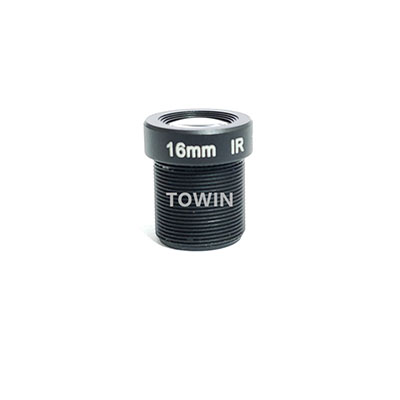
Facial recognition systems have become an essential part of modern AI applications, enabling secure identity verification, smart access control, financial payment authentication, and intelligent surveillance. While AI algorithms and image sensors receive significant attention, the optical lens is equally critical because it determines image quality, facial feature accuracy, and overall recognition performance.
Selecting the right lens requires balancing resolution, distortion, infrared performance, focal length, and sensor compatibility. Whether designing a compact embedded terminal or a professional biometric device, choosing the correct optical solution can dramatically improve recognition accuracy and system reliability.
For organizations developing AI authentication products, our Biometric Recognition Lens Solutions provide customized optical designs for facial recognition, iris scanning, access control, and embedded AI vision applications.
How Do Facial Recognition Systems Work?
A typical facial recognition system consists of an optical lens, image sensor, image processor, and AI recognition algorithm. The lens captures facial details and projects them onto the sensor, while AI software analyzes landmarks such as eye position, nose shape, and facial geometry.
If the lens introduces distortion, poor sharpness, or inconsistent infrared focus, recognition accuracy decreases significantly. This is why high-quality biometric lenses are essential for modern AI devices.
Many industrial AI platforms also integrate technologies used in Machine Vision Lens Solutions, where precision imaging directly affects system performance.
Key Optical Requirements for Facial Recognition Lenses
High Resolution Imaging
Facial recognition algorithms require clear and detailed images. Most commercial systems use 5MP to 12MP cameras to capture sufficient facial information for accurate identification.
- Access Control: 2MP–5MP
- Smart Authentication: 5MP–8MP
- Financial Payment Systems: 8MP+
- AI Identity Verification: Up to 12MP
Low Distortion Performance
Low distortion is critical because AI algorithms rely on precise facial geometry. Even minor optical distortion can reduce matching accuracy and increase false recognition rates.
Learn more about optical distortion in our Distortion Guide.
IR Corrected Design
Many biometric devices operate under both visible light and infrared illumination. IR corrected lenses maintain accurate focus across different wavelengths, ensuring reliable operation during both daytime and nighttime.
Typical infrared wavelengths include:
- 850nm IR
- 940nm IR
Appropriate Field of View
The focal length determines how much of the subject is captured and directly affects facial image quality.
- 2.8mm: Wide-angle authentication terminals
- 4mm: Standard access control systems
- 6mm–8mm: Visitor management devices
- 12mm+: Long-distance identification systems
Use our FOV Calculator to estimate the appropriate viewing angle for your project.
Lens Parameter Comparison
| Parameter | Recommended Specification |
|---|---|
| Resolution | 5MP–12MP |
| Sensor Size | 1/3″–1/1.8″ |
| Mount Type | M12 or C-Mount |
| Focal Length | 2.8mm–12mm |
| Distortion | Below 1% |
| IR Support | 850nm / 940nm |
These parameters ensure that facial recognition systems deliver consistent image quality while maintaining excellent AI recognition performance.
M12 vs C-Mount Lenses for Facial Recognition
| Feature | M12 Lens | C-Mount Lens |
|---|---|---|
| Size | Compact | Larger Industrial Design |
| Cost | Lower | Higher |
| Integration | Excellent for Embedded Devices | Best for Professional Systems |
| Typical Application | Access Control | Industrial AI Authentication |
If you would like a detailed comparison, read our What Is the Difference Between M12 and C-Mount Lenses?.
Recommended Lens Types for Different Applications
| Application | Recommended Lens |
|---|---|
| Smart Access Control | M12 Low Distortion Lens |
| Financial Payment Authentication | High Resolution M12 Lens |
| Smart Security Camera | IR Corrected Lens |
| AI Identity Verification Kiosk | High Resolution C-Mount Lens |
| Embedded AI Device | Compact M12 Lens |
Many facial recognition products are also integrated into Smart Security Lens Solutions, combining AI surveillance with biometric authentication for intelligent monitoring applications.
Biometric Recognition Lens Solutions
Modern biometric applications demand more than simply high-resolution cameras. They require optical systems specifically optimized for AI recognition algorithms.
TOWIN provides customized solutions including:
- M12 Biometric Lenses
- Low Distortion Optical Design
- IR Corrected Lenses
- High Resolution Imaging Lenses
- OEM & ODM Optical Customization
Explore our complete Biometric Recognition Lens Solutions to discover optical products designed for facial recognition terminals, iris scanners, access control systems, and AI authentication devices.
Frequently Asked Questions
Q: What lens is best for facial recognition systems?
A: Low distortion, high-resolution M12 or C-Mount lenses with IR correction are generally the preferred choice for biometric applications.
Q: Why is low distortion important?
A: Accurate facial geometry improves AI landmark detection and increases recognition reliability.
Q: Do facial recognition cameras require IR corrected lenses?
A: Yes. IR corrected optics maintain sharp focus under both visible light and infrared illumination, improving performance in low-light environments.
Q: Which sensor size is recommended?
A: Most biometric applications use sensors ranging from 1/3″ to 1/1.8″, depending on required resolution and installation distance.
Q: Can TOWIN provide customized biometric lenses?
A: Yes. TOWIN offers OEM and ODM optical solutions tailored for AI authentication, facial recognition, smart security, and embedded vision systems.
Conclusion
Choosing the right optical lens is one of the most important factors in building reliable facial recognition systems. Resolution, distortion control, infrared performance, focal length, and sensor compatibility all influence AI recognition accuracy and long-term system stability.
Whether you are developing access control terminals, payment authentication devices, smart security cameras, or embedded AI products, selecting a professional biometric lens will significantly improve imaging performance.
Explore TOWIN’s Biometric Recognition Lens Solutions to find customized optical solutions designed specifically for next-generation AI facial recognition applications.