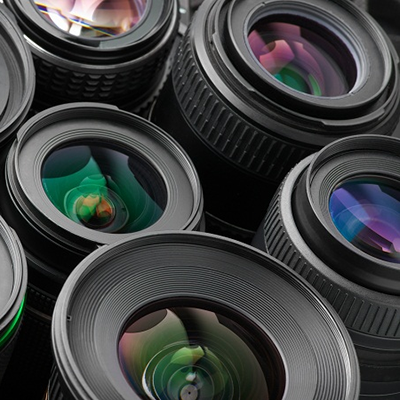



4.2mm 1/3″ HD CCTV M12 Pinhole lens
02/25/2026
Low distortion 35mm M12 S-mount board lens
02/26/2026
Table of Contents
Key Takeaways
- In 2026, the global industrial lens market is dominated by players that excel in customization, mass production stability, and industry-specific performance, serving machine vision, automotive, robotics, and automation.
- Edmund Optics, Towin, Commonlands, Lensation, and Sunex rank as the top 5 manufacturers due to their complete product lines, global delivery, and certified quality systems.
- Key 2026 trends: high resolution (20MP+), ultra‑compact design (M7/M8), and rugged durability (IP69K). Integrated solutions including lenses, filters, and adapters are now standard.
- Strengths differ: European & US brands focus on premium precision and support; Chinese brands lead in cost‑efficiency and fast lead times.
Introduction
Industrial lens are core optical components for machine vision, industrial inspection, smart vehicles, robotics, and automation. Their precision, stability, and compatibility directly define the performance of industrial AI vision systems.
As Industry 4.0 and AI vision continue to expand in 2026, demand is rising sharply for high-resolution, compact, and customizable industrial lenses. Manufacturers must also deliver reliable mass production, international certifications, and application-specific solutions.
This article ranks the Top 5 Industrial Lens Manufacturers in 2026 based on strict selection criteria. We analyze each brand’s strengths, product lineup, ideal use cases, and provide a side-by-side comparison to help buyers make informed decisions.
Selection Criteria for Industrial Lens Manufacturers
We evaluated manufacturers using five objective standards to ensure global competitiveness and industrial-grade reliability:
Full product range: Covers M12/S-Mount, C-Mount, CS-Mount, plus filters, adapters, and optical accessories.
Technology & quality: ISO-certified, full MTF testing, vibration resistance, temperature cycling, and support for 5MP+ high-resolution sensors.
Production & delivery: Stable mass production, fast sample shipping, short lead times, and global warehousing.
Customization capability: Optical parameter tuning, mechanical modification, environmental protection (IP rating), and full design-to-production support.
Industry fit: Proven solutions for machine vision, automotive ADAS, robotics, security, and industrial inspection.
Edmund Optics
Edmund Optics
Brand Overview
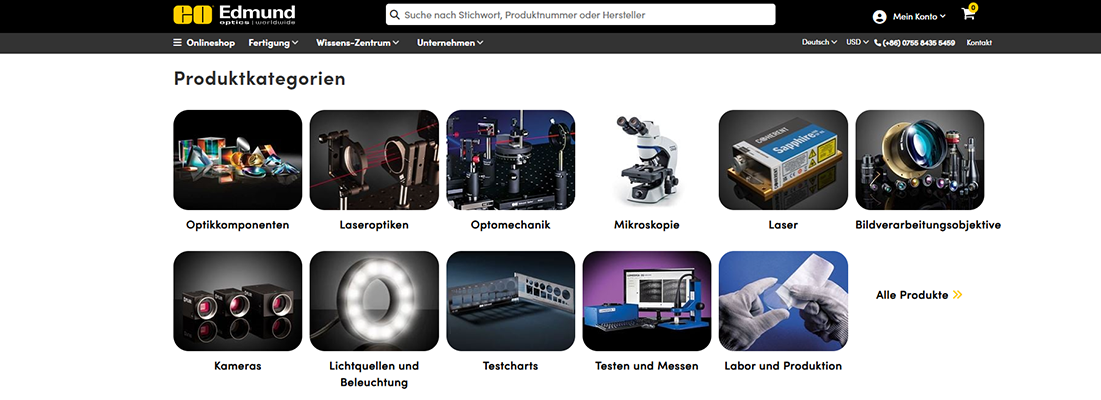
- A leading American optical manufacturer and a global benchmark in industrial optics. Edmund Optics is well-known for ultra-precise components, broad catalogs, and professional technical resources, serving high-end industrial and scientific markets.
Core Strengths
- Extensive product portfolio with over 34,000 optical products and thousands of new models in 2026.
- TECHSPEC series sets industry standards for C-Mount lenses, achromatic lenses, and laser optics.
- Rich technical resources including application notes, webinars, and optical design tools.
- Global warehouses and strong compatibility with major industrial camera brands.
Key Products
- TECHSPEC C-Mount fixed focal length lenses for machine vision and precision inspection.
- High-reflectivity laser optics for industrial laser systems.
- Microscope objectives for micro-manufacturing and laboratory inspection.
Ideal Applications
- High-end machine vision, laser industrial systems, scientific inspection, life science, and precision measurement.
Towin

Towin Industrial Lens
Brand Overview
- A top Chinese industrial lens manufacturer focused on cost-effective standard products and fast customization. Towin is a top global choice for small- and medium-batch projects.
Core Strengths
- Complete lineup covering M12/S-Mount, C-Mount, and CS-Mount lenses.
- Excellent price-performance ratio ideal for volume projects.
- Fast delivery and responsive technical support.
- Mature solutions for ITS, security, and industrial vision.
Key Products
| Lens Type | Core Specifications | Typical Applications |
| M12/S-Mount Lens | M12X0.5 thread, ultra-compact size, supports low distortion / fisheye / wide-angle | Embedded machine vision, drones, IoT devices, small industrial cameras |
| C-Mount Lens | Flange focal length 17.526 mm, supports 5MP+ high resolution | Industrial machine vision, USB/GigE/3D industrial cameras, traffic monitoring |
| CS-Mount Lens | Flange focal length 12.526 mm, manual / auto iris, IR correction | CCTV / network / IP security cameras, industrial video surveillance |
Ideal Applications
- Machine vision, smart transportation, security surveillance, and small-to-medium industrial inspection projects.
Commonlands

Commonlands
Brand Overview
- A fast-growing US-based brand focused on embedded machine vision optics. It leads in ultra-compact lenses, stable mass production, and one-stop optical solutions.
Core Strengths
- ISO 9001:2015 certified, 100% MTF testing, high batch stability.
- Pioneers ultra-small M7/M8 lenses for space-constrained devices.
- Strong customization: IR filters, F-number, IP67/IP69K ruggedization.
- One-stop solution: lenses, filters, adapters, and lens module assembly.
Key Products
- M12/S-Mount lenses: 0.8–75mm focal length, low distortion, IR-corrected.
- C-Mount lenses: up to 20MP, ruggedized, anti-vibration.
- M7/M8 ultra-miniature lenses for medical, wearable, and micro-robotics.
Ideal Applications
- Embedded vision, drones, robotics, automotive ADAS, compact industrial cameras.
Lensation
Lensation
Brand Overview
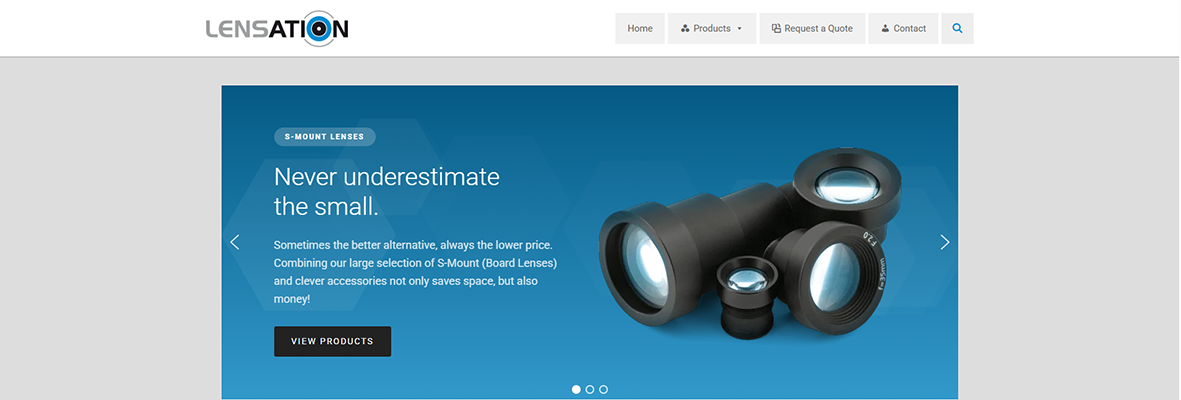
- A German industrial optics specialist known for high-precision C-Mount lenses, professional consulting, and OEM customization. Strong in European factory automation.
Core Strengths
- Professional optical consulting and tailored product matching.
- High-resolution C-Mount lenses (5–10MP) for European industrial cameras.
- Specialized lenses: telecentric lenses for measurement, macro lenses for close inspection.
- Reliable OEM/ODM service for European industrial brands.
Key Products
- S-Mount / M12 mini lenses for board-level cameras.
- High-precision C-Mount lenses for factory automation.
- Telecentric and macro lenses for precision measurement.
Ideal Applications
- European factory automation, precision industrial measurement, inspection systems, high-end security.
Sunex
Sunex
Brand Overview
- A respected American optical designer with 25+ years of experience. Sunex specializes in custom optical solutions for automotive, robotics, security, and medical applications.
Core Strengths
- Full-cycle customization: optical design, prototyping, mass production.
- Deep industry expertise in automotive, robotics, and medical optics.
- Advanced technologies: ultra-fisheye lenses, low-light lenses, hyperspectral lenses.
- Medical-grade assembly in cleanroom environments.
Key Products
- M12/S-Mount lenses for robotics and embedded vision.
- Automotive lenses for ADAS and driver monitoring.
- Special lenses: 185° fisheye, low-light, hyperspectral.
Ideal Applications
- Automotive vision, industrial robotics, high-end security, medical devices, video conferencing systems.
Product Matrix Comparison
| Brand | Core Lens Types | Key 2026 Features | Main Strengths | Target Applications |
| Edmund Optics | C-Mount, Laser Optics, Micro Objectives | 2/3” format, high precision | Premium accuracy, full catalog, technical support | High-end machine vision, laser systems, scientific inspection |
| TOWIN | M12/S-Mount, C-Mount, CS-Mount | 5MP+, IR correction, compact | Cost-effective, fast delivery, full standard lineup | Industrial vision, smart traffic, security |
| Commonlands | M12, C-Mount, M7/M8 Ultra-Compact | 20MP, IP69K, TTL 6mm | Ultra-small, stable mass production, integrated solutions | Embedded vision, robotics, drones, ADAS |
| Lensation | C-Mount, S-Mount, Telecentric, Macro | 5–10MP, zero-distortion measurement | German precision, consulting, specialty lenses | European automation, precision measurement |
| Sunex | M12, Automotive, Special Lenses | 185° FOV, 8MP automotive, medical-grade | Deep customization, industry-specific design | Automotive, robotics, medical, specialty vision |
FAQs
What are the main lens mounts in 2026 and how to choose?
The main interfaces are M12/S-Mount, C-Mount, and CS-Mount. M12/S-Mount is compact and used in embedded vision and small cameras. C-Mount is the industrial standard for high-resolution inspection. CS-Mount is widely used in security and compact surveillance systems. You should choose based on your device size, sensor size, and required precision.
Why are low distortion and high resolution important for industrial inspection?
Low distortion ensures accurate measurement and dimension checking, which is critical for precision parts inspection. High resolution of 5MP and above captures tiny defects in electronics and micro-components. In 2026, 8–20MP is becoming standard for industrial inspection, and high-end systems use 20MP+ lenses.
What can be customized in industrial lenses and what should buyers watch for?
Common customizations include IR-cut or IR-pass filters, F-number adjustment, mechanical size or interface changes, and IP67/IP69K ruggedization. Buyers should choose ISO-certified manufacturers with full testing capabilities, clearly define focal length, aperture, and environmental requirements, and validate performance with prototype samples.
What is the difference between Western and Chinese industrial lens brands?
European and US brands focus on premium precision, high customization, and professional support at a higher price point. Chinese brands like Towin provide better cost efficiency, fast delivery, and reliable standard products ideal for volume projects. Western brands suit high-end custom projects while Chinese brands fit standardized and cost-sensitive applications.
What are the 2026 trends in industrial lenses?
The three major trends are ultra-compact design using M7/M8 lenses for embedded devices, ruggedized and waterproof performance for outdoor and automotive use, and integrated optical solutions that combine lenses, filters, and adapters to simplify assembly and improve system stability.
Conclusion
In 2026, the global industrial lens market is moving toward higher precision, deeper customization, and industry-specific design. The top five manufacturers — Edmund Optics, Towin, Commonlands, Lensation, and Sunex — cover every major segment from high-end inspection to volume automation.
As industrial lenses continue to integrate with AI, robotics, and smart vehicles, manufacturers with strong innovation, production stability, and application expertise will lead the global optical industry.