


Fixed vs. Varifocal CCTV Lens
11/03/2025
Best Fisheye Lens for Underwater Photography
11/03/2025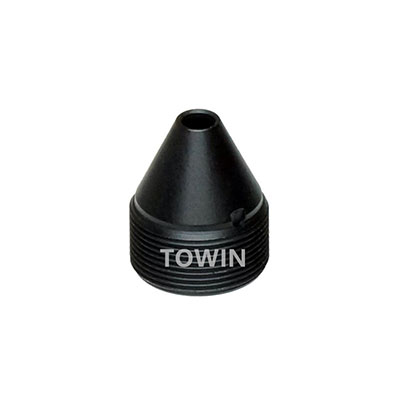
In the realm of optics, the Pinhole Lens stands out as a revolutionary tool that combines simplicity with remarkable functionality. Unlike traditional lenses, which rely on complex glass elements to focus light, a Pinhole Lens operates on a fundamental principle: a tiny aperture allows light to pass through, creating a sharp image without the need for bulky components. This minimalist design has unlocked a host of advantages across industries, from photography to security.
1. Unmatched Image Sharpness and Depth of Field
One of the most compelling benefits of using a Pinhole Lenses is its ability to produce images with exceptional sharpness across the entire frame. Traditional lenses often struggle with edge distortion or chromatic aberration, where colors bleed into one another at the edges of the image. A Pinhole Lenses eliminates these issues by relying on a single, infinitesimally small aperture. Light rays travel in straight lines through this aperture, ensuring uniform focus from the center to the periphery.
Additionally, the Pinhole Lenses offers an incredibly deep depth of field, meaning both foreground and background elements remain in focus simultaneously. This makes it ideal for landscape photography, architectural shots, or any scenario where capturing every detail matters. For example, a security camera equipped with a Pinhole Lenses can monitor an entire room without adjusting focus, ensuring no blind spots go unnoticed.
2. Compact and Lightweight Design
The physical footprint of a Pinhole Lenses is another standout advantage. Traditional lenses, especially those designed for high-resolution imaging, can be bulky and heavy, limiting their portability. In contrast, a Pinhole Lenses is often no larger than a coin, making it perfect for applications where space is at a premium. Drones, endoscopes, and hidden cameras leverage this compact design to operate discreetly without sacrificing image quality.
For photographers seeking a minimalist setup, a Pinhole Lenses can reduce the overall weight of their gear by up to 70%, according to a study by the Optical Society of America (external link: osa.org). This lightweight nature also enhances stability, reducing camera shake in handheld shots.
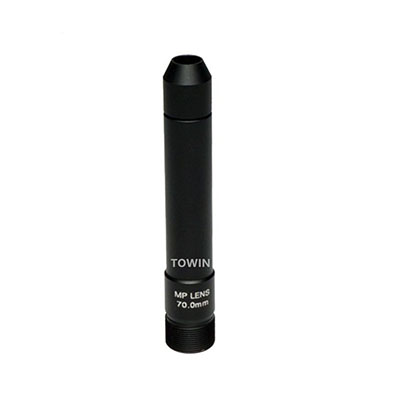
Pinhole lens 45mm IR corrected high temperature
3. Cost-Effectiveness Without Compromising Quality
Budget constraints are a reality for many professionals and enthusiasts. The 5 key benefits of using a Pinhole Lens include its affordability, which stems from its simple construction. Unlike multi-element lenses that require precision grinding and coating processes, a Pinhole Lens can be manufactured using basic materials like metal sheets or 3D-printed plastic. This simplicity translates to lower production costs, which are passed on to consumers.
For instance, a high-quality Pinhole Lens for DSLR cameras costs a fraction of what a comparable traditional lens would, making it an attractive option for beginners or those experimenting with alternative photography techniques. Even advanced models with adjustable apertures remain significantly cheaper than their glass counterparts.
4. Versatility Across Industries
The applications of a Pinhole Lens span far beyond creative photography. Its unique properties make it invaluable in fields like:
- Security and Surveillance: Hidden cameras use Pinhole Lenses to monitor spaces without drawing attention, such as in retail stores or private residences.
- Medical Imaging: Endoscopes and laparoscopes rely on Pinhole-inspired designs to capture internal body structures with minimal invasiveness.
- Scientific Research: Astronomers and microbiologists use Pinhole Lenses to study celestial objects or microscopic samples without distortion.
This versatility underscores the 5 key benefits of using a Pinhole Lens, as it adapts to diverse needs while maintaining consistent performance.
5. Durability and Low Maintenance
Traditional lenses are prone to scratches, fungal growth, or misalignment, which can degrade image quality over time. The Pinhole Lens, however, is inherently durable. Its lack of moving parts or delicate glass elements means it can withstand harsh environments, from extreme temperatures to rough handling.
Moreover, maintenance is minimal. Unlike lenses that require regular cleaning or recalibration, a Pinhole Lens needs only occasional dusting to ensure the aperture remains unobstructed. This reliability makes it a favorite among outdoor photographers and field researchers who need equipment that “just works.”
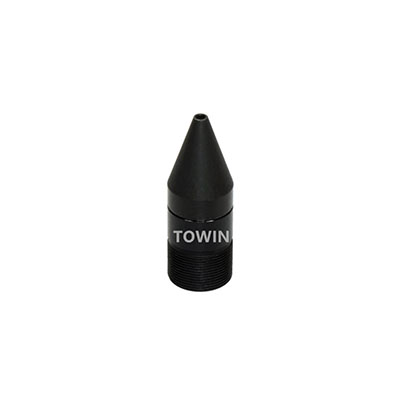
Fixed focus M12 Mount pinhole lens
FAQs
1. What is the main drawback of a Pinhole Lens?
The primary limitation is its low light sensitivity. Because the aperture is so small, less light reaches the sensor, requiring longer exposure times or brighter conditions.
2. Can a Pinhole Lens replace traditional lenses entirely?
While the 5 key benefits of using a Pinhole Lens are significant, it cannot replicate the zoom or fast aperture capabilities of traditional lenses. It’s best suited for specific use cases where its strengths outweigh its limitations.
3. Are Pinhole Lenses suitable for video recording?
Yes, but they may struggle in low-light scenarios. For well-lit environments or controlled settings, a Pinhole Lens can produce stable, high-depth-of-field footage.
4. How do I choose the right Pinhole Lens for my camera?
Consider factors like aperture size (smaller apertures yield sharper images but require more light) and compatibility with your camera’s mount system. Many third-party adapters are available for popular models.
Conclusion
The 5 Key Benefits of Using Pinhole Lens—sharpness, compactness, affordability, versatility, and durability—position it as a game-changer in modern imaging. Whether you’re a photographer seeking creative freedom, a security professional needing discreet monitoring, or a scientist requiring precise tools, the Pinhole Lens delivers unparalleled value.