


Automotive camera lens manufacturer
04/09/2026
Night vision CCTV lens: Selection Guide
04/11/2026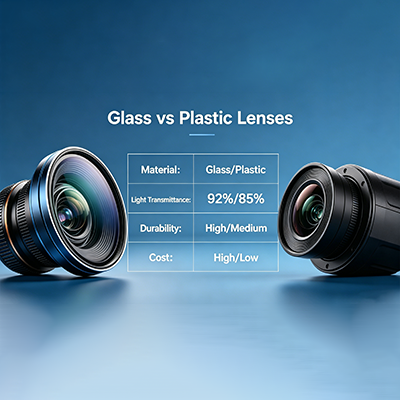
Table of Contents
Key Takeaways
- Glass vs Plastic Lenses: Glass lenses offer far better reliability for automotive applications, making them essential for safety-critical systems including ADAS and DMS.
- Glass lenses provide stable performance from -40℃ to 125℃, excellent UV resistance, and consistent optical quality over the long vehicle service life.
- Plastic lenses are only suitable for low-cost, non-safety in-vehicle cameras and cannot meet strict automotive reliability standards.
- TOWIN supplies professional automotive glass lenses with M12/C/CS mounts, supporting custom designs and quick delivery.
- Glass is the preferred choice for ADAS, DMS and front-view cameras; plastic is only recommended for non-critical, budget-limited projects.
Introduction
Automotive cameras work in extreme environments (-40℃~125℃, vibration, UV, wear). Lens material affects performance, lifespan and safety; compromising on it causes costly malfunctions for ADAS/DMS.
This guide compares Glass vs Plastic Lenses for automotive use, helps you choose. TOWIN produces reliable glass lenses meeting strict industry standards.
Critical Reliability Requirements for Automotive Lens
Lenses must endure harsh conditions (comply with AEC-Q100). Key factors:
- Temperature Stability: -40℃~125℃, no deformation/focus shift.
- Optical Consistency: 5–10 years of high light transmittance, minimal chromatic aberration.
- Durability: Resist scratches, vibration, salt spray, UV (no yellowing/degradation).
- Precision: Stable focal length/clarity for 1MP~10MP+ cameras.
- Compliance: Meet automotive safety/performance certifications.
Glass vs Plastic Lenses: Core Parameter Comparison
Comparison Factor | Glass Lenses | Plastic Lenses | Automotive Advantage |
|---|---|---|---|
Temperature Stability | Low thermal expansion; stable at -40℃~125℃; no focus drift | High thermal expansion; deforms at 60℃+; focus shifts easily | Glass |
Light Transmittance | 90%+ transmittance; IR-corrected for day/night imaging | 75–85% transmittance; fades over time; poor low-light performance | Glass |
UV & Aging Resistance | No yellowing; stable for 5–10 years; resists UV damage | Yellowing after 1–2 years; UV exposure degrades optical performance | Glass |
Hardness & Scratch Resistance | High hardness (Mohs 5–6); resistant to scratches and debris | Low hardness (Mohs 2–3); easily scratched; requires extra coating | Glass |
Weight & Cost | Slightly heavier; higher initial cost | Lightweight; lower initial cost; easy to mass-produce | Plastic |
Precision & Tolerance | Stable mold precision; minimal shrinkage; consistent performance | Injection molding shrinkage; poor tolerance; inconsistent focus | Glass |
Note: For safety-critical automotive systems, the long-term reliability of glass lenses far outweighs the minor cost and weight advantages of plastic.
Why Glass Optics Dominate Automotive Reliability
Glass lenses are the gold standard for automotive safety systems because they address the industry’s most critical pain points—something that sets Glass vs Plastic Lenses apart in automotive applications. Here’s a detailed breakdown of their key advantages:
1. Extreme Temperature Stability for All Climates
Automotive cameras are exposed to extreme temperature fluctuations—from desert heat to arctic cold. Glass has a low thermal expansion coefficient, meaning it won’t expand, contract, or deform in these conditions. This stability ensures:
- No focus drift, even after years of temperature cycling.
- Consistent image clarity in all weather conditions.
- Compliance with AEC-Q100 automotive standards for temperature resistance.
Unlike plastic, which softens and deforms at high temperatures (often above 60℃), glass maintains its shape and performance, making it ideal for front-view, side-view, and ADAS cameras exposed to direct sunlight.
2. Long-Term Optical Consistency
Automotive lenses need to perform reliably for 5–10 years—the typical lifespan of a vehicle. Glass lenses offer unmatched optical stability:
- High light transmittance (90%+) that doesn’t fade over time.
- IR-corrected coating (available in TOWIN lenses) for clear day/night imaging.
- Minimal chromatic aberration, ensuring accurate color reproduction and object recognition.
Plastic lenses, by contrast, yellow and degrade when exposed to UV radiation, leading to reduced visibility and potential safety risks after just 1–2 years of use.
3. Durability for Harsh Automotive Environments
Automotive cameras are exposed to vibration, debris, salt spray, and chemicals. Glass lenses are far more durable than plastic:
- High hardness resists scratches from dust, sand, and minor impacts.
- Resistant to salt spray and chemicals (e.g., road salt, cleaning agents).
- Stable under constant vibration (common in engines and body panels) without damage.
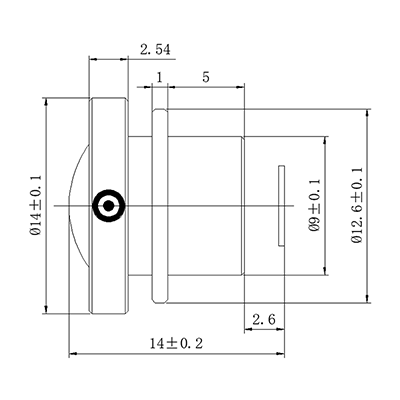
1.9mm 8-Megapixel M12 Fisheye CCTV lens
Plastic Lenses: When to Use Them (and When to Avoid)
While glass is superior for safety-critical applications, plastic lenses have their place in non-safety automotive cameras—an important distinction when evaluating Glass vs Plastic Lenses. Below is a breakdown of their best uses and limitations:
Best Use Cases for Plastic Lenses
- Non-safety in-vehicle cameras (e.g., rear-seat monitoring, infotainment displays).
- Low-cost, short-lifespan automotive projects (e.g., temporary fleet monitoring).
- Lightweight applications where weight is a top priority (e.g., small interior cameras).
When to Avoid Plastic Lenses
- ADAS systems (e.g., lane departure warning, automatic emergency braking).
- DMS (Driver Monitoring Systems) that require consistent long-term performance.
- Outdoor cameras (front-view, side-view) exposed to extreme temperatures and UV radiation.
- High-resolution cameras (5MP+) where precision and clarity are critical.
Automotive Lens Selection Guide: Glass vs Plastic Lenses
Project Requirement | Recommended Lens Material | TOWIN Lens Recommendation | Key Considerations |
|---|---|---|---|
ADAS/DMS/Front-View Camera | Glass | M12/S-Mount Automotive Lenses (Low Distortion, IR-Corrected) | Temperature stability, UV resistance, high resolution |
Rear-Seat/Infotainment Camera | Plastic (or Glass for longer lifespan) | Economical M12 Lenses | Cost, weight, non-safety priority |
High-Resolution (5MP+) Camera | Glass | C-Mount/CS-Mount Megapixel Lenses | Precision, minimal aberration, consistency |
Extreme Environment (Desert/Arctic) | Glass | Custom Glass Lenses (Wide Temperature Range) | Temperature stability (-40℃~125℃) |
Low-Cost, Short-Term Project | Plastic | Economical Plastic Lenses | Budget, short lifespan acceptable |
FAQs
Q1: Are glass lenses really more reliable than plastic for automotive cameras?
A1: Yes. Glass lenses offer superior temperature stability, UV resistance, and durability—critical for long-term automotive use, outperforming plastic in ADAS/DMS.
Q2: Can plastic lenses pass automotive temperature cycling tests?
A2: Most fail strict tests (-40℃~125℃), deforming at high temperatures and causing focus drift.
Q3: Is the extra cost of glass lenses worth it for automotive projects?
A3: Yes for safety-critical systems (reduces maintenance/costly failures); plastic is cost-effective for non-safety projects.
Q4: Does TOWIN offer automotive glass lenses with different mounts?
A4: Yes, including M12/S-Mount, C-Mount, CS-Mount, plus low distortion, wide angle, IR-corrected options.
Q5: How long do glass automotive lenses last compared to plastic?
A5: Glass: 5–10 years (matches vehicle lifespan); plastic: degrades in 1–2 years (UV/temperature exposure).
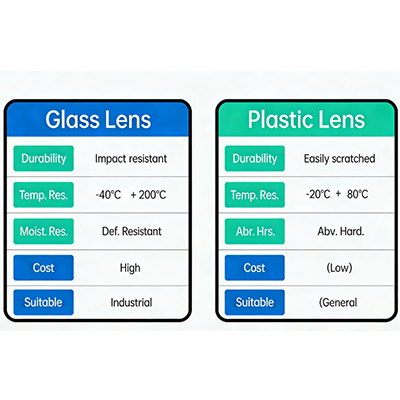
Glass vs. Plastic Lenses
TOWIN: Your Trusted Supplier for Automotive Glass Lenses
As a professional optical lens supplier, TOWIN specializes in high-reliability automotive glass lenses meeting strict industry standards. Why choose TOWIN:
- Custom glass lens solutions for ADAS, DMS, front-view,环视 cameras, tailored to your needs.
- Full mounts: M12/S-Mount, C-Mount, CS-Mount (low distortion, wide angle, IR-corrected for day/night imaging).
- Fast delivery: Streamlined process ensures quick selection, production and shipping.
- Strict quality control: Rigorous testing for temperature stability, durability and optical performance.
- Customer-centric service: Help with lens selection, custom designs and questions. Contact us at info@towin-elec.com.
Conclusion
For automotive lenses, reliability is non-negotiable—especially for safety-critical systems. Glass outperforms plastic in temperature stability, optical consistency, durability and precision. Glass is the only choice for ADAS, DMS and front-view cameras to ensure long-term performance and safety.
For non-safety, low-cost projects, plastic lenses may be a viable option—but don’t sacrifice reliability for cost in critical applications. When evaluating Glass vs Plastic Lenses for your automotive project, TOWIN is here to help you select the right lens, with professional design, fast delivery, and unmatched quality.
Contact TOWIN today to learn more about our automotive glass lenses, request a sample, or get a quote. Let us be your trusted partner for reliable optical solutions.