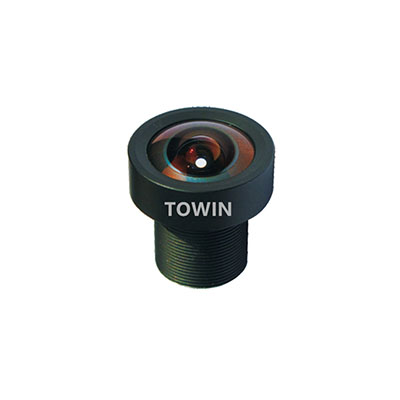



TOWIN’s 5 Machine Vision Lenses: An Introduction
12/22/2025
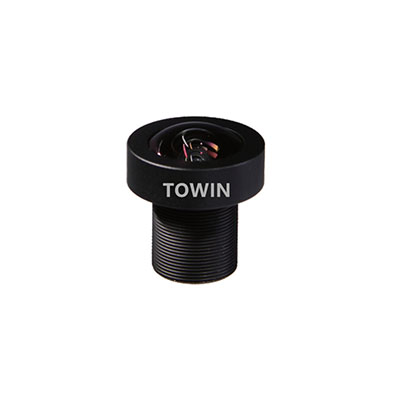
1/2.7″ 3.2mm M12 wide-angle lens
12/24/2025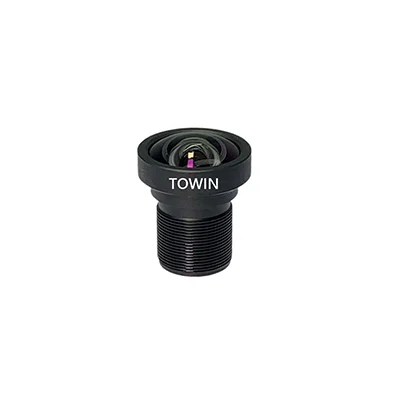
Table of Contents
Introduction: Low Distortion Lens – The Core of Drone Photography
In recent years, drone technology has developed rapidly and has been widely used in various scenarios such as professional fields, public entertainment, commercial cooperation, and industrial inspection. However, distortion issues commonly occurring in aerial photography, such as edge stretching and straight line bending of images, seriously affect the shooting effect. The launch of TOWIN Low Distortion Lens has accurately addressed this pain point. This series of lenses can maximize the suppression of image distortion, accurately restore the proportion and shape of the shooting object, and significantly improve image sharpness, color consistency, and edge resolution, making it the core support for high-quality drone aerial photography.
Technical Analysis: Optical Design and Principle of Low Distortion Lenses
With sophisticated optical design and the application of special materials, low distortion lenses can minimize geometric distortions (such as barrel distortion and pincushion distortion) at the edge of images, ensuring that the shape and proportion of objects are truly restored from the center to the edge of the image. Its core design principles and technical points are as follows:
7.5mm 45° M12 Low distortion lens
1. Types and Causes of Distortion
Distortion is mainly divided into two types: barrel distortion (edges expand outward, common in wide-angle lenses) and pincushion distortion (edges shrink inward, more common in telephoto lenses). Its essential cause is the inconsistent magnification between the center and the edge of the lens image field, which is specifically affected by factors such as lens design scheme, aperture position, and optical structure complexity.
2. Core Principles of Low Distortion Design
- Aspherical Lenses: By designing complex curved surface shapes to correct the edge light path, distortion can be significantly reduced. For example, a certain wide-angle lens adopts a combination of multiple aspherical lenses, successfully controlling the distortion rate within 0.5% with extremely high edge straight line restoration.
- Optical Coating Technology: Multi-layer coating technology can improve lens light transmittance and effectively suppress glare, while nano-scale coating can further reduce chromatic aberration, avoid edge blurring, and ensure accurate color restoration.
- Floating Lens Group Structure: By dynamically adjusting the distance between lenses in the zoom lens, real-time compensation for distortion changes at different focal lengths is achieved, realizing low distortion performance within the full focal length range.
- Symmetrical Optical Structure: Positive and negative lenses are arranged symmetrically, and imaging is optimized by using the principle of mutual cancellation of distortion. For example, a certain machine vision lens strictly controls the distortion rate below 0.1% through this design.
3. Material and Process Support
- Special Optical Materials: Ultra-low dispersion (ED) glass is used to reduce chromatic aberration interference, and high refractive index materials are matched to optimize the light path, ensuring excellent imaging quality while reducing the lens volume.
- Precision Manufacturing Process: The processing of aspherical lenses needs to reach micron-level precision, and the tolerance during lens assembly also needs to be strictly controlled within the allowable range to avoid introducing additional distortion due to manufacturing errors.
4. Design Optimization and Verification
- Optical Simulation: With the help of professional software to simulate the light tracing process, the lens distortion performance is predicted in advance, and the lens parameters are adjusted iteratively until the preset low distortion standard is reached.
- Structural Stability Analysis: Finite Element Analysis (FEA) technology is used to verify the performance stability of the lens under complex environments such as temperature changes and mechanical vibrations, and a thermal drift compensation mechanism is designed to ensure imaging accuracy under extreme working conditions.

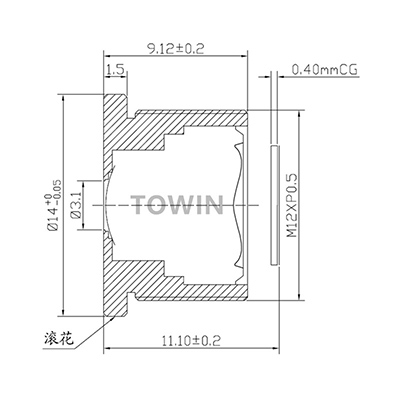
Low distortion CCTV 4.9mm M12 lens
Recommendation of 5 Selected Lenses: Professional Choices for Full-Scene Coverage
The core value of low distortion lenses lies in accurately matching the imaging needs of different aerial photography scenarios. The following 5 selected TOWIN brand products cover five core types: ultra-wide angle, standard medium focus, telephoto, macro, and large aperture. With hard-core parameters and practical design, they realize full-scene coverage from ultra-wide field of view capture to close-range detail shooting, adapting to the professional application needs of various consumer and industrial drones.
1. Ultra-Wide Angle Flagship: Perfect Balance of Large Field of View and Low Distortion
Model: CCL123030MPFR
Core Parameters:
- Focal Length: 12mm (equivalent to 18-22mm in full frame)
- Aperture: F2.8
- Angle of View: Approximately 100° diagonal (ultra-wide angle)
- Distortion: <0.5%
- Interface: M12/C dual interface
- Resolution: 12MP
Advantage Analysis:
100° ultra-wide angle of view can easily handle large-scene shooting such as urban panoramas, mountains and rivers, covering the entire image without significantly retreating, and significantly improving shooting efficiency; the edge image quality is almost free of distortion, especially suitable for scenarios requiring high geometric accuracy such as architectural photography and surveying and mapping modeling, greatly reducing post-correction workload; M12/C dual interface design can not only be compatible with consumer drones, but also adapt to industrial drone gimbals, with full flexibility.
Applicable Scenarios: Landscape photography, urban aerial photography, surveying and mapping modeling, panoramic recording of large-scale events
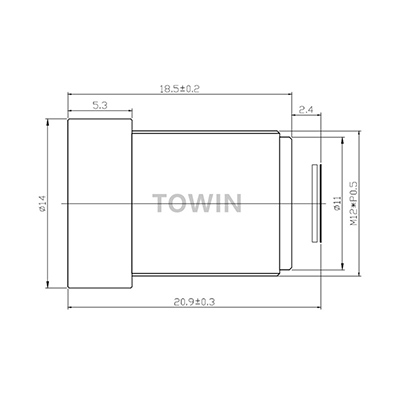
Low distortion wide angle M12 lens
2. Standard Medium Focus All-Rounder: Natural Image Quality Close to Human Vision
Model: CCL2316MPR7
Core Parameters:
- Focal Length: 23mm (equivalent to 35-50mm in full frame)
- Aperture: F1.6
- Angle of View: Approximately 65° diagonal (standard angle of view)
- Distortion: <0.3%
- Interface: M12
- Resolution: 8MP
Advantage Analysis:
The 65° standard angle of view is close to human visual habits, and the images are natural and real when shooting subjects such as people and street scenes; the F1.6 large aperture greatly improves light intake, with excellent noise control in low-light environments, suitable for shooting in low-light scenarios such as dusk and indoors; the lightweight design is small in size, which can perfectly adapt to the compact structure of drones and effectively reduce the load pressure of the fuselage.
Applicable Scenarios: Portrait aerial photography, travel recording, news interviews, low-light environment shooting
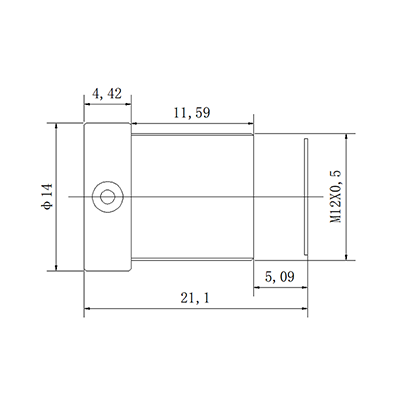
16mm IR-corrected low-distortion CCTV lens
3. Telephoto Detail Tool: Accurate Capture at Long Distances
Model: C7501028M8
Core Parameters:
- Focal Length: 75mm (equivalent to 100-150mm in full frame)
- Aperture: F2.8
- Angle of View: Approximately 32° diagonal (telephoto compression)
- Distortion: <0.1%
- Interface: C-Mount
- Resolution: 5MP
Advantage Analysis:
The telephoto compression effect is obvious, which can accurately capture details of long-distance scenes such as wild animals and sports events. The background blur effect is prominent, which can effectively highlight the shooting subject; the ultra-low distortion rate of <0.1% is suitable for scenarios requiring high geometric accuracy such as bridge inspection and cultural relic shooting; the C interface design is perfectly compatible with industrial drone gimbals and professional aerial photography equipment.
Applicable Scenarios: Ecological photography, sports event aerial photography, security monitoring, cultural relic digital collection
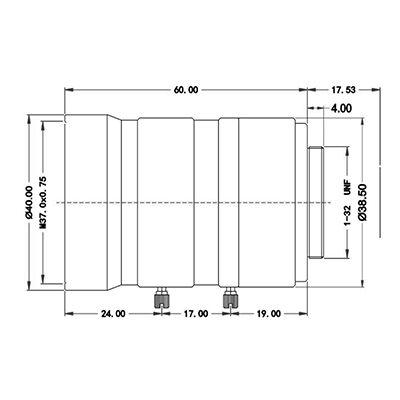
C-Mount 75mm low-distortion lens
4. Macro Explorer: Clear Presentation of the Micro World
Model: M806312804466
Core Parameters:
- Focal Length: 6.3mm (macro dedicated)
- Aperture: F6.6
- Minimum Focus Distance: 15mm
- Magnification: Professional macro (suitable for close-range detail shooting)
- Interface: M8
- Resolution: 5MP
Advantage Analysis:
The 15mm ultra-close focus distance combined with professional macro optical design can clearly present micro details such as insect hairs and plant textures, meeting the needs of close-range accurate shooting; 5MP resolution ensures clear details and natural color restoration; the lightweight M8 interface design accurately adapts to corresponding specifications of consumer drones, with convenient mounting, providing a cost-effective professional solution for macro aerial photography.
Applicable Scenarios: Natural science popularization macro shooting, ecological research detail recording, advertising creative macro shooting, scientific research and teaching micro imaging
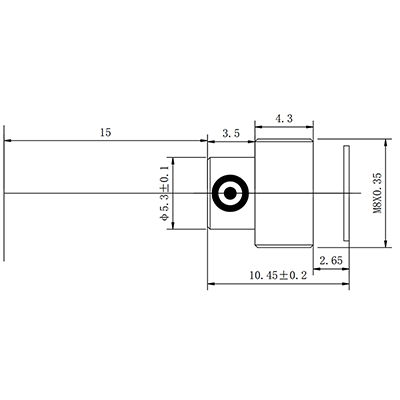
5-Megapixel Low-distortion lens
5. Large Aperture Night Shooting King: Image Quality Guarantee in Low-Light Environments
Model: CCL118080MP
Core Parameters:
- Focal Length: 8mm (equivalent to 12-16mm in full frame)
- Aperture: F1.8
- Angle of View: Approximately 75° diagonal (wide angle)
- Distortion: <-0.9%
- Interface: M12
- Resolution: 12MP
Advantage Analysis:
The F1.8 large aperture design greatly improves light intake, with less noise and pure image quality when shooting in low-light environments such as night and indoors; the 75° wide angle of view balances field of view coverage and distortion control, with no obvious edge distortion when shooting architectural and panoramic images, suitable for panoramic stitching needs; 12MP high resolution can meet 4K video shooting with delicate image details.
Applicable Scenarios: Night urban aerial photography, indoor event recording, architectural night shooting, panoramic stitching production
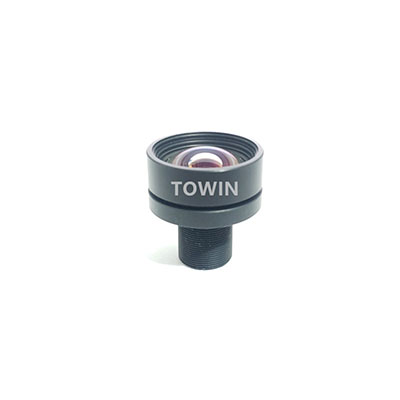
1/1.8″ Low distortion industrial 8mm fixed focus lens
Adaptability Guide: Scenario-Based Lens Selection Table
| Usage Scenario | Core Requirements | Key Specifications | Recommended Product |
| Large-Scale Farmland Monitoring (Continuous Wheat/Rice Cultivation) | Wide-area coverage, lightweight, fog resistance, no missed detection | Field of View (FoV) ≥100° (diagonal), Distortion Rate ≤-1%, Weight ≤50g, IR Correction supported | CCL123030MPFR (3mm focal length, 104° FoV) |
| Cash Crop Detail Diagnosis (Fruit Trees/Tall Crops Micro-Inspection) | Close-range micro-detail identification, low distortion, portability, easy mounting | Focal Length 6.3mm (macro dedicated), Resolution 5MP, Minimum Object Distance (MOD) ≤15mm, Distortion Rate ≤0.3% | M806312804466 (6.3mm focal length, 5MP resolution, M8 interface) |
| Ultra-Wide Landscape (Mountains/Lakes/Grasslands) | Panoramic presentation, regular lines, anti-glare, high dynamic range | FoV ≥100° (diagonal), Distortion Rate ≤0.9%, Dynamic Range ≥12 stops, Multi-layer Coating supported | CCL118080MP (8mm focal length, 59° FoV, F1.8 large aperture) |
| Long-Distance Detail Capture (Snow Mountain Peaks/Wildlife) | Long-distance precise focusing, spatial compression effect, anti-shake, low distortion | Focal Length ≥70mm, Distortion Rate ≤0.3%, Resolution ≥8MP, Weight ≤300g | C7501028M8 (75mm focal length, 8MP resolution) |
| Building Complex Panorama (CBD/Ancient City Blocks) | Regular lines, accurate color reproduction, high dynamic range, panoramic coverage | Equivalent Focal Length 16-35mm, Distortion Rate ≤0.5%, High color accuracy, Dynamic Range ≥14 stops | CCL2316MPR7 (16mm focal length, 38° FoV) |
| Commercial Night Photography (Bridges/Neon Blocks) | Low-light noise reduction, anti-glare, shallow depth of field, clear light lines | Aperture ≥F1.8, Distortion Rate ≤0.9%, Multi-layer Coating (anti-ghosting) supported, Resolution ≥5MP | CCL118080MP (F1.8 aperture, IR Correction supported) |
Creative Performance of Low Distortion Lenses in Aerial Photography
By accurately restoring spatial geometric relationships and eliminating image edge distortion, low distortion lenses provide solid technical support for aerial creative shooting and unlock diverse shooting methods:
1. Geometric Aesthetics: Enhancing Picture Order and Abstract Expression
In architectural and urban aerial photography, it can accurately capture straight lines, rectangles and other architectural structures, avoid edge bending, and enhance architectural textures with side light to create a highly technological picture atmosphere; when shooting top-down regular arranged natural landscapes such as farmland and vineyards, it can convert crop distribution into regular abstract geometric patterns; when shooting canyons at low altitude, it can naturally extend the lines of rocks and rivers to enhance the sense of immersion in the picture.
2. Perspective Control: Balancing Spatial Layers and Picture Realism
Using a medium-telephoto low distortion lens (such as 75mm) to shoot people and backgrounds can use telephoto compression to pull close the distant view, keep distant mountains, buildings and other backgrounds clear, and highlight the main body’s dynamics; using a wide-angle low distortion lens to fly at low altitude, combined with gimbal pitch adjustment, can simultaneously cover ground and sky details, enrich picture layers, and present an open sense of space.
3. Dynamic Capture: Accurately Restoring Motion Trajectories and Shapes
When shooting high-speed moving scenes such as racing drones and racing cars, low distortion lenses can avoid motion trajectory distortion and truly restore the sense of speed; when shooting slow-motion fluid movements such as waterfalls and cloud layers, they can maintain the uniform width of water flow and cloud layers, presenting a “silk-like” delicate texture.
4. Post-Creation: Reducing Difficulty and Expanding the Boundaries of Digital Art
The low distortion feature can greatly reduce image misalignment during panoramic stitching, generating high-precision urban panoramic images (such as M300 RTK multi-camera scanning scenarios); when scanning ancient buildings with lidar technology, accurate geometric restoration can improve the accuracy of point cloud data, helping to generate interactive virtual models and providing digital support for cultural heritage protection and exhibitions.
5. Industry Integration: Balancing Functional Needs and Creative Expression
In agricultural monitoring, NDVI images generated by multi-spectral low distortion lenses can convert crop health into intuitive abstract art patterns, balancing data analysis and visual aesthetics; in film and television production, low distortion lenses can replace professional film lenses at low cost, truly restore light and shadow layers when shooting urban night scenes, save post-correction time, and improve creative efficiency.
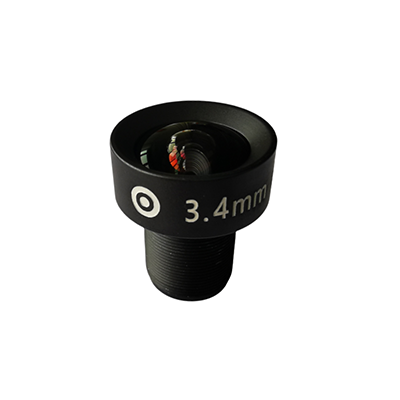
3.4mm Non-distortion Lens
Future Trends: Innovation Directions of Low Distortion Lens Technology
With the in-depth expansion of drone application scenarios and the iteration and upgrading of technical requirements, low distortion lenses are moving towards four core directions: extreme performance, multi-functional integration, lightweight adaptation, and intelligent adaptation. In the future, they will further break technical boundaries and empower a wider range of professional fields and consumer scenarios.
1. Synergy of Extreme Low Distortion and Ultra-High Resolution
In the future, it will move towards near-zero distortion (<0.05%) and simultaneously improve resolution to adapt to 20MP+ sensors. Through AI-assisted optical design, the contradiction between wide-angle/telephoto low distortion will be overcome to meet high-end needs such as 8K aerial photography and high-precision surveying and mapping.
2. Innovation of Lightweight and High-Strength Materials
The core breakthrough is “reducing weight without reducing quality”. Lightweight materials such as carbon fiber reinforced optical plastics are used, combined with wafer-level manufacturing technology to achieve miniaturization, adapting to small and portable drones, and further expanding the application range.
3. Multi-Modal Fusion and Intelligent Adaptation
Promote the integrated integration of low distortion optical systems with multi-spectral, lidar and other technologies, implant intelligent adaptive adjustment technology, realize linkage with drone gimbals and flight control systems, automatically match scene parameters, and reduce professional operation thresholds.
4. Customized Adaptation for Segmented Scenarios
Abandon the general design, and develop special customized lenses for segmented scenarios such as industrial grade (power inspection, cultural relic protection, etc.) and consumer grade (Vlog, travel aerial photography, etc.) to accurately match the special needs of different scenarios.
5. Green and Sustainable Design
Integrate the concept of green and low carbon, adopt environmentally friendly materials and coating processes, optimize the structure to improve material utilization, extend service life, realize the whole life cycle of low carbon environmental protection, and promote the eco-friendly development of the industry.
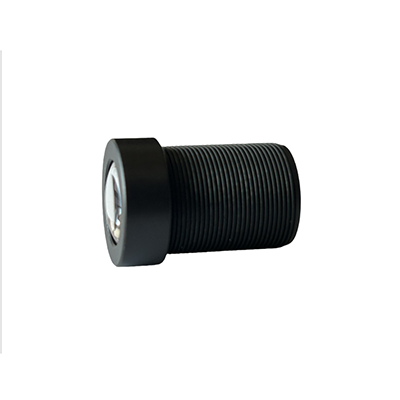
25mm-Low Distortion Telecentric Lens
FAQs
1. Are low distortion lenses necessarily heavier than ordinary lenses?
Not necessarily. Current low distortion lenses can achieve weight reduction through lightweight materials and precision processes. Some models (such as TOWIN CCL2316MPR7) have the same weight as ordinary lenses of the same specification and are suitable for small drones.
2. How to judge whether the distortion rate of the lens meets the needs of your own aerial photography scenario?
Choose according to the precision requirements of the scenario: <0.5% for ordinary aerial photography; <0.1% for high-precision scenarios (surveying and mapping, cultural relic digitization); 0.3%-0.5% is sufficient for daily shooting.
3. Do low distortion lenses need post-correction?
Most do not require complex correction. High-quality low distortion lenses (such as TOWIN CCL123030MPFR) have distortion that reaches a visually acceptable range, and only slight adjustments are needed for ultra-high precision scenarios.
4. How to adapt low distortion lenses with different interfaces to your own drone?
Prioritize matching the original interface: choose M12 or M8 interface for consumer grade (such as CCL2316MPR7, M806312804466), and C interface for industrial grade (such as C7501028M8); an adapter ring is required for cross-interface, and it is recommended to prioritize the original interface.
5. What is the imaging effect of low distortion lenses in low-light environments?
It depends on the aperture and coating. Large aperture (F2.8 and below, such as TOWIN CCL118080MP) has excellent imaging in low light and is suitable for night; small aperture is more suitable for daytime scenarios.
Conclusion
Low distortion lens, core in drone photography, determine aerial imaging accuracy and creative scope via tech and adaptability. From the precise iteration of optical design to the improvement of the full-scene product matrix, from industrial-grade professional applications to consumer-grade creative shooting, low distortion lenses are gradually breaking technical barriers and becoming a key support for empowering the high-quality development of the drone industry.