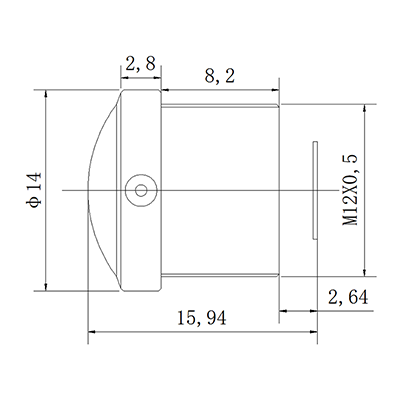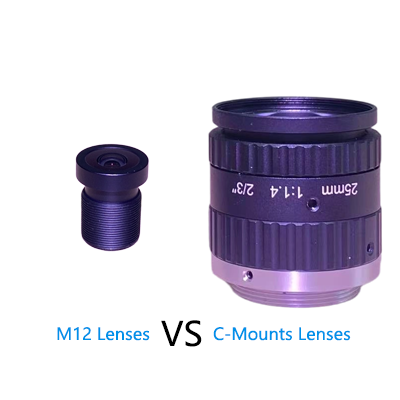



What is a machine vision lens?
08/22/2025
Pinhole lens 10mm IR corrected CCTV lens
08/22/2025
Aperture is the cornerstone of photography, a tool that separates amateurs from professionals. It’s not just a technical setting—it’s the gateway to artistic expression, allowing you to control light, focus, and mood with precision. So, how does aperture work in photography?
How Does Aperture Work in Photography?
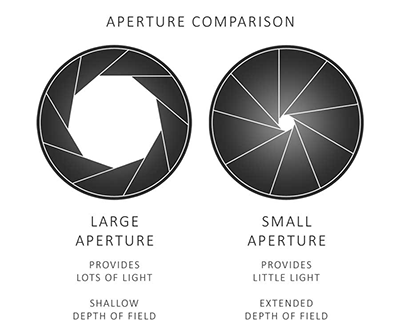
Aperture refers to the opening in your camera lens through which light passes. Think of it as the pupil of an eye: when it’s wide, more light enters; when narrow, less light gets through. This mechanism directly impacts two critical aspects of your photos: exposure (brightness) and depth of field (focus range).
1. Aperture and Exposure: Brightness Control
The size of the aperture is measured in f-stops (e.g., f/1.4, f/2.8, f/8, f/16). A lower f-stop number (like f/1.4) means a wider aperture, letting in more light. Conversely, a higher f-stop (like f/16) narrows the opening, reducing light intake.
- Wide aperture (low f-stop): Ideal for low-light conditions (e.g., indoor events, night scenes) or when you want a bright, vivid image.
- Narrow aperture (high f-stop): Best for bright environments (e.g., sunny landscapes) or when you need to balance exposure with other settings like shutter speed.
Example: Shooting a sunset? Use a narrow aperture (f/11 or higher) to capture sharp details in both the foreground and the sky.

Wide aperture lenses
2. Aperture and Depth of Field: Creative Focus
Depth of field (DoF) determines how much of your image is in focus. Aperture is the primary tool to manipulate this:
- Shallow DoF (wide aperture, low f-stop): Blurs the background, isolating your subject. Perfect for portraits, wildlife, or macro photography.
- Deep DoF (narrow aperture, high f-stop): Keeps most of the scene sharp, ideal for landscapes or architectural shots.
Pro Tip: The closer you are to your subject, the shallower the DoF becomes, even at moderate apertures. Experiment with distance and f-stops to achieve dramatic effects!
3. Aperture and Lens Quality: The Sweet Spot
Every lens has an “optimal” aperture where it performs best in terms of sharpness and clarity. This is often 2–3 stops above the widest setting. For example, a lens with a maximum aperture of f/2.8 might shine at f/5.6 or f/8.
- Why it matters: Shooting at extremely wide apertures (e.g., f/1.2) can introduce softness or chromatic aberration (color fringing). Narrowing the aperture too much (e.g., f/22) causes diffraction, reducing overall sharpness.
Action Step: Test your lens at different apertures to find its sweet spot. Use a tripod and focus on a static subject to compare results.
4. Aperture in Different Photography Genres
Aperture isn’t one-size-fits-all. Here’s how to leverage it in various scenarios:
- Portraits: Use a wide aperture (f/1.8–f/2.8) to blur distractions and make your subject pop.
- Landscapes: Opt for a narrow aperture (f/8–f/16) to ensure everything from rocks to clouds is crisp.
- Street Photography: A mid-range aperture (f/5.6–f/8) balances DoF and shutter speed for moving subjects.
- Astrophotography: A wide aperture (f/2.8 or lower) captures more stars, while a narrow one (f/4–f/5.6) prevents overexposure in long exposures.
5. Aperture and the Exposure Triangle
Aperture doesn’t work in isolation—it’s part of the exposure triangle, alongside shutter speed and ISO. Adjusting one affects the others:
- Wide aperture + fast shutter speed: Freezes motion in bright light (e.g., sports photography).
- Narrow aperture + slow shutter speed: Creates motion blur for artistic effects (e.g., waterfalls).
Example: Shooting a moving car at night? Use a wide aperture (f/2.8) to let in light, paired with a fast shutter speed (1/500s) to avoid blur. How does aperture work in photography?
How Aperture Influences Sharpness
Common Aperture Mistakes to Avoid
Even seasoned photographers make errors with aperture. Here’s how to sidestep them:
- Over-relying on wide apertures: While f/1.4 looks dreamy, it can miss critical details. Use it purposefully, not as a default.
- Ignoring diffraction: Stopping down too far (e.g., f/22) softens images. Stick to f/8–f/11 for landscapes unless necessary.
- Forgetting lens limitations: Cheaper lenses may struggle with sharpness at extreme apertures. Invest in quality glass for consistent results.
Advanced Tip: Aperture and Bokeh
Bokeh—the aesthetic quality of out-of-focus areas—depends heavily on aperture. Wide apertures (f/1.4–f/2.8) produce creamy, rounded bokeh, while narrow ones create harsh, distracting backgrounds.
Pro Hack: Use a prime lens (e.g., 50mm f/1.8) for the smoothest bokeh. Position your subject far from the background to enhance the effect. Recommended Reading: Why is aperture measured in f-numbers?
Final Thoughts
Aperture is your most versatile creative tool. By mastering its relationship with exposure, depth of field, and lens performance, you’ll transform ordinary scenes into extraordinary stories. Remember: photography is about experimentation. Don’t be afraid to test different apertures in various conditions—you’ll discover techniques that make your work uniquely compelling.