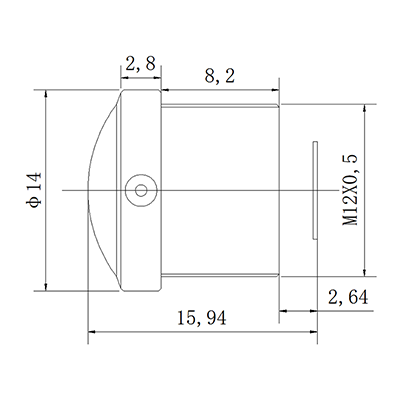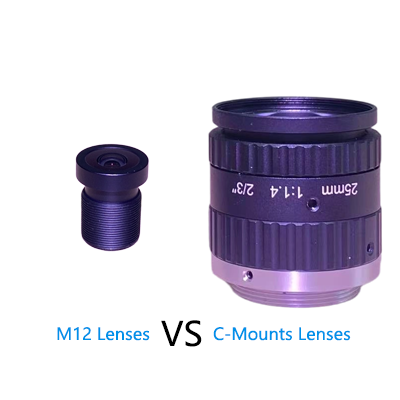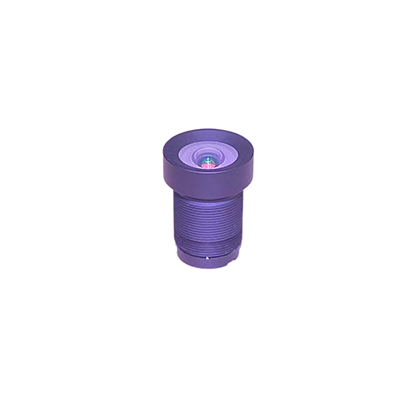



Metal housing CCTV lens
08/20/2025
8.8mm 3-Megapixel Low distortion industrial lens
08/20/2025
Fixed focus lenses, also known as prime lenses, are celebrated for their sharpness, compact design, and affordability. But how do they fare when paired with different camera sensor sizes? Whether you’re shooting with a crop-sensor DSLR, a full-frame mirrorless, or a medium-format beast, understanding compatibility is key to unlocking the full potential of Fixed Focus Lens.
Fixed Focus Lens and Sensor Sizes: Why Compatibility Matters
Camera sensors come in varying sizes, from tiny 1-inch sensors in compact cameras to massive medium-format sensors in professional rigs. Fixed focus lens are designed with a specific focal length (e.g., 35mm, 50mm, 85mm), but their effective field of view changes based on the sensor size. This phenomenon, called the crop factor, can either narrow or widen your angle of view, impacting composition and perspective.
For instance, a 50mm lens on a full-frame camera behaves like a 50mm lens. But mount it on an APS-C camera with a 1.5x crop factor, and it suddenly acts like a 75mm lens. This isn’t inherently bad—it’s just a shift in how the lens interacts with the sensor.Recommended Reading: What are fixed-focus lenses?
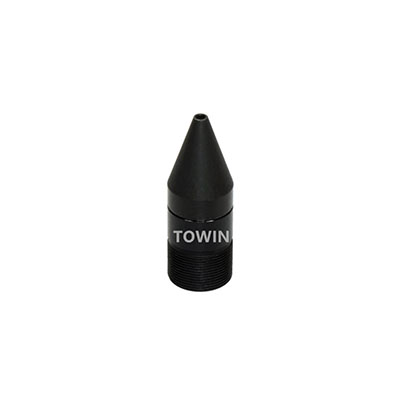
Fixed focus pinhole lens
1. Full-Frame Sensors: The Gold Standard for Fixed Focus Lenses
Full-frame sensors (36x24mm) are the largest commonly used in consumer cameras. Fixed focus lenses designed for full-frame systems deliver their advertised focal length without cropping. This makes them ideal for:
- Portrait photography: 85mm and 135mm lenses excel here, offering flattering compression and creamy bokeh.
- Low-light performance: Larger sensors paired with wide-aperture lenses (e.g., f/1.4) capture more light, reducing noise.
- Wide-angle versatility: 24mm or 35mm lenses provide expansive views without distortion.
2. APS-C Sensors: Crop Factor and Creative Opportunities
APS-C sensors (roughly 23.6×15.7mm) are smaller than full-frame, introducing a crop factor. This means Fixed Focus Lenses behave differently:
- A 35mm lens on APS-C becomes a 52.5mm equivalent (1.5x crop), mimicking a “normal” lens.
- A 50mm lens turns into a 75mm telephoto, great for portraits or tight shots.
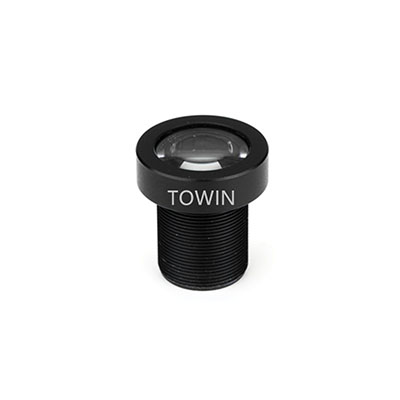
Low-distortion-3.4mm-fixed-focus-industrial-lens
Conclusion
Fixed focus lenses are a fantastic addition to any camera bag, offering superior image quality and simplicity. By understanding how sensor sizes affect focal length and composition, you can select lenses that align with your creative vision.