


Edge-to-edge sharpness in Fisheye lens imaging
02/20/2026
Sustainable optical manufacturing: Eco-friendly glass materials
02/22/2026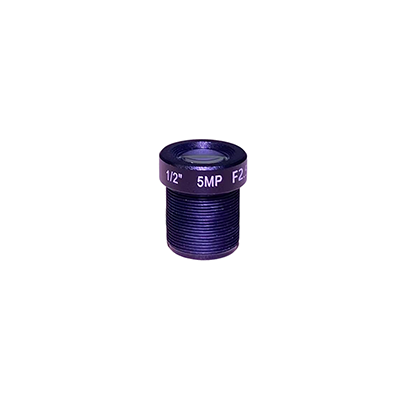
Introduction to Chief Ray Angle (CRA): Foundation of Optical Lens Performance
The Chief Ray Angle (CRA) stands as a fundamental parameter in optical lens design, serving as the backbone of lens functionality and output quality. For professionals in industries ranging from consumer electronics to industrial automation—where TOWIN’s optical lenses are widely applied—understanding CRA is non-negotiable for selecting or designing lenses that meet performance expectations.
CRA is not just a technical detail; it shapes how light interacts with image sensors, dictates edge-to-center image consistency, and determines compatibility with different optical systems. Whether you’re integrating a lens into a smartphone camera, a machine vision setup (TOWIN’s MV/FA lenses), or a security camera (our CS-Mount CCTV lenses), CRA directly impacts the final image’s clarity, brightness, and accuracy.
In this guide, we’ll break down CRA’s definition, core principles, practical applications, and optimization strategies—with insights tailored to TOWIN’s product lineup (M12/S-Mount, C-Mount, CS-Mount lenses) to help you make informed decisions for your projects.
Defining CRA: Key Distinction from Paraxial Rays in Lens Optics
To grasp CRA’s role, it’s critical to distinguish it from paraxial rays—another foundational concept in lens optics:
What is Chief Ray Angle (CRA)?
- CRA is the angle between the chief ray (the central ray of light originating from the edge of the lens’s field of view) and the optical axis of the lens.
- It represents the path of light that passes through the center of the lens’s aperture stop and lands at the edge of the image sensor’s active area.
- Unlike paraxial rays (which are close to the optical axis and simplify lens calculations), CRA focuses on light from the periphery of the field of view—making it vital for edge-image quality.
Core Differences: CRA vs. Paraxial Rays
| Aspect | Chief Ray Angle (CRA) | Paraxial Rays |
| Light Source | Edge of the field of view | Near the optical axis |
| Key Role | Determines edge-image brightness, sensor compatibility, and vignetting | Simplifies lens design calculations (e.g., focal length, magnification) |
| Impact on Quality | Directly affects edge sharpness and uniformity | Minimal impact on peripheral image quality |
| Relevance to TOWIN Lenses | Critical for wide-angle M12 lenses and industrial C-Mount lenses (e.g., ITS traffic lenses) | Used in basic lens design for all TOWIN product categories |
This distinction matters because paraxial rays alone can’t account for real-world performance—especially in lenses with large fields of view (e.g., TOWIN’s Fisheye M12 lenses) or high-resolution sensors, where CRA-driven uniformity is essential.
CRA’s Relationship to Image Sensor Compatibility
One of CRA’s most practical roles is ensuring seamless compatibility between lenses and image sensors. For optimal performance, a lens’s CRA must align with the sensor’s entrance pupil position and pixel arrangement—a priority in TOWIN’s lens design process.
Key Sensor Specifications Influenced by CRA
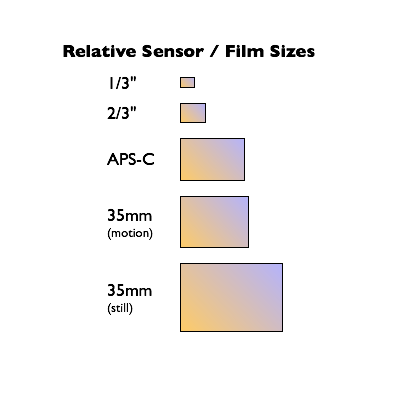
- Sensor Size: Larger sensors (e.g., 1/2″ 5MP sensors used in TOWIN’s CCL121625MPRF lens) require carefully tuned CRA to avoid light fall-off at the edges.
- Pixel Pitch: Smaller pixel pitches (common in high-megapixel sensors) demand tighter CRA control to ensure consistent light delivery to each pixel.
- Sensor Type: CCD vs. CMOS sensors have different entrance pupil characteristics—TOWIN’s CS-Mount lenses (for CCTV/IP cameras) are optimized for both with IR-corrected, multi-coated optics.
Consequences of Misaligned CRA and Sensors
- Vignetting: Darkening of image edges (a common issue if CRA is too steep for the sensor).
- Color Shifting: Uneven color reproduction due to inconsistent light coupling.
- Reduced Resolution: Blurred edges as light fails to hit pixel centers accurately.
TOWIN mitigates these issues by engineering lenses like our M12/S-Mount Low Distortion lenses with CRA matched to popular sensor sizes (e.g., 1/2″, 1/3″)—ensuring plug-and-play compatibility for PCB cameras and surveillance systems.
How CRA Influences Lens Aberration and Image Sharpness
CRA is a primary driver of image quality, as it directly correlates with common lens aberrations and edge-to-center sharpness:
Common Aberrations Linked to CRA
- Coma: Asymmetric blurring of off-axis points (exacerbated by mismatched CRA and sensor size).
- Astigmatism: Different focal lengths for horizontal vs. vertical lines (more pronounced with poorly tuned CRA).
- Vignetting: As mentioned earlier—caused by CRA exceeding the sensor’s ability to capture peripheral light.
CRA’s Impact on Sharpness
- Center Sharpness: Paraxial rays dominate here, so CRA has minimal effect.
- Edge Sharpness: CRA is critical—lenses with CRA aligned to the sensor’s exit pupil (e.g., TOWIN’s S6822023F – IMX335 lens, optimized for the IMX335 sensor) deliver consistent sharpness across the entire frame.
TOWIN’s quality control process includes rigorous CRA testing for all lenses—ensuring aberrations are minimized and sharpness meets industry standards (e.g., 5MP resolution for our C-Mount industrial lens).
Core Principles: Calculating CRA in Single-Element vs. Multi-Element Lenses
Calculating CRA varies based on lens complexity—from simple single-element designs to TOWIN’s multi-element precision lenses (e.g., automotive M12 lens):
Key Principles for CRA Calculation
- 1. Optical Axis Reference: CRA is measured relative to the lens’s optical axis (the central line passing through lens elements).
- 2. Aperture Stop Consideration: The chief ray passes through the center of the aperture stop—so its position dictates CRA.
- 3. Ray Tracing: Mathematical modeling of light paths (used for both single and multi-element lenses).
Calculation Methodologies: Single vs. Multi-Element
| Lens Type | Calculation Approach | TOWIN Application Example |
| Single-Element | Simplified ray tracing: CRA = arctan[(sensor half-diagonal) / (focal length + flange distance)] | Basic pinhole M12 lenses (e.g., TOWIN’s Pinhole S-Mount lenses) |
| Multi-Element | Complex ray tracing (accounting for refraction through each element); software tools (e.g., Zemax) used to optimize CRA | High-performance C-Mount ITS lenses (for traffic monitoring) and CS-Mount vari-focal lenses |
For multi-element lenses—like TOWIN’s M12 Wide Angle lens or industrial FA lens—CRA calculation is integrated into the design phase to balance sharpness, size, and cost.
CRA Measurement Techniques: Tools and Best Practices
Accurate CRA measurement is critical for quality control—especially for mass-produced lenses like TOWIN’s M12/S-Mount series. Below are the industry-standard tools and practices:
Essential Measurement Tools
- Goniometers: Measure the angle of the chief ray relative to the optical axis (precision ±0.1°).
- Optical Benches: Simulate real-world light paths to test CRA in prototype lenses.
- Image Analyzers: Capture test images to quantify CRA-related artifacts (e.g., vignetting).
- Sensor Test Rigs: Pair lenses with target sensors (e.g., 5MP CMOS sensors) to validate CRA alignment.
Step-by-Step Measurement Best Practices
- 1. Mount the lens on a calibrated optical bench, aligned with the optical axis.
- 2. Direct collimated light from the edge of the lens’s field of view (matching target sensor size).
- 3. Use a goniometer to measure the angle of the chief ray at the sensor plane.
- 4. Cross-verify with image analysis: check for edge brightness uniformity and sharpness.
- 5. Document results against tolerance limits (e.g., TOWIN’s CRA tolerance of ±0.2° for industrial lens).
TOWIN applies these practices to every production batch—ensuring consistent CRA performance across our lens lineup.
Field of View (FOV) Correlation: How CRA Shapes Lens Viewing Range
CRA and Field of View (FOV) are closely linked—together, they define how much of a scene a lens can capture:
Core Relationship
- Wide-Angle Lenses: Larger FOV requires higher CRA (e.g., TOWIN’s Fisheye M12 lenses have FOV up to 180° and CRA tailored to capture peripheral light).
- Telephoto Lenses: Narrower FOV means lower CRA (critical for long-distance industrial inspection lenses).
- Tradeoff: Higher CRA can increase vignetting risk—TOWIN mitigates this with multi-element designs and aperture optimization.
Example: TOWIN Lens CRA vs. FOV
| TOWIN Lens Model | FOV | CRA | Application |
| M12 Fisheye Lens | 180° | 45° | Security cameras |
| C-Mount Industrial Lens | 30° | 10° | Machine vision inspection |
| CS-Mount Vari-Focal Lens | 60°–120° | 20°–35° | IP cameras for retail |
CRA vs. Marginal Ray Angle: Critical Differences
While CRA focuses on the central ray from the field edge, marginal ray angle (MRA) refers to the outermost ray from the center of the field of view. Both are critical for lens performance—but serve distinct roles:
| Aspect | Chief Ray Angle (CRA) | Marginal Ray Angle (MRA) |
| Light Source | Edge of the field of view | Center of the field of view |
| Key Role | Determines edge image quality and sensor compatibility | Dictates maximum light throughput and center resolution |
| Aberration Impact | Coma, astigmatism, vignetting | Spherical aberration, chromatic aberration |
| TOWIN Optimization | Tuned for sensor alignment (e.g., IMX335-compatible lenses) | Optimized for aperture efficiency (e.g., F2 aperture in CCL121625MPRF) |
Together, CRA and MRA define the “optical envelope” of a lens—TOWIN’s engineering team balances both to deliver lenses that perform consistently across the entire field of view.
High CRA Lens Applications: Smartphones, Cameras, and Industrial Optics
High CRA lenses (typically CRA >30°) are essential for applications requiring wide FOV and high-resolution edge performance. TOWIN’s high CRA lens lineup serves three key industries:
1. Consumer Electronics (Smartphones/Cameras)
- Use Case: Wide-angle rear cameras and ultra-wide selfie lenses.
- CRA Requirement: 35°–45° to match small sensors (1/3″–1/2″) and avoid vignetting.
- TOWIN Solution: M12 Low Light Sensitive lenses with high CRA and multi-coating for reduced glare.
2. Security & Surveillance
- Use Case: CCTV, IP, and network cameras (indoor/outdoor).
- CRA Requirement: 25°–40° for wide coverage without edge blurring.
- TOWIN Solution: CS-Mount Fixed Focal lenses with IR correction and CRA aligned to 1/2″ sensors—ideal for day/night security.
3. Industrial Optics
- Use Case: Machine vision (MV/FA lenses), traffic monitoring (ITS lenses), and automotive optics.
- CRA Requirement: 15°–30° (balanced for FOV and precision).
- TOWIN Solution: C-Mount industrial lenses (e.g., S7018020F) with tight CRA tolerance for consistent inspection results; automotive M12 lenses optimized for ADAS sensors.
CRA Tolerance Limits: Avoiding Image Degradation
CRA tolerance refers to the acceptable range of deviation from the target CRA value—exceeding these limits leads to image degradation:
Typical CRA Tolerance Ranges (By Application)
| Application | CRA Tolerance | Consequence of Exceeding Limits |
| Consumer Cameras | ±0.5° | Vignetting and color shifting |
| Industrial Machine Vision | ±0.2° | Reduced measurement accuracy |
| Security Cameras | ±0.3° | Edge blurring in low light |
TOWIN’s Quality Control for CRA Tolerance
- Incoming inspection of lens elements to ensure alignment.
- In-line CRA testing during assembly (using optical benches and goniometers).
- Final batch testing with target sensors to validate performance.
- Rejection of lenses outside tolerance—ensuring only high-quality products ship (consistent with TOWIN’s “FAST” and “PROFESSIONAL” brand promises).
Optimizing CRA for Lens Design: Tradeoffs and Strategies
Designing lenses with optimal CRA requires balancing competing goals—image quality, size, cost, and FOV. Below are practical strategies used by TOWIN’s engineers:
Key Tradeoffs
- CRA vs. Lens Size: Higher CRA often requires larger lens elements (e.g., TOWIN’s wide-angle M12 lenses balance size and CRA for PCB camera integration).
- CRA vs. Cost: Multi-element designs to optimize CRA increase production costs—TOWIN offers tiered solutions for budget and high-performance needs.
- CRA vs. Aberrations: Increasing CRA can worsen coma—solved with aspherical elements in premium lenses (e.g., S6822023F – IMX335).
Optimization Strategies
- Sensor-Specific Tuning: Design CRA around popular sensor models (e.g., IMX335, 5MP CMOS) for plug-and-play compatibility.
- Aperture Adjustment: Modify aperture size to balance CRA and light throughput (e.g., F2 aperture in TOWIN’s 1/2″ 5MP lenses).
- Element Configuration: Use multi-element designs (e.g., 6–8 elements in industrial lenses) to correct CRA-related aberrations.
- Flange Distance Matching: Align CRA with flange focal distance (e.g., 17.526 mm for C-Mount lenses) to avoid misalignment.
FAQs
1. What happens if CRA is too high for my sensor?
Excessively high CRA causes vignetting (dark edges), color shifting, and reduced edge sharpness. TOWIN recommends selecting lenses with CRA matched to your sensor’s half-diagonal and entrance pupil position.
2. Do all TOWIN lenses have CRA specifications available?
Yes—all TOWIN lenses (M12/S-Mount, C-Mount, CS-Mount) include CRA data in their technical datasheets. Contact our team at info@towin-elec.com for custom sensor compatibility checks.
3. How does CRA affect low-light performance?
Proper CRA alignment ensures uniform light distribution across the sensor, improving low-light sensitivity. TOWIN’s Low Light Sensitive M12 lenses are optimized for this, with CRA tuned to maximize light coupling in dim environments.
4. Can CRA be adjusted after lens production?
No—CRA is fixed during design and assembly. For custom CRA requirements, TOWIN offers OEM/ODM services to tailor lenses to your specific needs.
5. Is CRA more important for wide-angle or telephoto lenses?
CRA is critical for wide-angle lenses (high FOV) because peripheral light paths are more sensitive to misalignment. Telephoto lenses (narrow FOV) have lower CRA but still require precision for center-to-edge sharpness.
Conclusion
Chief Ray Angle (CRA) is far more than a technical parameter—it’s a cornerstone of optical lens performance that directly impacts sensor compatibility, image quality, and application suitability. For professionals sourcing lenses for consumer electronics, security systems, or industrial automation, understanding CRA is key to avoiding costly mistakes and achieving optimal results.
TOWIN’s commitment to “PROFESSIONAL-ALL-EASY-FAST” extends to CRA engineering: our M12/S-Mount, C-Mount, and CS-Mount lenses are designed with precise CRA tuning, sensor-specific compatibility, and strict quality control to meet the demands of global clients. Whether you need a high CRA wide-angle lens for security cameras or a low CRA precision lens for machine vision, TOWIN has the expertise and product range to deliver.
Ready to find the perfect lens with optimized CRA for your project? Contact our team today at info@towin-elec.com or explore our full product lineup at Towin.
.png)