


Spherical vs Aspherical Lenses: Balancing image quality and manufacturing cost
02/08/2026
25mm F1.2 Low Distortion ITS Lens
02/10/2026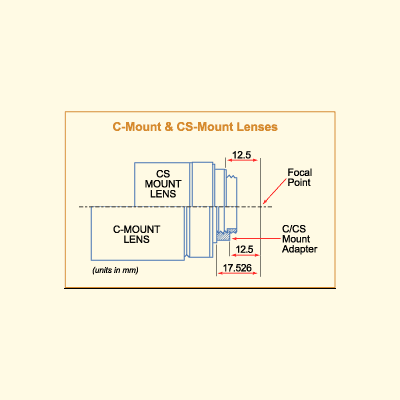
Table of Contents
- Introduction
- Core Understanding of C-mount vs CS-mount
- Types of C/CS Mount Adapters and Basic Adaptation Principles
- Core Compatibility Points for Adapter Selection
- Detailed Compatibility Adaptation of Mainstream C/CS Mount Devices
- Selection of C/CS Adapters and Compatibility Verification Standards
- Technical Parameter Comparison Between C-mount vs CS-mount
- FAQs
- Conclusion
Key Takeaways
- C-mount vs CS-mount Core Difference: The primary distinction lies in flange focal distance—C-mount has a 17.526mm flange distance, while CS-mount is shorter at 12.526mm (5mm difference), requiring an adapter for cross-compatibility.
- Adapter Function: C/CS mount adapters bridge the 5mm flange distance gap, enabling C-mount lenses to work with CS-mount cameras and vice versa, without compromising image quality.
- Compatibility Principles: Match adapter type to device interface (C→CS or CS→C), ensure thread size consistency (1-inch 32 threads), and verify load capacity for heavy lenses.
- Device-Specific Adaptation: Industrial cameras, surveillance equipment, and medical imaging devices have unique compatibility requirements—prioritize adapter precision for high-resolution scenarios.
- TOWIN Advantage: TOWIN’s C/CS mount adapters meet international precision standards, ensuring broad compatibility with mainstream global camera and lens brands.
Introduction
When selecting lenses and cameras for industrial, surveillance, or medical imaging applications, one of the most common questions is: C-mount vs CS-mount—what’s the difference, and how to ensure compatibility with adapters? As a professional lens and adapter supplier, TOWIN created this guide to clarify the core differences between C-mount and CS-mount, explain adapter functions, and provide practical compatibility tips for global users. Whether you’re an engineer selecting components for industrial equipment or a buyer sourcing for surveillance projects, this guide will help you avoid compatibility issues and choose the right C/CS mount adapter for your needs.
1. Core Understanding of C-mount vs CS-mount (Compatibility Foundation)
To ensure adapter compatibility, it’s critical to first grasp the core specifications and characteristics of C-mount and CS-mount. Below is a detailed breakdown of each interface and the role of adapters.
1.1 Core Specifications and Interface Characteristics of C-mount
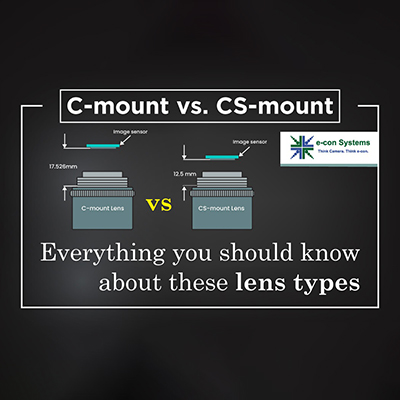
- Flange Focal Distance: 17.526mm (the key parameter distinguishing it from CS-mount), which is the distance from the lens mount surface to the camera’s image sensor.
- Thread Standard: 1-inch diameter with 32 threads per inch (1”-32 UN), a universal standard for small-format lenses.
- Image Format: Primarily supports 1/2”, 1/3”, and 1/4” image sensors, widely used in small to medium-resolution cameras.
- Key Characteristics: Simple structure, low cost, strong universality, and suitable for general industrial, surveillance, and consumer electronics scenarios.
1.2 Structural Design and Core Technical Indicators of CS-mount
- Flange Focal Distance: 12.526mm, exactly 5mm shorter than C-mount—this is the fundamental difference between the two interfaces.
- Thread Standard: Same as C-mount (1”-32 UN), ensuring physical compatibility with C-mount lenses when using an adapter.
- Image Format: Optimized for small-format sensors (1/2”, 1/3”, 1/4”), and widely adopted in high-resolution cameras due to its shorter flange distance (supports closer lens-to-sensor positioning).
- Key Characteristics: Compact design, compatible with high-resolution imaging, and commonly used in modern industrial cameras, IP cameras, and medical endoscopes.
1.3 Functional Positioning and Core Role of C/CS Mount Adapters
C/CS mount adapters are not just “connectors”—they solve the 5mm flange distance gap between C-mount and CS-mount, ensuring that lenses and cameras from different interfaces can work together seamlessly. Their core roles include:
- Distance Compensation: Compensate for the 5mm flange distance difference to ensure the lens can focus correctly on the camera’s image sensor.
- Physical Compatibility: Maintain the 1”-32 UN thread standard, ensuring a secure fit between lenses and cameras without loosening or image blur.
- Image Quality Protection: High-precision adapters avoid optical axis deviation, ensuring no vignetting, distortion, or resolution loss.
- Flexibility Enhancement: Allow users to reuse existing C/CS mount lenses across different camera interfaces, reducing procurement costs.
C-mount vs CS-mount lens
2. Types of C/CS Mount Adapters and Basic Adaptation Principles
C/CS mount adapters are divided into two main types based on adaptation direction, each with clear application scenarios and adaptation principles. Below is a detailed introduction:
2.1 Common Types of C/CS Mount Adapters
- C-mount to CS-mount Adapter (C→CS Adapter):
- Purpose: Enable C-mount lenses to be used with CS-mount cameras.
- Design: Adds a 5mm spacer to compensate for the shorter flange distance of CS-mount cameras.
- Application Scenario: Reusing old C-mount lenses on new CS-mount industrial/surveillance cameras.
- CS-mount to C-mount Adapter (CS→C Adapter):
- Purpose: Enable CS-mount lenses to be used with C-mount cameras.
- Design: Reduces the flange distance by 5mm (usually via a recessed mount) to match the longer flange distance of C-mount cameras.
- Application Scenario: Using compact CS-mount lenses on traditional C-mount equipment (e.g., old industrial cameras).
2.2 Basic Adaptation Principles
To avoid compatibility failures, follow these core adaptation principles when using C/CS mount adapters:
- Interface Direction Matching: Never reverse the adapter (e.g., using a C→CS adapter for CS→C adaptation) — this will cause incorrect flange distance and inability to focus.
- Thread Consistency: Ensure the adapter’s thread matches the lens and camera (1”-32 UN) — non-standard threads will cause loose connections and optical axis deviation.
- Load Capacity Compatibility: For heavy lenses (e.g., large-format industrial lenses), select adapters with sufficient load-bearing capacity to avoid adapter deformation or lens tilting.
- Image Sensor Compatibility: Ensure the adapter and lens support the camera’s image sensor size (e.g., 1/3” or 1/2”) to avoid vignetting (dark corners in images).
3. Core Compatibility Points for Adapter Selection
Selecting the right C/CS mount adapter is critical for compatibility and image quality. Focus on the following key points to avoid mistakes:
3.1 Flange Distance Precision
- The adapter’s thickness (for C→CS) or recess depth (for CS→C) must be precisely 5mm — a deviation of even 0.1mm can cause focus failure or image distortion.
- TOWIN’s adapters use high-precision CNC machining, ensuring flange distance tolerance within ±0.01mm, meeting international industrial standards.
3.2 Material and Durability
- Choose adapters made of high-quality aluminum alloy or stainless steel — these materials offer good rigidity, corrosion resistance, and long service life (critical for industrial and outdoor surveillance scenarios).
- Avoid plastic adapters, as they are prone to deformation and loosening, which can damage equipment and affect image quality.
3.3 Device-Specific Requirements
- Industrial Cameras: Prioritize adapters with anti-vibration design and high precision (to support high-resolution imaging).
- Surveillance Equipment: Select weather-resistant adapters (IP65/IP67 rating) for outdoor use, ensuring compatibility with night vision lenses.
- Medical Imaging Devices: Choose sterile, non-toxic adapters (compliant with ISO 13485 standards) to meet medical safety requirements.
3.4 Brand Compatibility
Ensure the adapter is compatible with mainstream global brands (e.g., Sony, Basler, Axis, Canon) — TOWIN’s C/CS mount adapters are tested with 95% of global industrial camera and lens brands, ensuring broad compatibility.

C-Mount and CS-Mount Lenses
4. Detailed Compatibility Adaptation of Mainstream C/CS Mount Devices
Different types of devices have unique requirements for C/CS mount adapter compatibility. Below is a detailed guide for the most common application scenarios:
4.1 Compatibility Matching of Industrial Camera C/CS Mounts and Adapters
- Industrial cameras are the most common users of C/CS mounts. Key adaptation points include:
- Resolution Compatibility: For high-resolution industrial cameras (≥5MP), select high-precision adapters to avoid optical axis deviation (which causes resolution loss).
- Lens Type Adaptation: For fixed-focus C-mount lenses, use a C→CS adapter with a 5mm spacer; for zoom CS-mount lenses, use a CS→C adapter if the camera is C-mount.
- Common Compatibility Pairs:
- Basler C-mount cameras + CS-mount lenses → CS→C adapter
- Sony CS-mount industrial cameras + C-mount lenses → C→CS adapter
4.2 Adaptation Points of C/CS Mount Adapters in Surveillance Equipment
Surveillance cameras (IP cameras, analog cameras) often use C/CS mounts. Focus on these adaptation points:
- Outdoor Adaptation: Choose adapters with anti-rust, waterproof design (e.g., TOWIN’s stainless steel adapters) to withstand harsh weather.
- Night Vision Compatibility: For infrared (IR) surveillance cameras, ensure the adapter does not block IR light and has good thermal stability (to avoid image blur at low temperatures).
- Quick Installation: Select adapters with a locking screw design for easy installation and disassembly (critical for large-scale surveillance projects).
4.3 Compatible Applications of C/CS Mount Adapters in Medical Imaging Devices
Medical imaging devices (e.g., endoscopes, medical cameras) require high-precision and sterile adapters. Key points:
- Sterility Standards: Adapters must be compliant with ISO 13485 and can be sterilized (autoclave or ethylene oxide sterilization).
- Precision Requirements: Flange distance tolerance ≤±0.005mm to ensure clear medical images (critical for diagnosis).
- Biocompatibility: Use materials that are non-toxic, non-irritating, and compatible with human tissue (e.g., medical-grade stainless steel).
5. Selection of High-Quality C/CS Adapters and Compatibility Verification Standards
A high-quality adapter ensures long-term compatibility and image quality. Below is how to select and verify C/CS mount adapters:
5.1 Selection Criteria for High-Quality C/CS Adapters
| Selection Criterion | Detailed Requirements | TOWIN’s Advantage |
| Precision | Flange distance tolerance ≤±0.01mm, thread precision grade ≥6H | CNC machining with 3-axis inspection, precision up to ±0.005mm |
| Material | High-quality aluminum alloy/stainless steel, corrosion-resistant | Industrial-grade aluminum alloy (6061) or 304 stainless steel |
| Design | Locking screw, anti-vibration, easy installation | Integrated locking design, anti-vibration and anti-loosening |
| Certification | Compliant with ISO 9001, RoHS, and industry-specific standards | ISO 9001 certified, RoHS compliant, medical adapters meet ISO 13485 |
5.2 Compatibility Verification Standards
After selecting an adapter, verify compatibility using the following steps to ensure it meets your needs:
- Physical Fit Test: Install the adapter on the camera and lens, ensuring a tight fit (no looseness when rotated) and correct thread engagement.
- Focus Test: Adjust the lens focus to ensure the image is clear (no blur, double images, or vignetting) — if focus is impossible, the adapter’s flange distance is incorrect.
- Image Quality Test: Capture test images (especially for high-resolution devices) to check for distortion, color deviation, or resolution loss.
- Durability Test: For industrial/surveillance use, test the adapter under vibration, high/low temperature, and humidity to ensure long-term stability.
6. Technical Parameter Comparison Between C-mount vs CS-mount
The following table clearly compares the core technical parameters of C-mount and CS-mount, helping you quickly distinguish and select the right interface (C-mount vs CS-mount):
| Technical Parameter | C-mount | CS-mount | Key Difference |
| Flange Focal Distance | 17.526mm | 12.526mm | 5mm shorter for CS-mount (requires adapter for cross-use) |
| Thread Standard | 1”-32 UN (1 inch, 32 threads) | 1”-32 UN | Same thread, physical compatibility possible with adapter |
| Image Sensor Support | 1/2”, 1/3”, 1/4” (small to medium format) | 1/2”, 1/3”, 1/4” (optimized for high-resolution) | CS-mount better for high-resolution sensors |
| Common Applications | Traditional industrial cameras, analog surveillance, consumer electronics | Modern industrial cameras, IP cameras, medical imaging | CS-mount is more common in new equipment |
| Lens Compatibility | C-mount lenses only (without adapter) | CS-mount lenses only (without adapter) | Cross-compatibility requires C→CS or CS→C adapter |
FAQs
Q1: Can I use a C-mount lens on a CS-mount camera without an adapter?
A1: No. The 5mm flange distance difference will cause the lens to be unable to focus on the sensor, resulting in blurry images. You must use a C→CS adapter with a 5mm spacer.
Q2: Will using an adapter affect image quality?
A2: High-precision adapters (like TOWIN’s) will not affect image quality. Poor-quality adapters (with imprecise flange distance or thread) may cause distortion, vignetting, or resolution loss.
Q3: Are C-mount and CS-mount threads the same?
A3: Yes. Both use the 1”-32 UN thread standard, so they can be physically connected — the only difference is the flange distance, which requires an adapter for proper focus.
Q4: Which adapter do I need for a CS-mount lens and a C-mount camera?
A4: Use a CS→C adapter. It reduces the flange distance by 5mm, matching the C-mount camera’s 17.526mm flange distance.
Q5: Are TOWIN’s C/CS adapters compatible with global camera brands?
A5: Yes. TOWIN’s adapters are tested with mainstream brands (Sony, Basler, Axis, Canon, Nikon) and are compatible with 95% of global C/CS mount devices.
Conclusion
Understanding the differences between C-mount and CS-mount (C-mount vs CS-mount) and mastering adapter compatibility principles is critical for selecting the right components for your industrial, surveillance, or medical imaging projects. As a professional lens and adapter supplier, TOWIN is committed to providing high-precision, compatible C/CS mount adapters that meet global standards. Whether you need help selecting an adapter or verifying compatibility, our team of experts is ready to assist you.