


1/1.8″ 4.5-18mm IR corrected C-mount CCTV Lens
12/29/2025
CCTV IR corrected 1/3″ 185° M12 Fisheye lens
12/30/2025
Table of Contents
Introduction: Why Automotive Lens Matters for Smart Driving
Automotive intelligence has swept the global automotive industry, and as a core component of smart driving, Automotive Lens has seen exponential growth in market demand. According to the latest industry report, the global automotive lens market size was valued at USD 2.07 billion in 2024 and is projected to reach USD 5.316 billion by 2031 with a CAGR of 14.6% 1. Automakers choosing high-performance, reliable automotive lenses boost vehicle competitiveness and offer safer, comfier drives.
As the “eyes” of autonomous driving and ADAS (Advanced Driver Assistance Systems), automotive lenses are critical for environmental perception. Whether it’s lane keeping, collision avoidance, 360° surround view parking, or driver monitoring, their technical level directly determines the safety and intelligence of vehicles. So, what core technologies empower automotive lenses to become indispensable in smart driving? And how to select the best automotive lens for different scenarios?
Core Technologies of Automotive Lens: A Comprehensive Analysis
The core technology system of automotive lenses is built around three key dimensions: optical design, material craftsmanship, and protection performance. These technologies directly affect imaging quality and environmental adaptability. Below is a detailed breakdown of key core technologies:
1. Optical Design Technology (Core Competitiveness)
The core goal of automotive lens optical design is to achieve high resolution, low distortion, and wide field of view. The current mainstream technologies include aspherical lens design and multi-lens combination optimization:
- Aspherical Lens Technology: High-order aspherical lenses (single-sided, double-sided, or multi-sided) effectively offset barrel distortion from wide angles or pincushion distortion from telephoto lenses. The distortion rate of mainstream automotive lenses can be controlled within 0.5%, and high-end ADAS lenses even below 0.2%. For instance, Hoya’s ultra-low distortion lens tech keeps distortion under 0.5%, ensuring accurate lane line recognition.
- Multi-Lens Combination Structure: Mainstream automotive lenses adopt a 6P1IR structure (6 lenses + 1 IR cut filter). Optical path design with double cemented lenses offsets over 95% axial chromatic aberration, avoiding colored edges.
IP67 Waterproof Automotive Lens
2. Material & Manufacturing Craftsmanship (Reliability Guarantee)
Automotive lenses must adapt to extreme in-vehicle environments, so material selection and manufacturing processes directly determine their reliability:
- Lens Materials: Core lenses use high-transmittance, low-expansion materials like SCHOTT ZERODUR to prevent temp-related cracking/deformation. High-end lenses use glass-plastic hybrids, cutting weight by 25% and cost by 20%.
- Lens Barrel Materials: High-temp PA66 + glass fiber with silicone gaskets counteracts stress, ensuring optical stability. Key joints use fluororubber seals combined with laser welding sealing technology to improve protection performance.
- Precision Manufacturing: Nano-level optical tech ensures aspherical surface error < λ/6 and radius tolerance ±0.008mm. Through automated assembly and machine vision positioning, the coaxiality error of lenses is controlled within 0.02mm, ensuring mass production consistency.
3. Protection & Adaptation Technology (Environmental Adaptability)
Targeting complex in-vehicle environments, protection technology is key to ensuring long-term stable operation of automotive lenses:
- Coating Technology: Multi-layer narrow-band film boosts visible light transmittance ≥95%, cuts stray light 99%, avoids spots. Some high-end lenses use nano-hydrophobic films (contact angle > 110°) to achieve automatic sliding of rainwater and fog droplets.
- Environmental Adaptation Technology: Active heating defrosting and cleaning maintain function in -40℃~85℃ and harsh weather like rain/fog. Special-shaped light shields are adopted to further improve anti-glare capabilities.
Automotive Lens Performance Requirements by Application Scenarios
| Application Scenarios | Core Needs | Key Parameters (Simplified) |
| ADAS Forward Viewing | Accurate long-distance recognition of lane lines, vehicles, pedestrians and traffic signs; support ACC, AEB and other core ADAS functions | FOV: 50° (8mm focal length); Max detection distance: 150-200m; Resolution: ≥8MP; Dynamic resolution: 1920×1080@60fps; Distortion: <0.2%; Transmittance: ≥95%; Temp range: -40℃~85℃; Vibration test: 10-2000Hz |
| 360° Surround View | Blind spot coverage within 3-5m around the vehicle; support panoramic parking and obstacle detection; solve wide-angle distortion | FOV: ≥120° (2.5mm focal length), up to 190° for high-end; Distortion: <0.5%; Protection: ≥IP6K9K; Resolution: ≥2MP; Withstand 80℃, 80bar high-pressure flushing |
| DMS Internal Viewing | Real-time monitoring of driver fatigue/distraction; support facial detail recognition; adapt to complex in-vehicle lighting | FOV: 60°-80°; 850nm IR fill light; Resolution: ≥2MP; Frame rate: ≥30fps; Stray light suppression: ≥98%; Millisecond-level response |
| Electronic Rearview Mirror | Replace traditional optical mirrors; expand field of view; improve adaptability in rain/snow/fog | Resolution: ≥8MP; Delay: <100ms; FOV expanded by 50%-60%; Protection: IP69K; Auto brightness adjustment; Transmittance loss: <3% |
Automotive Lens Performance Requirements & Adaptation Solutions
1. General Performance Requirements
Optical Performance Benchmarks
- Resolution: Mainstream products ≥2MP, high-end ADAS lenses ≥8MP (able to recognize black tires 200 meters away);
- Dynamic resolution: Must reach 1920×1080@60fps to avoid motion blur during high-speed driving;
- Optical indicators: Transmittance ≥90% (high-end products ≥95%), distortion rate <1% (lower for scenario-specific lenses), dispersion coefficient ν≥50 (low-dispersion materials).
Environmental Reliability Requirements
- Temperature and humidity adaptation: Stable operation in the extreme temperature range of -40℃~85℃, no mold or fogging for 500 hours in a humid and hot environment (85℃, 85%RH);
- Protection level: External lenses IP6K9K, internal IP54; pass 500-hour salt spray, no displacement in vibration test;
- Automotive regulations certification: Meet ISO 26262, AEC-Q100; exports adhere to EU Emark, US DOT, China CCC.
2. Scenario-Specific Adaptation Solutions
High-End Autonomous Driving (L2+ to L4) Adaptation Solution
- Core Needs: Multi-scenario fusion perception, high precision, and high reliability.
- Lens Selection: Front 8MP hybrid lenses; surround: 190° wide; DMS+OMS; LiDAR fuses with lenses for multi-sensor perception.
- Technical Optimization: Use AI for auto-focus/exposure; optimize aberration weights to boost lane recognition (MTF ≥0.6@100lp/mm).
Mainstream Passenger Car Adaptation Solution
- Core Needs: Balanced cost-performance, covering basic ADAS and parking functions.
- Lens Selection: Forward viewing 2-5MP all-glass lenses, surround viewing 120° wide-angle lenses (distortion rate <0.5%), rear viewing lenses use high-definition modules with IP69K protection level.
- Technical Optimization: 6P optical structure cuts costs; anti-reflection coating boosts backlight imaging; fits Mobileye, Horizon chips.
Commercial Vehicle Adaptation Solution
- Core Needs: Wide field of view, strong protection, and adaptation to complex road conditions.
- Lens Selection: 360° panoramic (≥150°), side blind spot lenses, IP69K; LC3+ headlights (haze <15%, loss <6%).
- Technical Optimization: Enhanced vibration protection (≥2500Hz), metal brackets; supports 4G remote monitoring for real-time data.
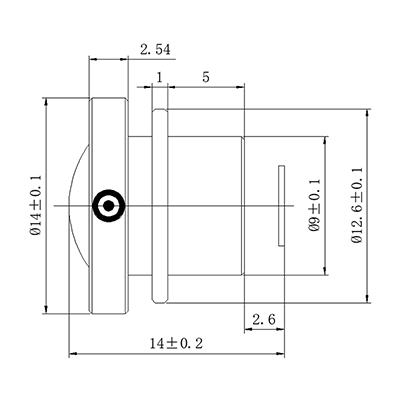
8-Megapixel M12 Fisheye CCTV IP69K waterproof Automotive Lens
Top 6 Best Automotive Lenses in 2025
Based on scenario adaptability, performance parameters, and market reputation, we have selected 6 best automotive lenses for different needs. All products meet international automotive regulations and have been verified in actual vehicle applications:
1. Towin A06012006420F67 8MP Low Distortion Wide-Angle Automotive Lens
Core Highlights
- High resolution + low distortion: 8MP imaging, adapted to 1/2″ sensor, dynamic resolution clearly captures lane lines and traffic signs within 200 meters; TV distortion rate ≤-2.9%, minimal geometric error to avoid target recognition deviation;
- Reliable protection & compact design: IP67 waterproof and dustproof, resisting rain and dust intrusion; Φ10 interface with 20.47mm total length, adapting to most automotive camera modules; 6G+IRCF optical structure ensures visible light transmittance ≥90%;
- Close-range perception: Minimum object distance only 0.2m, balancing long-distance detection and close-range obstacle recognition, adapting to multi-scenario perception needs.
Suitable Scenarios: ADAS forward viewing systems and 360° surround view modules of mainstream passenger cars, especially economical sedans and SUVs equipped with basic L2-level ADAS functions, seamlessly compatible with mid-range vision chip platforms.
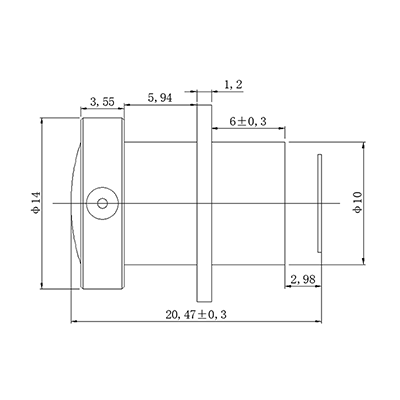
IP67 Waterproof Automotive Lens
2. Towin S01213716020F69 190° Fisheye Automotive Lens for Extreme Environments
Core Highlights
- Top-level protection & environmental adaptation: IP69K highest level waterproof and dustproof, able to withstand 80℃, 80bar high-pressure water flushing; operating temperature covers -40℃~85℃, easily coping with extreme cold, heat, heavy rain and other severe weather; 500-hour salt spray test without corrosion;
- Ultra-wide field of view: 190° diagonal field of view, combined with fisheye optical design, a single lens can cover 3-5 meters blind spots around the vehicle; 160° horizontal field of view meets seamless panoramic stitching;
- Ruggedized design: 2G4P+IRCF optical structure, lens barrel with built-in buffer bracket, no lens group displacement in vibration test (10-2000Hz), adapting to complex road conditions of commercial vehicles.
Suitable Scenarios: 360° panoramic monitoring systems of commercial vehicles such as heavy trucks and buses, as well as blind spot monitoring of special vehicles in extreme environments such as mines and coastal areas, can replace traditional rearview mirrors to achieve all-round environmental perception.
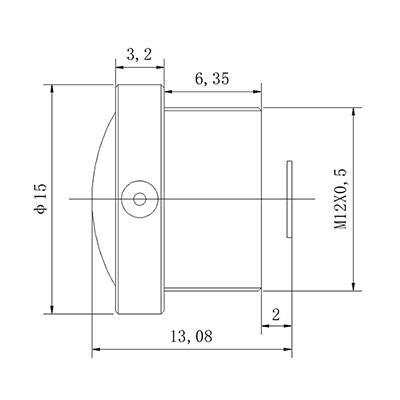
Fisheye IP69K Waterproof M12 Lens
3. Towin S01512323020 8MP 230° Ultra-Wide Fisheye Lens
Core Highlights
- Ultra-large field of view breakthrough: 230° diagonal/horizontal/vertical full field of view, top-level in the industry; a single lens can cover blind spots on both sides and behind the vehicle, significantly reducing the number of lenses in the panoramic system;
- Balance of high pixel & protection: 8MP imaging, better detail recognition than traditional standard-definition fisheye lenses; IP68 waterproof level, combined with M12x0.5 standard interface, strong installation compatibility; manual focus design adapts to different installation heights;
- Lightweight structure: 6G all-glass optical structure, total length only 14.8mm, 15% lighter than similar products, reducing the load of automotive camera modules.
Suitable Scenarios: 360° panoramic parking systems of mid-to-high-end passenger cars, especially SUVs and MPVs with long body lengths, can achieve “under-vehicle perspective” and “seamless stitching” functions to improve parking safety.
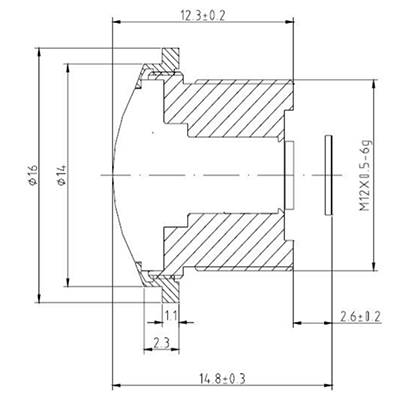
8-Megapixel M12 Automotive lens
4. Towin S06012006428F67 12MP Ultra-Low Distortion Automotive Lens
Core Highlights
- Ultra-high definition resolution: 12MP imaging, adapted to IMX477 high-performance sensor, dynamic resolution up to 4000×3000, clearly recognizing black tires 200 meters away and small text on traffic signs;
- Extreme low distortion: TV distortion rate ≤-2.9%, combined with 6G+IRCF optical correction, excellent chromatic aberration control, avoiding red/blue edges on targets, improving ADAS algorithm recognition accuracy;
- Reliable adaptability: IP67 waterproof level, M12x0.5 interface, total length 20.5mm, deep collaboration with high-end vision chips such as NVIDIA and Horizon, supporting 60fps high frame rate output.
Suitable Scenarios: ADAS forward viewing perception systems of L2+ level high-end passenger cars, such as ACC, AEB, and lane centering functions of new energy smart models, meeting the core needs of high-level ADAS for ultra-high definition and low distortion.
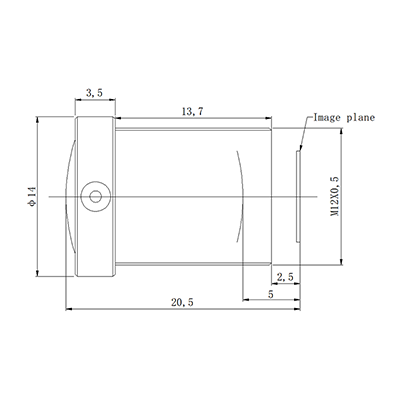
12MP Waterproof IP67 Automotive lens
5. Towin S5318620F69 3MP IR-Enhanced Fisheye Lens
Core Highlights
- Dual protection + IR adaptation: IP69K top-level waterproof and dustproof, built-in IR filter, 850nm IR transmittance ≥85%, clearly recognizing obstacles in low-light environments at night;
- Balanced performance design: 186° diagonal field of view, 3MP imaging meets panoramic monitoring clarity requirements; F2.0 large aperture improves light intake, distortion rate ≤-7.9%, better than similar IR fisheye lenses;
- Stable structure: 6G+IRCF optical structure, lens barrel made of PA66 + glass fiber material, strong thermal stability, no fogging or mold in -40℃~85℃ environment.
Suitable Scenarios: Night panoramic monitoring of commercial vehicles, auxiliary perception of DMS/OMS internal viewing systems of passenger cars, and parking assistance functions in low-light environments such as tunnels and underground garages, balancing protection and night imaging capabilities.
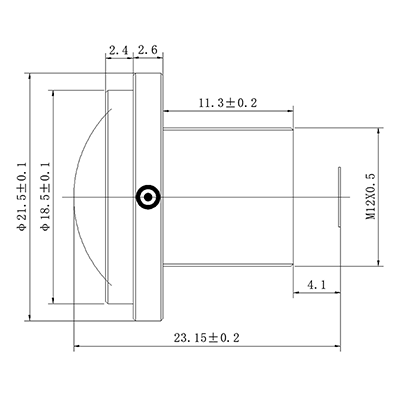
3-Megapixel M12 Fisheye Lens
6. Towin S0301231222468 12.3MP Ultra-Wide Automotive Lens
Core Highlights
- Balance of high pixel & wide angle: 12.3MP adapted to 1/2.3″ IMX577 sensor, 153° diagonal field of view, ensuring ultra-wide coverage while avoiding image stretching caused by excessive distortion;
- High-quality optical performance: F2.4 large aperture improves low-light imaging effect; 4G3P hybrid optical structure (4 glass + 3 plastic), balancing transmittance and lightweight, total length only 15.9mm, adapting to miniaturized camera modules;
- Reliable protection: IP68 waterproof level, minimum object distance 0.1m, able to recognize close-range low obstacles (such as curbs and stone piers), meeting the refined needs of panoramic parking.
Suitable Scenarios: 360° panoramic imaging systems of high-end new energy passenger cars, especially smart models pursuing a balance of “high definition + wide angle”, which can collaborate with domain controllers to achieve multi-lens data fusion and improve the integrity of environmental perception.
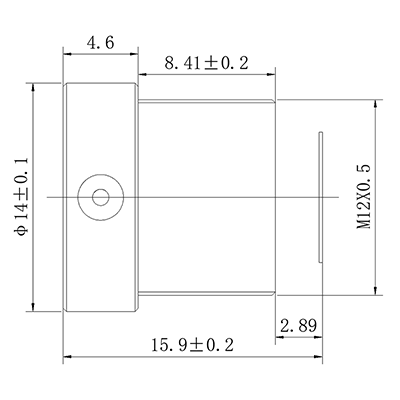
F2.4 IP68 Waterproof Automotive Lens
Future Innovation Trends of Automotive Lens
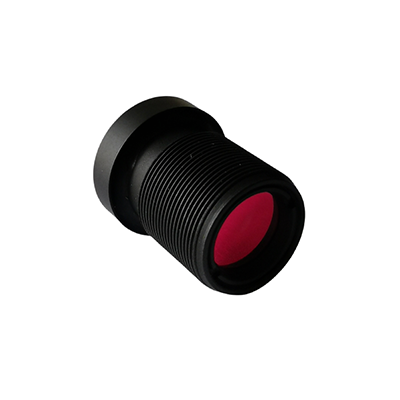
IP67 6mm Waterproof Automotive Wide-Angle Lenses
FAQs
1. How to Judge the Quality of Automotive Lens?
Focus on optics (≥2MP, ≥90% transmittance, <1% distortion), reliability (IP6K9K, -40℃~85℃), certifications (ISO, AEC-Q100). Products from well-known brands such as Sunny Optical and Hoya have more guaranteed quality 5.
2. What is the Service Life of Automotive Lens? How to Maintain It?
Automotive lenses that meet automotive regulations have a design service life of ≥10 years, matching the entire vehicle life cycle. Daily care: Avoid hard wiping, check lens seals, clean regularly in dusty/salty areas for clear imaging.
3. Are High-Pixel Automotive Lenses Necessarily Better Than Low-Pixel Ones?
Not necessarily – choose according to scenario needs. High pixels (≥8MP) suit L2+ forward view for long-range; 2-5MP enough for surround/rear close-range. Blindly pursuing high pixels will increase costs. In addition, pixel improvement needs to be supported by chip computing power, otherwise the performance advantage cannot be fully exerted.
4. Do Different Vehicle Models Have Different Requirements for Automotive Lens?
Passenger cars: mini, low distortion, smart; commercial: wide view (≥150°), strong protection; EVs: light, low power, integrated lenses.
Conclusion
As the core perception component of smart driving, Automotive Lens directly determines the safety performance and intelligent experience of vehicles. With the increasingly strict automotive regulations and continuous upgrading of autonomous driving technology, high resolution, high reliability, miniaturization, and intelligence will become the core development direction of automotive lenses. It is not only the iteration of hardware but also the carrier of software and algorithms, driving the evolution of cars from “mechanical products” to “mobile intelligent terminals”.
When selecting the best automotive lens, it is crucial to match scenario needs, balance performance and cost, and prioritize products that meet international automotive regulations and have been verified by market practice. As tech advances, automotive lenses will be pivotal in creating safer, smarter driving ecosystem.