


Waterproof Fisheye Lens
08/07/2025
Achromatic S-Mount Lens for Color Imaging
08/08/2025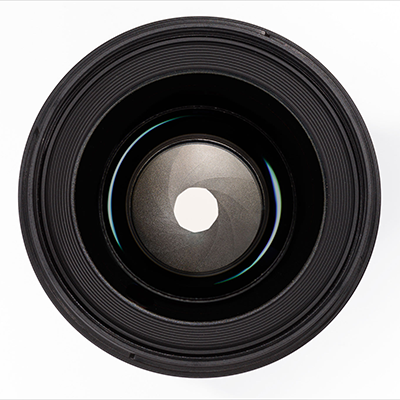
Photography is a blend of art and science, and one of its most critical technical elements is the aperture in a camera lens. This seemingly small component holds immense power over how your images look, feel, and communicate. Whether you’re a beginner or a seasoned pro, understanding aperture is essential for capturing photos that stand out.
What Is Aperture in a Camera Lens?
The aperture is the opening inside your camera lens through which light travels to reach the sensor. Think of it like the pupil of an eye: it expands and contracts to control how much light enters. In photography, aperture is measured in f-stops (e.g., f/1.8, f/8, f/16), with lower numbers representing wider openings and higher numbers indicating narrower ones.
For example, a lens set to f/1.8 lets in significantly more light than one at f/16, making it ideal for low-light situations or achieving a shallow depth of field. Conversely, a smaller aperture like f/16 is perfect for landscapes where you want sharpness from foreground to background.
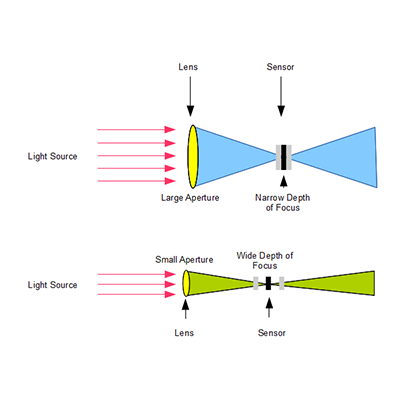
Optimal Aperture for Sharpness
How Aperture Affects Your Photos
Aperture influences three key aspects of photography:
- 1. Exposure (brightness)
- 2. Depth of field (sharpness range)
- 3. Image quality (sharpness and diffraction)
Let’s explore each in detail.
1. Exposure: Brightness and Light Control
The aperture directly impacts how bright or dark your image appears. A wider aperture (e.g., f/1.4) allows more light to hit the sensor, resulting in a brighter photo. This is invaluable in dim environments like indoor events or nighttime shots.
On the flip side, a narrow aperture (e.g., f/22) reduces light intake, requiring longer shutter speeds or higher ISO settings to compensate. While this can be a drawback in low light, it’s useful for balancing exposure in bright conditions, such as sunny outdoor scenes.
2. Depth of Field: Blur vs. Sharpness
Depth of field (DoF) refers to the portion of your image that appears acceptably sharp. Aperture is the primary tool for controlling DoF:
- Wide aperture (low f-number): Creates a shallow DoF, isolating your subject from the background with a creamy blur (bokeh). This technique is popular in portraits and macro photography.
- Narrow aperture (high f-number): Increases DoF, keeping more of the scene in focus. Landscape photographers often use apertures like f/11 or f/16 to ensure everything from rocks to mountains is sharp.
3. Image Quality: Sharpness and Diffraction
While aperture offers creative flexibility, it also affects technical image quality. Most lenses produce their sharpest results at mid-range apertures (e.g., f/5.6 to f/8). At extremely narrow settings (e.g., f/22), a phenomenon called diffraction can occur, where light waves bend around the aperture blades, reducing overall sharpness.
Conversely, very wide apertures (e.g., f/1.2) may introduce softness at the edges of the frame, though modern lenses have minimized this issue.
Practical Tips for Using Aperture
Now that you understand the basics, here’s how to apply aperture creatively:
- Portraits: Use a wide aperture (f/1.8 to f/2.8) to blur distractions and draw attention to your subject’s face.
- Landscapes: Opt for a narrow aperture (f/8 to f/16) to maximize sharpness across the scene.
- Low light: Widen the aperture to gather more light, avoiding grainy high-ISO shots.
- Astrophotography: A fast lens (f/2.8 or wider) is essential for capturing stars without motion blur.

Does Aperture Affect Image Sharpness
Common Aperture Myths Debunked
1. “A wider aperture always means better photos.”
- Not true! While wide apertures are great for bokeh, they can make focusing tricky and reduce DoF excessively.
2. “Small apertures are useless.”
- False! Narrow apertures are vital for landscapes and long exposures, despite potential diffraction.
3. “All lenses perform equally at the same aperture.”
- Nope! Lens quality varies, and some lenses are sharper at specific f-stops.
Advanced Concepts: Aperture and Lens Speed
A lens’s maximum aperture (e.g., f/1.4) determines its “speed.” Faster lenses (with wider max apertures) are more expensive but offer superior low-light performance and creative control. For example, a 50mm f/1.8 lens is affordable and versatile, while a 85mm f/1.2 is a professional-grade portrait tool.

How Aperture Affects Your Photos
Aperture vs. Shutter Speed vs. ISO
Aperture is part of the exposure triangle, alongside shutter speed and ISO. These three settings work together to balance light and artistic effect:
- Aperture: Controls DoF and light intake.
- Shutter speed: Freezes or blurs motion.
- ISO: Adjusts sensor sensitivity to light.
For instance, if you’re shooting a moving car at dusk, you might need a wide aperture (f/2.8) to let in light, a fast shutter speed (1/500s) to freeze motion, and a moderate ISO (400) to avoid noise.
Final Thoughts
The aperture in your camera lens is a powerful tool that bridges technical precision and artistic expression. By experimenting with different f-stops, you’ll learn how to control light, depth, and mood in your photos. Remember, there’s no “right” aperture—only the right choice for your vision.Recommended Reading:Aperture techniques for macro photography
So grab your camera, adjust that dial, and watch as your images transform from ordinary to extraordinary. Happy shooting!