


Which M12 Lenses model is worth buying?
12/08/2025
Low distortion wide angle 1/2.5″ 4.1mm 66° M12 lens
12/10/2025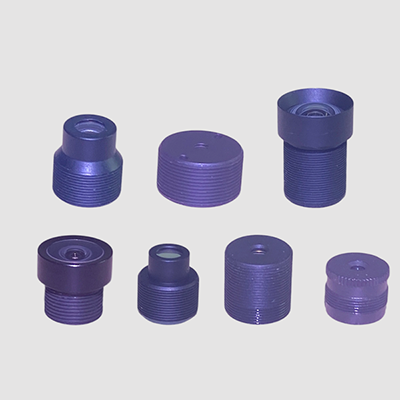
Lightweight, portable, and capable of capturing cinematic-quality images—that’s the advantage of the M3.5 to M8 series of small lenses. These compact lenses, while maintaining high stability and image recording capabilities, offer a unique aesthetic within their small size, painting a distinctive picture of the visual world.
For frequent travelers and photographers, this series of small lenses is almost a dream choice: lightweight, compact, and easy to carry, perfect for long trips or outdoor shooting. They also feature large apertures, achieving a shallow depth of field effect in their small size, highlighting the subject and creating a soft background blur.
M8/M7/M6/M5/M3.5 Small Mount Lenses meet diverse shooting needs
1. Street Photography and Documentary Photography
- Core Advantage: The M-series rangefinder cameras are known for their compact and discreet design. Paired with a small lens (such as the Summilux-M 35mm f/1.4 ASPH.), they minimize interference with the subject, capturing natural moments.
- Example: The Leica M4, a classic film rangefinder, lacks autofocus and relies on manual operation, making it suitable for street photography enthusiasts seeking a pure photographic experience. The M9 features an 18-megapixel full-frame CCD sensor, paired with lightweight lenses (such as the Macro-Elmar-M 90mm f/4), enabling the capture of richly detailed documentary images from a distance.
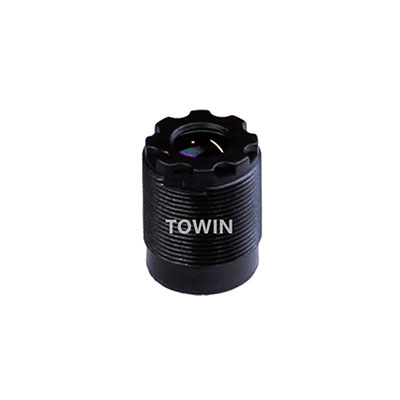
low-distortion-M8-Mount-lens
2. Travel and Landscape Photography
- Core Advantages: Miniature lenses are small and lightweight, making them easy to carry, especially suitable for long trips or outdoor shooting. For example, the Macro-Elmar-M 90mm f/4 has a foldable design, saving backpack space, while also supporting 1:2 macro shooting, balancing telephoto and close-up needs.
- Example: Using Leica M lenses (such as the Summicron-M 28mm f/2 ASPH.) while traveling allows for capturing expansive landscapes, and their compact size won’t add to your luggage burden.
3. Portrait and Portrait Photography
- Core Advantage: Large-aperture lenses (such as the Summilux-M 50mm f/1.4 ASPH.) achieve shallow depth of field in a compact size, highlighting the subject and creating a soft background blur.
- Example: The Leica M9 paired with a 50mm f/1.4 lens delivers high resolution and detailed image quality on a full-frame sensor, ideal for portrait photography.
4. Macro and Detail Photography
- Core Advantage: Some compact lenses (such as the Macro-Elmar-M 90mm f/4) support macro mode via adapters, with a maximum magnification ratio of 1:2, suitable for capturing details such as flowers and insects.
- Example: With the Macro-M adapter, the Leica M240 camera can use this lens for close-up photography, with a minimum focusing distance of only 41cm.
5. Video and Dynamic Recording
- Core Advantage: Although the M series primarily focuses on still photography, some digital models (such as the M9) support live view, which, when paired with lightweight lenses, allows for handheld video shooting, ideal for capturing everyday moments.
- Case Study: While the Leica M8 (white special edition) did not come with video functionality, its successors (such as the M9-P) have optimized the sensor and processor, offering more possibilities for video creation.
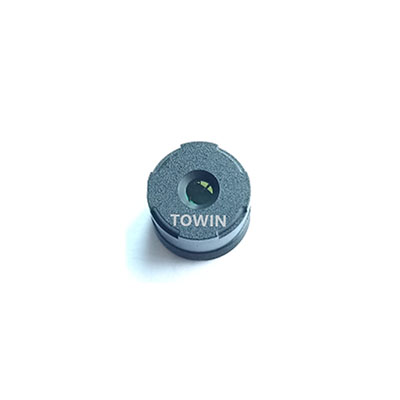
F2.0 low distortion M8 mount lens
The M3.5 – M8 series of compact lenses represents a gradual upgrade from mechanical structure optimization to digital technology integration
1. M5 (1971): Adaptation to TTL metering, focusing on cost and fundamental optical optimization.
As the first Leica M camera with TTL metering, the core technical improvement of its lenses was to adapt to metering functionality while balancing cost and image quality.
2. M6 (1984): Technical improvements to achieve a balance between optical quality and image texture, aligning with precise metering.
The M6 returned to a compact body and optimized TTL metering. Corresponding lens improvements focused on addressing the shortcomings of previous generation lenses in terms of image quality, adapting to the market environment where color film was becoming increasingly prevalent.
3. M7 (2002): Bridging Film and Digital, Laying the Foundation for 6-bit Encoding and Optical Transition
The M7 featured aperture-priority autofocus (AE) functionality, balancing mechanical shutter and electronic exposure. The core technological upgrades to its compatible lenses were to pave the way for digital transformation, while simultaneously enhancing compatibility with AE functionality.
4. M8 (2006): Adapting to Digital Sensors, Initiating Core Technological Upgrades in Lens Digitalization
As the first Leica M-series digital camera, the M8’s sensor characteristics exposed many shortcomings of film lenses, prompting a large-scale digital transformation of its lenses.
Comparison of Core Parameters for M8/M7/M6/M5/M3.5 Small Mount Lenses
| Parameter Type | M8 Small Mount Lens | M7 Small Mount Lens | M6 Small Mount Lens | M5 Small Mount Lens | M3.5 Small Mount Lens |
| Compatible Sensor Size | Max 1/2.5″, commonly 1/2.7″, 1/2.9″ | 1/4″ | 1/2.7″ – 1/9″ | 1/5″ | No universal standard; reference compact specifications of the same series, mostly 1/4″ – 1/9″ |
| Focal Length Range | 0.76mm – 6mm, typical models 4.5mm, 3mm | 0.96mm – 6mm, best-selling model 1mm (170° ultra-wide angle) | 1.03mm – 5.6mm, representative models 3.6mm, 5.6mm | 1.83mm | Refer to similar compact lenses, commonly 1.5mm – 3mm |
| Maximum Pixel | Some models up to 12MP (vehicle-mounted), regular models 4MP – 5MP | Regular 2MP – 5MP, suitable for HD needs of small devices | Max 5MP, compatible with small device imaging | 5MP | Mostly 2MP – 5MP, matching portable shooting equipment |
| Maximum Field of View | Up to 190° (fisheye models), regular models 65° – 130° | 170° (mainstream ultra-wide angle) | Up to 177°, regular models 64° – 129° | 88° | Refer to ultra-wide-angle design of the same series, commonly 100° – 130° |
| Aperture Value (FNO) | 2.0 – 8.0, mainstream models F2.0 (high light transmittance) | Fixed aperture mostly 2.0 – 2.8 | 2.0 – 5.7, regular models F2.0 – 2.6 | No universal value; reference similar specifications about F2.2 | Mostly fixed aperture F2.4 – 2.8 |
| Total Track Length (TTL) | <10mm, typical model 7.8mm±0.2mm | <10mm, portable for small devices | 2.7mm – 15.69mm, compact model only 2.7mm | No universal value; reference short TTL design about 5mm – 8mm | Refer to short-focus models of the same series, about 4mm – 7mm |
| Aperture Type | Mostly fixed aperture, suitable for automated imaging scenarios | Fixed aperture, simplified structure for miniaturization | Mainly fixed aperture, some models support manual fine-tuning | Fixed aperture, matching macro and wide-angle shooting needs | Fixed aperture, suitable for portable shooting equipment |
| Core Application Scenarios | Vehicle surround view, security cameras, industrial inspection | Small-scale surveillance, portable imaging devices | Mini cameras, small detectors | Wide-angle micro-shooting equipment, simple endoscopes | Pocket cameras, portable recorders, small surveillance devices |
Where to Buy with Confidence?
TOWIN is a professional optical lens supplier established in China in 2012. Its products cover multiple small mount lenses, including M8/M7, and are widely used in security, industrial automation, automotive electronics, and other fields. Its customers are located all over the world.
1. Core Product System: The brand’s products cover various interfaces and functional types, adapting to different scenario needs. This includes the small mount lens series you previously focused on, specifically categorized as follows:
| Lens Series/Type | Core Representatives & Parameters | Application Scenarios |
| Small Mount Lenses (M8/M7/M6/M5/M3.5, etc.) | Featured compact series, focal length covering 0.76mm – 6mm, compatible with small-size sensors, mostly fixed aperture design | Small-scale surveillance, portable imaging equipment, simple endoscopes, vehicle surround view |
| M12/S Mount Lenses | Including low-distortion, fisheye, wide-angle models, e.g., 8MP f2.0 fisheye lens, 2.1mm f1.8 wide-angle lens | Dashcams, drones, face recognition, smart home, panoramic surveillance |
| C/CS Mount Lenses | C-mount: industrial lenses and intelligent transportation lenses; CS-mount: fixed-focus megapixel, day-night zoom lenses, e.g., LD series wide-angle low-distortion models (focal length 2.8mm – 6mm, distortion <0.1%) | Factory automation, machine vision, traffic surveillance, supermarket security |
2. Core Competitive Advantages: Strong Technical Strength: Products focus on high image quality and practicality. For example, fisheye lenses use low-dispersion glass to reduce chromatic aberration, and the low-distortion series uses a telecentric design to control distortion within 0.05%. Some industrial lenses also have temperature stability from -20°C to +60°C, suitable for harsh working conditions. Meanwhile, advanced technologies and equipment are used in the production process, supporting end-to-end optical solutions from selection to customization.
- Wide Compatibility: The lenses are not only compatible with conventional surveillance and camera equipment, but also with specialized equipment in fields such as automotive driver assistance, high-temperature metallurgy, and 3D scanning. They are also compatible with various sensor sizes from 5MP to 12MP, offering strong versatility.
- Mature Supply Chain and Service: Adhering to the mission of “quickly matching lenses for customers,” TOWIN can quickly complete product selection and delivery. Customization services are also available to meet customers’ specific parameter requirements, and after-sales support is convenient.
3. Market and Partnerships: TOWIN has established long-term partnerships with many well-known global companies, including Celestica, e-con systems, Parrot, and Corning. Its business covers multiple countries and regions worldwide, and it has accumulated a strong industry reputation in niche areas such as industrial optics and security monitoring, making it a supplier with considerable influence in the global optical lens industry.
Compact and Portable: M8/M7/M6/M5/M3.5 Small Mount Lenses Are a Great Choice
Looking for lenses that are small yet perform exceptionally well? Check out the M8/M7/M6/M5/M3.5 small mount lenses! They’re ultra-compact and portable, easily fitting into a pocket or mounting on mini cameras, endoscopes, or small surveillance equipment. Even better, they’re more stable than their predecessors, ensuring sharp, clear, and blur-free photos every time. For users who prioritize portability and reliability, these small-mount lenses offer exceptional value!
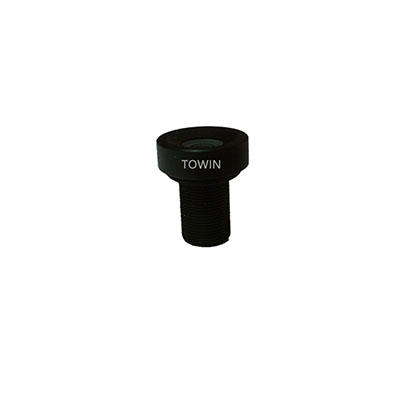
M8 mount low distortion lens
FAQs
Can the M8 use the M6’s 35mm/1.4 ASPH lens directly?
Some early-production 35mm/1.4 ASPH lenses (such as versions from 1961-1995) may not be directly compatible with the M8 due to rear cover design issues, or they may not be able to focus to infinity after installation. This is because the M8, as a first-generation digital rangefinder, has stricter requirements for lens mechanical dimensions. It requires modification of the lens structure (such as adjusting the position of the rear element) through Leica’s official customer service to ensure compatibility. Later-produced lenses of the same model are usually optimized for digital cameras and can be used directly.
Does the M7’s electronic shutter support all M-mount lenses?
The M7’s electronic shutter supports aperture-priority auto exposure mode and is compatible with all M-mount lenses. However, when using manual lenses, it’s important to note that the aperture value must be set via the aperture ring. The camera’s metering system will calculate the exposure based on this. Some early lenses manufactured in the 1950s (such as the first Summilux 35mm/1.4) may have inaccurate metering due to differences in aperture coupling lever design. In such cases, manual exposure compensation is necessary (e.g., opening the aperture by half a stop to one stop).
How does the M6’s TTL metering system work?
The M6’s TTL metering system achieves accurate exposure by controlling the amount of light passing through the lens. During operation, two triangular LED indicators (left dark, right bright) will be displayed in the viewfinder. Adjusting the shutter speed or aperture value until the brightness of the two lights is balanced (the middle indicator light will illuminate) indicates accurate exposure. This system is compatible with all M-mount lenses, but it’s crucial to ensure the lens aperture ring is not locked at its minimum aperture (e.g., f/16); otherwise, the metering function will be ineffective.
How does the M9’s CCD sensor perform at high ISO?
The M9’s 18-megapixel Kodak CCD sensor produces fine image quality and accurate color reproduction at ISO 800 and below, maintaining Leica’s signature “German sound” (deep cyan tones and rich warm yellows). However, as the ISO increases above 800, noise increases significantly, accompanied by loss of detail. In this case, it is recommended to use a tripod for stable shooting or a large-aperture lens (such as the Noctilux 50mm/0.95) to increase light intake. Post-processing noise reduction can be performed using software such as DxO PureRAW.
Does the M7 support exposure compensation? How do I use it?
The M7 supports exposure compensation. Users can adjust the compensation value (usually within ±3EV) by rotating a dedicated dial on the top of the camera body. The compensation value will be displayed in real time in the viewfinder during adjustment. This function is especially useful in backlit or high-contrast scenes. For example, when shooting snow scenes, you can appropriately increase the exposure compensation (e.g., +1EV) to avoid the image being too dark, while when shooting silhouettes, you can decrease the compensation value (e.g., -1EV) to enhance the contrast effect.