


M12 Mount Pinhole lens
08/29/2025
Custom focal length CCTV lens
09/01/2025
Lens aperture is one of photography’s most critical yet misunderstood concepts. Many photographers—even experienced ones—fall prey to myths that affect their creativity and technical results.
1. Misconception: “A Wide Aperture Always Produces the Best Bokeh”
The Truth:
Bokeh, the aesthetic quality of out-of-focus areas, is often associated with wide apertures like f/1.4 or f/2.8. While these settings create a shallow depth of field, bokeh quality depends on lens design, not just aperture size. For example, a cheap f/1.8 lens might produce harsh, distracting bokeh, while a premium f/2.8 zoom lens could render smoother, creamier backgrounds.
Why It Matters:
Chasing ultra-wide apertures can lead to disappointment if your lens lacks high-quality glass elements. Instead, prioritize lenses with well-corrected optics, even if their maximum aperture is moderate.
Lens Aperture
2. Misconception: “Stopping Down Improves Image Quality at All Apertures”
The Truth:
It’s widely believed that smaller apertures (e.g., f/16 or f/22) always yield sharper images due to reduced lens aberrations. However, diffraction—a phenomenon where light bends around the aperture blades—softens details at tiny openings. Most lenses perform best between f/5.6 and f/11, where aberrations are minimized without significant diffraction.
Example:
A landscape photographer using f/22 to maximize depth of field might notice reduced sharpness in fine details like tree branches or distant mountains. Switching to f/11 could retain sharpness while keeping most of the scene in focus.
3. Misconception: “Aperture Controls Exposure Independently of Shutter Speed and ISO”
The Truth:
Aperture is part of the exposure triangle, alongside shutter speed and ISO. Adjusting one affects the others. For instance, opening the aperture (lower f-number) lets in more light, requiring a faster shutter speed or lower ISO to avoid overexposure. Conversely, a narrow aperture (higher f-number) demands slower shutter speeds or higher ISO.
Practical Tip:
Use your camera’s metering mode to balance these settings. For example, in aperture priority mode, the camera automatically adjusts shutter speed based on your chosen f-stop.
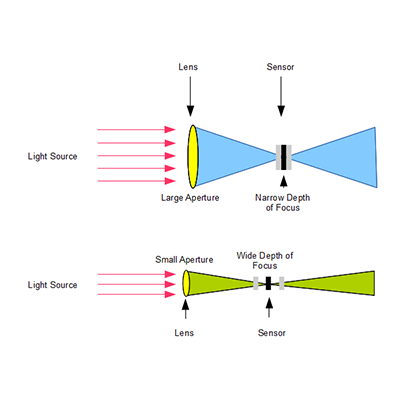
Optimal Aperture for Sharpness
4. Misconception: “Fast Lenses Are Only Useful in Low Light”
The Truth:
“Fast” lenses (those with wide maximum apertures like f/1.4) excel in low light, but their real power lies in creative control. A wide aperture lets you isolate subjects with dramatic background blur, freeze motion in dim environments, or use faster shutter speeds in bright conditions.
Case Study:
Portrait photographers often use f/2.8 to f/1.4 to make their subjects pop against a softly blurred background, even in daylight. This technique relies on aperture’s ability to manipulate depth of field, not just light intake.
5. Misconception: “All Lenses Perform Equally at the Same Aperture”
The Truth:
Aperture settings behave differently across lenses due to optical design. For example, a 50mm f/1.8 lens might suffer from chromatic aberration (color fringing) at wide apertures, while a 50mm f/1.2 lens could remain sharp with minimal aberrations. Similarly, zoom lenses often have variable apertures (e.g., f/3.5–5.6), which change as you zoom in or out.
6. Misconception: “Aperture Doesn’t Affect Starbursts or Sunbursts”
The Truth:
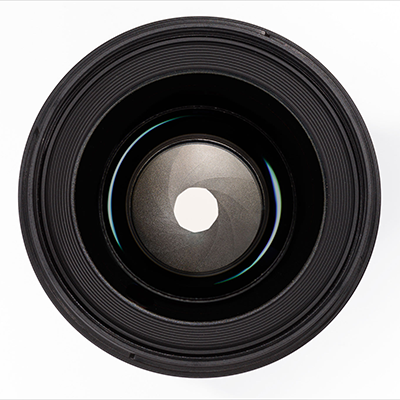
The number of aperture blades in a lens determines the shape of starbursts (light streaks from bright sources like the sun or streetlights). Lenses with fewer blades (e.g., 5–7) produce fewer-pointed stars, while those with 9+ blades create more intricate patterns. Additionally, stopping down to f/16 or smaller enhances the starburst effect.
Creative Application:
Landscape photographers often use small apertures to capture striking sunbursts in golden-hour shots. Pair this with a tripod to avoid camera shake from long exposures.
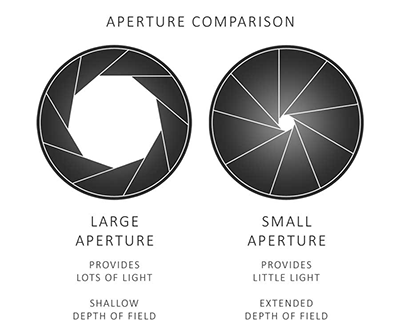
How Aperture Influences Sharpness
7. Misconception: “You Should Always Use the Widest Aperture for Portraits”
The Truth:
While wide apertures create beautiful bokeh, they can also reduce sharpness if the focus is slightly off. For group portraits or full-body shots, a moderate aperture (f/4 to f/5.6) ensures everyone remains in focus while maintaining some background separation.
Pro Tip:
Use live view and zoom in on your camera’s LCD to check focus accuracy at wide apertures. For critical shots, consider f/2.8 or narrower to increase your margin for error. Recommended Reading: Weather-sealed lenses with wide aperture
Conclusion
Understanding common misconceptions about lens aperture empowers you to make informed creative and technical decisions. Whether you’re shooting portraits, landscapes, or action, remember that aperture is a tool—not a rule. Experiment with different settings, test your lenses, and prioritize results over assumptions.