


2.1mm M12 Wide Angle lens
01/13/2026
1/2″ 30mm IR corrected CCTV M12 Pinhole lens
01/14/2026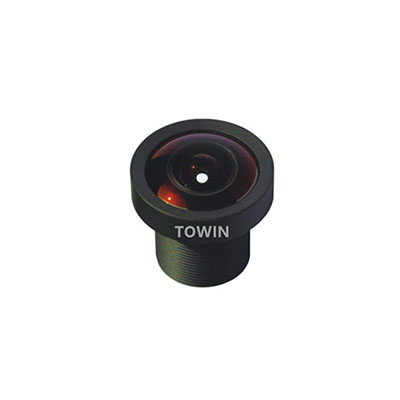
Introduction
Have you noticed how modern cars are getting increasingly “smart” – they can automatically detect pedestrians, see clearly in rainy nights, and monitor your driving state via cabin cameras? Behind this transformation, Automotive lens act as the “core eyes” of vehicle perception, quietly undergoing a technological revolution. By 2026, this revolution will completely rewrite the rules of automotive imaging: instead of merely competing for pixel count, the focus will shift to smarter perception, more reliable environmental adaptability, and richer interactive experiences. Today, we’ll examine five key automotive imaging trends for 2026 and how innovative lenses will transform future driving.
1. In-Vehicle Multi-Modal Perception Fusion: Reimagining Automotive Imaging Architecture
Traditionally, in-vehicle cameras, radars, and infrared sensors operated like “isolated soldiers”: cameras captured images, radars measured distances, and infrared sensors provided night-time supplementary lighting. By 2026, the “solo” model will fade as multi-modal fusion integrates sensor data, reshaping automotive imaging architecture.
Take a real-world scenario: on a mountain road during heavy rain, traditional cameras get blurred by raindrops, while radars can measure distance but can’t distinguish object types. With multi-modal fusion, however, the detailed imagery from cameras + distance data from radars + penetration capabilities of terahertz sensors enables the vehicle to accurately identify “a pedestrian crossing the road 50 meters ahead” – and even predict their movement trajectory. This integration goes beyond simple addition, offering vehicles a 3D “vision” like human senses, aiding reliable autonomous driving decisions.
Automotive lenses now prioritize “data compatibility” over clarity, aligning resolution, FOV, and distortion with multi-sensor systems.
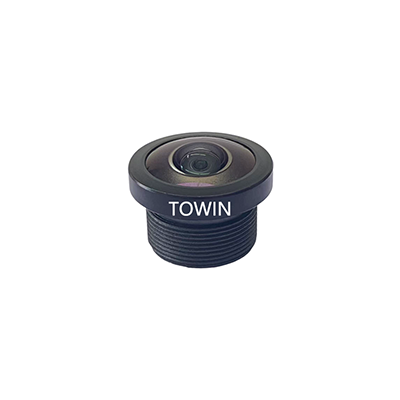
M12 Fisheye CCTV lens
2. Automotive-Grade Pixel Intelligence: From Size Competition to Functional Integration
In recent years, the automotive lens industry has fixated on “who has the highest pixels” – jumping from 2MP to 4MP to 8MP. But by 2026, this “size race” will cool off dramatically, replaced by “pixel intelligence” – integrating more functions into pixel technology so every pixel can deliver “intelligent perception.”
Unlike traditional 8MP lenses, a 2026 automotive 8MP lens adds IR filtering, dynamic range optimization, and noise reduction for clear imaging in all lighting.
More importantly, “intelligent” pixel technology will support L3+ autonomous driving – images captured by the lens can directly output structured data (e.g., “A white sedan 30 meters ahead traveling at 60km/h”) without requiring complex computations from the on-board computer, significantly boosting decision-making efficiency. Functional integration offers greater value than pixel boosts, becoming the key competitive edge for automotive lenses in 2026.
3. Terahertz Visual Sensing: Unlocking All-Weather Automotive Imaging
“All-weather imaging” has long been a pain point for automotive lenses: heavy rain, thick fog, blizzards, and nighttime glare can all render traditional lenses ineffective. But by 2026, terahertz visual sensing technology will emerge as the game-changer, unlocking a new era of all-weather automotive imaging.
Terahertz waves offer exceptional penetration, easily cutting through rain, fog, and dust – and unlike infrared light, they aren’t affected by temperature. Paired with traditional lenses, vehicles capture clear images in extreme weather, seeing 100m ahead in snow and detecting hidden obstacles in fog.
Combining terahertz sensing with optical imaging gives car lenses “multi-D perception”—seeing shape, color, material, and temperature. This technological breakthrough will take autonomous driving safety to new heights and become a standard feature in high-end automotive lens.
4. Cabin Imaging System Upgrade: From Safety Monitoring to Multi-Modal Intelligent Interaction
What were cabin cameras primarily used for in the past? Mostly “safety monitoring” functions like driver fatigue detection and passenger seatbelt checks. But by 2026, cabin imaging systems will undergo a major upgrade – shifting from mere “monitoring” to “multi-modal intelligent interaction,” turning the cabin into a “bridge” for human-vehicle communication.
For instance, via cabin cameras, the vehicle can recognize your facial expressions: if you frown or yawn, the system infers you’re tired or frustrated, automatically adjusting the air conditioning, playing soothing music, or even reminding you to pull over and rest; if you gesture to “turn up the volume” or “switch navigation,” the camera accurately recognizes and executes the command – no need for manual screen taps; more advanced systems can track your eye gaze, notice you’re looking at a roadside billboard, and proactively ask, “Would you like to learn more about this restaurant?”
This upgrade raises the bar for cabin lenses: they need to be smaller (to preserve cabin aesthetics), offer higher frame rates (to capture quick gestures), and provide stronger privacy protection (local data processing to prevent personal information leaks). By 2026, cabin imaging will be a key marker of vehicle intelligence, making driving more personalized and convenient.
5. 2026 Global Automotive Lens Supply Chain: Trends & Opportunities
As automotive imaging technology evolves rapidly, the global automotive lens supply chain is also transforming, with three distinct trends emerging:
First, “automotive-grade certification” has become the core threshold. In the past, some consumer lens manufacturers tried to enter the automotive space, but by 2026, automotive-grade certifications (such as ISO 26262 functional safety certification and IP68/IP69K waterproof certification) will become increasingly stringent. Only manufacturers with mature automotive-grade production capabilities and a track record of product stability and reliability will thrive.
Second, “regionalized supply” is accelerating. Driven by global supply chain restructuring, lens manufacturers will increasingly set up facilities near major automotive production hubs – establishing localized manufacturing and R&D centers in China, Europe, and North America to shorten lead times, reduce logistics costs, and better meet automakers’ customized needs.
Third, “upstream-downstream collaborative R&D” has become the norm. Automakers no longer simply purchase off-the-shelf lens products; instead, they collaborate with lens manufacturers early in the design process, co-developing customized lenses tailored to their vehicle’s autonomous driving systems and cabin designs (e.g., adjusting field of view, optimizing installation dimensions, integrating specific functions). This collaborative approach ensures lenses are perfectly aligned with overall vehicle requirements and boosts supply chain efficiency.
For lens makers, 2026 opportunities are in innovation and customization; automakers need partners with full-chain layouts and fast R&D.
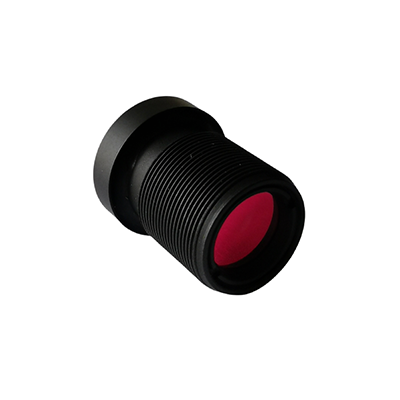
IP67 6mm Waterproof Automotive Wide-Angle Lenses
TOWIN Automotive Lens: Your Partner for 2026 Imaging Excellence
As a leading China-based automotive lens manufacturer with over 10 years of global export experience, TOWIN delivers high-quality, automotive-grade lenses designed to meet international standards and regional market demands. Our products combine cutting-edge technology, rigorous quality control, and reliable performance – perfectly aligning with the 2026 trends outlined above.
1. A06611707116F69: Core Lens for Forward-Looking ADAS, Adapted for L2+ Level Intelligent Driving
Key Parameters & Highlights
- Resolution & Light Efficiency: 8MP + F1.6 large aperture, with built-in IR filter (IRCF);
- Field of View & Mounting: 6.5mm focal length, 71° horizontal field of view (1/1.73″ sensor), Φ15 (A-A) mounting interface;
- Environmental Adaptability: IP69K highest level waterproof (resistant to high temperature and high pressure washing, heavy rain), TTL (total optical length) 33.12mm;
- Structural Stability: The 7G4MG optical structure (7 glass + 4 molded elements) achieves <19% imaging distortion, meeting forward-sensing needs.
Technological Advantages & Scene Adaptability
This lens is the “main perception lens” of the forward-looking ADAS system, precisely matched to L2+ level assisted driving requirements. The need for “long-range, high-detail, all-weather” imaging:
- 8MP high resolution clearly identifies lane lines and traffic signs (such as speed limit signs and no-overtaking signs) within 150 meters. Paired with a large F1.6 aperture, it reduces glare, retains details in low light, and aids ACC, LCC, and AEB. Following trends, 8MP is now mainstream for high-end forward ADAS lenses, cutting false “ghost pedestrian” and small-target alerts.
- IP69K waterproof rating is crucial for extreme environments: Whether driving at high speeds in heavy rain or being washed with a high-pressure water gun during a car wash, the lens maintains stable imaging, preventing ADAS malfunction due to water ingress.
- 71° horizontal field of view. “Wide Range and Distance”: Covers multiple lanes of forward vision (avoiding missing lane-changing intentions from adjacent lanes) without causing distant objects to appear too small due to an excessively wide field of view. It meets high-speed NOA’s forward detection needs, ideal for premium sedans and SUVs from new energy automakers.
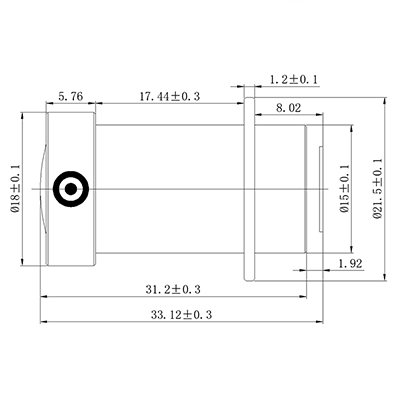
IP69K
2. D1601170311665: Low-distortion telephoto lens, specializing in accurate forward-looking long-distance perception.
Key Parameter Highlights
- Distortion Control: <-3.4% ultra-low distortion (excellent level among automotive lens), 16mm telephoto focal length;
- Basic Performance: 8MP resolution + F1.6 aperture, 1/1.73″ sensor compatibility, Φ16 mounting interface;
- Environment and Structure: IP6K5 waterproof (water and dust resistant), TTL 33.74mm, 8-element (8G) optical structure.
Technical Advantages and Scene Adaptability
The core competitiveness of this lens lies in its **low distortion + telephoto lens**, specifically designed for the “long-distance accurate detection” scenario of forward-looking ADAS, especially suitable for highway conditions:
- Ultra-low distortion (<-3.4%) is key: Excessive distortion in forward-looking lenses can lead to “distance calculation errors” (e.g., misjudging a vehicle 50 meters away as 40 meters). This lens’s distortion control maximizes the reproduction of the true size and distance of objects. Combined with a 16mm telephoto focal length, it can clearly capture the outline of a vehicle 200 meters away, road construction signs, and other small targets, supporting “highway NOA ramp merging and long-distance following” functions. Drawing on Li Auto L9’s forward-looking approach, its low-distortion lens cuts lane-change/overtake response time to <1.5s;
- 8MP + F1.6 The combination continues the high detail requirements of the front-view camera. In direct sunlight, its high dynamic range (common in 8MP lenses) prevents overexposure, ensuring clear lane/sign recognition.
- While IP6K5 waterproofing is lower than IP69K, it meets the daily needs of most family cars (such as driving in the rain and regular car washes). It is more suitable for gasoline vehicles or mid-range new energy vehicles that emphasize “high-speed intelligent driving.” Mounted inside the windshield, it functions as the main or auxiliary front-view camera, offering long and short-range vision.
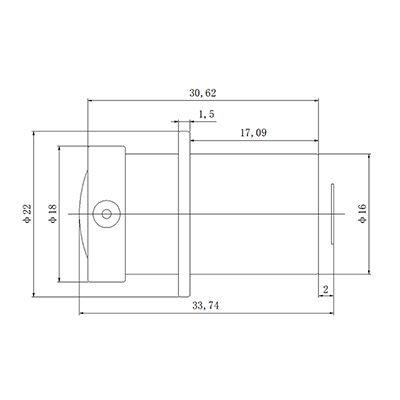
IP6K5
3. CCLA13021MPF: Short TTL Ultra-Wide Angle Lens, Compatible with Both Surround View and Cockpit Monitoring Scenarios
Key Parameters and Highlights
- Ultra-Wide Angle and Size: 2.1mm focal length, 177° diagonal field of view (138° horizontal), TTL length only 14.42mm (short optical length);
- Mounting and Operation: M12×0.5 standard S-Mount interface, manual focus, 1/3″ sensor adapter;
- Protection and Structure: IP67 waterproof (resistant to short-term immersion and dust), 6G+IR cut filter, minimum object distance (M.O.D.) 0.15m.
Technical Advantages and Scenarios Adaptability
This lens focuses on “small size + ultra-wide angle,” adapting to two high-frequency scenarios: 360° surround view and cockpit monitoring. It is especially suitable for compact family cars:
- The 177° ultra-wide angle is ideal for 360° surround view systems. “Ideal Choice”: When installed at the four corners of the vehicle (front grille, below the left and right rearview mirrors, and rear), the four lenses can be stitched together to create a seamless “bird’s-eye view.” The 138° horizontal field of view covers an area 1.5 times the width of the vehicle’s side. With manual focus, the sharpness can be adjusted, accurately identifying curbs and low obstacles (such as traffic cones), supporting “Automatic Parking (APA)” and “Narrow Parking” functions. According to industry data, a 170°+ wide-angle lens is the mainstream field of view for surround-view lenses, reducing blind spots.
- The 14.42mm short TTL solves the “installation space problem”: Space is limited in the cabin (such as above the dashboard or roof). The short-volume lens can be installed discreetly, avoiding disruption to the cabin’s aesthetics. Simultaneously, the 177° field of view covers the driver’s face (DMS) and rear passenger (OMS): When used for DMS, it can capture the driver’s blink frequency and head movement (to determine fatigue/distraction); when used for OMS… It can detect children left in the back seat and check seatbelt usage. With an IR filter, it can accurately identify objects even at night.
- IP67 waterproof rating adapts to both exterior and interior environments: rainproof when installed on the side of the vehicle, and dustproof when installed inside the cabin. Its versatility makes it particularly suitable for automakers seeking cost-saving solutions that cover multiple locations with a single lens.
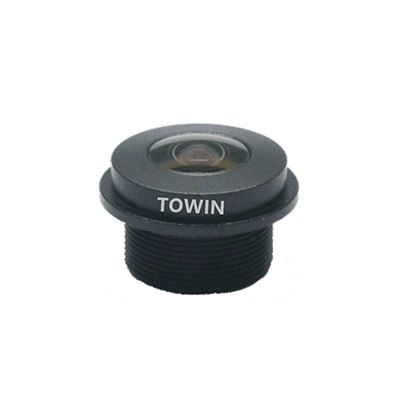
ip68-M12-S-mount-CCTV Automotive Lens
4. S01412420020F69: Fisheye ultra-wide-angle lens, specifically designed for vehicle blind spot monitoring.
Key Parameters & Highlights
- Ultra-wide field of view: 1.4mm focal length, 200° diagonal field of view (horizontal 200°), fisheye optical design;
- Basic performance: 3MP resolution, F2.0 aperture, built-in IRCF, M12×0.5 interface;
- Protection rating: IP69K waterproof, TTL 16.76mm, 2G4P (2 glass elements + 4…) (Plastic sheet) structure.
Technological Advantages and Scene Adaptability
The core value of this fisheye lens is “eliminating blind spots,” making it especially suitable for vehicles with large blind spots (such as SUVs, trucks, and MPVs):
- 200° ultra-wide field of view achieves “no blind spot coverage”: Traditional side-view lenses (120°-150°) cannot cover the “triangular blind spot” behind the vehicle (such as the area 1-2 meters behind the right side of the vehicle). However, when this fisheye lens is installed below the left and right rearview mirrors, it can directly cover pedestrians and non-motorized vehicles within 3 meters behind the vehicle, supporting the “Blind Spot Detection (BSD)” function. For trucks, it can be side-mounted to cover the inner wheel blind spot, lowering turning accident risks;
- 3MP resolution + F2.0 aperture meets “mid-range perception”: Blind spot detection does not require long-distance detection (usually 3-5 meters). 3MP is sufficient to clearly identify the outline of objects (such as pedestrians and bicycles), and the F2.0 aperture + IRCF… Ensures noise-free images in low-light scenarios such as nighttime or underground parking garages to avoid false alarms;
- IP69K waterproof rating adapts to high-frequency use scenarios in commercial vehicles: Trucks and SUVs often face complex road conditions (such as mud and heavy rain). IP69K resists high-pressure car washes and heavy rain, lasting up to 15 years, cutting automotive maintenance costs.
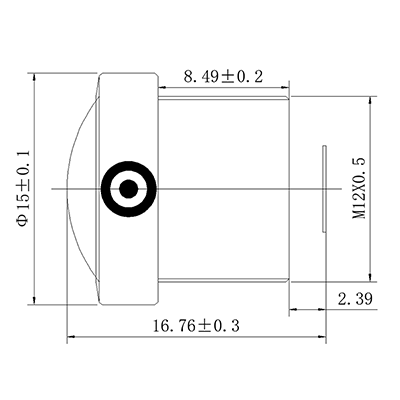
Fisheye M12-mount F2.0 CCTV Lens
5. S02712714120F68: Dual waterproof wide-angle lens, versatile for side and rear views
Key Parameters Highlights
- Protection and Field of View: IP68+IP69K dual waterproof certification (resistant to long-term immersion + high-temperature and high-pressure washing), 2.7mm focal length, 141° horizontal field of view;
- Basic Performance: 2MP resolution, F2.0 aperture, built-in IRF (infrared filter), M12×0.5 interface;
- Installation and Structure: TTL 16.9mm, 5G+IRF Optical structure, 1/2.7″ sensor adapter.
Technical Advantages and Scene Adaptability
This lens boasts “dual waterproofing + balanced field of view,” making it a “high-performance, cost-effective choice” for side-view and rear-view cameras in family cars:
- Dual waterproofing certification addresses the “pain points of harsh environments for side/rear-view cameras”: Rear-view cameras are mounted at the rear of the vehicle (easily submerged in rain and covered in mud), while side-view cameras are exposed on the outside of the vehicle (easily subjected to high-pressure water from car washes). IP68 resists 1m water immersion; IP69K withstands 80℃, 80bar wash, preventing lens fogging and image blur;
- 141° horizontal field of view + 2MP adapts to core side/rear-view needs: When used for rear-view, the 141° angle covers the ground within 3 meters behind the vehicle (in conjunction with dynamic reversing guide lines for accurate distance judgment of obstacles); when used for side-view, it covers vehicles within 2 meters to the side and rear (supporting “Lane Change Assist (LCA)”). Though 2MP resolution is lower than 8MP, it suits short-medium ranges like parking, lane changing, and is cost-effective;
- 5G+IRF structure ensures nighttime imaging: Family cars often drive at night; IRF filters stray light, 5 glass lenses cut glare, ensuring clear reversing/lane-changing and safer night driving.
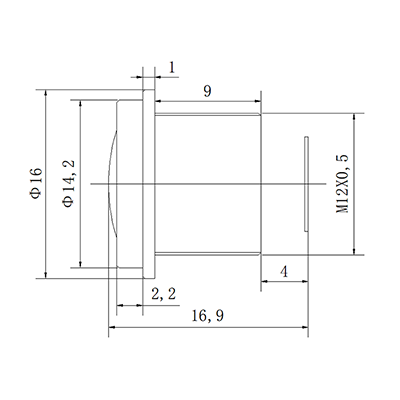
M12 Wide-angle CCTV Lens
Selection Summary: Matching Lens Core Parameters to Scene
| Application Scenarios | Key Parameters to Prioritize | Recommended Model |
| Front-view ADAS (L2+ Highway NOA) | 8MP+, F1.6+, IP69K, Low Distortion | A06611707116F69 |
| Front-view Long-distance Detection (Traffic Signs) | 16mm Telephoto, < -3.4% Ultra-low Distortion | D1601170311665 |
| 360° Surround View / Cabin DMS/OMS | 177° Ultra-wide Angle, Short TTL, IP67 | CCLA13021MPF |
| Blind Spot Monitoring (Trucks/SUVs) | 200° Fisheye Lens, IP69K | S01412420020F69 |
| Side/Rear View (Passenger Vehicles) | Dual Waterproof Certification, 141° Wide Angle, Cost-effective | S02712714120F68 |
How TOWIN Helps You Leverage 2026 Trends
- Multi-Modal Ready: All TOWIN lenses are engineered for data compatibility, making them seamless additions to future multi-sensor fusion systems
- Pixel Intelligence: Our 8MP lenses integrate intelligent features (HDR, noise reduction, infrared filtering) that align with the “pixel intelligence” trend
- Terahertz Compatibility: We’re actively developing lens solutions to pair with emerging terahertz sensing technology
- Cabin Experience Enhancement: Our compact, high-frame-rate cabin lenses support advanced DMS/OMS and gesture recognition
- Global Supply Chain Flexibility: With strategic production hubs, we offer localized support for major automotive markets
FAQs
Q1: When buying a car in 2026, what parameters should I focus on for the in-car camera?
A1: Four key points: ① Resolution (8MP and above); ② Waterproof rating (IP68 and above, IP69K for severe weather); ③ Field of view (35°-80° front view, 120°+ side/rear view, 170°+ cabin view); ④ Functionality (infrared filtering, dynamic noise reduction, multi-modal adaptation).
Q2: Will terahertz sensors be widespread in 2026?
A2: Initially, they will be available in mid-to-high-end models, and in 2026, some high-end family cars will have them. If your budget is limited, an IP68 sensor with an infrared filter will meet your daily needs.
Q3: How is privacy protected for the cabin camera?
A3: Supports local data processing, manual shutdown/sleep mode, and physical shielding, providing multiple layers of protection to prevent privacy leaks.
Q4: Can TOWIN lenses be adapted to all car models?
A4: Compatible with mainstream car model interfaces. For customized models, please contact our team for collaborative adjustments and adaptations.
Conclusion
By 2026, automotive lens will no longer be just “image-capturing tools” – they’ll be the “core nervous system” of autonomous driving and the “interface” for human-vehicle interaction. Multi-modal perception fusion enhances safety, pixel intelligence boosts practicality, terahertz technology enables all-weather reliability, and cabin imaging upgrades deliver personalized experiences.
At TOWIN, we’re dedicated to helping global automakers navigate this technological revolution. With our comprehensive product portfolio, industry-leading quality, and global support network, we’re your trusted partner for 2026 and beyond. Contact us today to explore how our automotive lenses can elevate your next vehicle platform to new heights of perception and intelligence.