



Medical endoscope micro lenses for minimally invasive surgery
02/11/2026
Narrow bandpass filter integrated TOF lenses
02/13/2026
Table of Contents
- Introduction
- Core Positioning of AEC-Q100 Standard
- AEC-Q100 Test Grade Classification and Scene Adaptation for Automotive Lenses
- Core Test Items for Automotive Lenses
- Automotive Lens Defect Screening Test and Failure Mode Rectification
- Automotive Lens AEC-Q100 Test Equipment Selection and Calibration
- Detailed Explanation of the Entire AEC-Q100 Certification Process
- Industry Application Practice of Automotive Lenses Under AEC-Q100 Standard
- FAQs
- Conclusion
Key Takeaways
- AEC-Q100 is a global authoritative reliability test standard for automotive electronic components, the core threshold for automotive lenses to enter the automotive supply chain.
- It is divided into 4 grades (Grade 0-3) based on temperature range, which are precisely adapted to different installation positions and working scenarios of automotive lenses.
- The test covers 7 core groups, focusing on environmental adaptability, service life, packaging integrity and other key reliability indicators of automotive lenses.
- Defect screening and failure mode rectification are the key links to ensure that automotive lenses pass AEC-Q100 certification at one time.
- Scientific equipment selection, regular calibration and standardized certification process are the basis for efficient and compliant passing of the standard.
- AEC-Q100 compliance has become a core competitiveness for automotive lens manufacturers to enter the global high-end automotive market.
Introduction
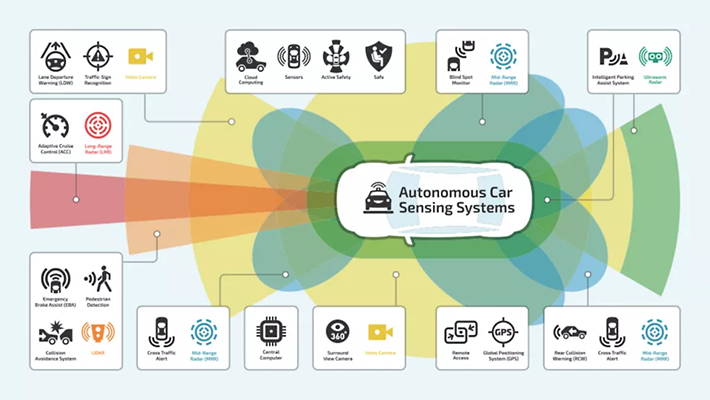
With the rapid development of automotive intelligence and ADAS (Advanced Driver Assistance Systems), automotive lenses have become the core perception component of vehicles, responsible for collecting image information for functions such as lane departure warning, automatic emergency braking, and 360° surround view. Their reliability directly relates to driving safety and system stability under harsh automotive working environments (extreme temperature, vibration, humidity, etc.).
AEC-Q100, formulated by the Automotive Electronics Council (AEC), is the most authoritative and widely recognized reliability test standard for automotive electronic components in the global automotive industry. For TOWIN, as a professional automotive lens manufacturer, mastering the AEC-Q100 standard and its practical application is not only the basic requirement for our products to enter the global automotive supply chain, but also the core guarantee for us to provide high-quality products to overseas customers.
This blog will detail the core content, test specifications, certification process and industry application practices of the AEC-Q100 standard for automotive lenses, helping overseas buyers, R&D personnel and supply chain partners quickly grasp the key points and provide valuable reference for cooperation and product selection.
Core Positioning of AEC-Q100 Standard
AEC-Q100 is not a design standard, but a minimum stress test qualification threshold for automotive integrated circuits and electronic components, which is widely recognized by global automakers and Tier 1 suppliers. Its core positioning can be summarized as follows:
- Global Supply Chain Access Threshold: Almost all mainstream automakers (such as Tesla, Toyota, Volkswagen, etc.) and automotive electronic component purchasers regard AEC-Q100 certification as a necessary condition for supplier access. Uncertified automotive lenses cannot enter the formal automotive supply chain.
- Reliability Guarantee Core Standard: The standard simulates extreme working environments and mechanical stresses that automotive lenses may encounter during the whole life cycle, evaluates their long-term stability and durability, and avoids potential failures caused by harsh conditions such as high temperature, low temperature, vibration and humidity.
- Unified Evaluation Framework: It provides a unified test method, index and judgment standard for global automotive lens manufacturers, suppliers and purchasers, eliminating the inconsistency of reliability evaluation caused by regional or enterprise standards, and reducing communication and cooperation costs.
- Continuous Upgrading to Adapt to Industry Development: The standard is continuously updated (the latest version is Rev-G released in 2023), which strengthens the requirements for high temperature, high humidity, static electricity and service life, and adapts to the development trend of automotive intelligence and electrification.
It should be noted that AEC-Q100 focuses on the intrinsic electrical and physical reliability of electronic components, which is complementary to ISO 20653 (focusing on the protection level of product shell structure). For automotive lenses, the combination of the two standards can achieve comprehensive reliability protection.
AEC-Q100 Test Grade Classification and Scene Adaptation for Automotive Lenses
AEC-Q100 divides automotive electronic components into 4 test grades (Grade 0-Grade 3) according to the working temperature range, and different grades correspond to different installation positions and working scenarios of automotive lenses. The specific classification and adaptation are shown in the following table:
| AEC-Q100 Test Grade | Operating Temperature Range | Automotive Lens Installation Scenario | Typical Application Examples | Core Requirements |
| Grade 0 | -40°C ~ 150°C | Extreme high temperature environment near the engine or exhaust system | Engine compartment monitoring lens | Super strong high temperature resistance, anti-thermal aging and anti-vibration performance |
| Grade 1 | -40°C ~ 125°C | External high temperature environment of the vehicle (front, rear, side) | ADAS front-view lens, driving recorder lens, side-view lens | Strong high and low temperature cycle resistance, humidity resistance and UV resistance |
| Grade 2 | -40°C ~ 100°C | Internal medium temperature environment of the vehicle | In-vehicle monitoring lens, instrument panel display lens | Good temperature adaptability and electrical performance stability |
| Grade 3 | -40°C ~ 85°C | Internal low temperature stable environment of the vehicle | In-vehicle entertainment system lens, OBD diagnostic auxiliary lens | Basic temperature resistance and structural stability, low failure rate in long-term use |
Key Reminder: The selection of test grades for automotive lenses should be based on the actual working environment of the product, not the higher the grade, the better. Choosing the appropriate grade can balance product reliability and production cost. TOWIN can provide customized test grade matching suggestions according to the customer’s product application scenarios.
Core Test Items for Automotive Lenses (AEC-Q100 Group Operation Rules)
AEC-Q100 includes 7 core test groups, covering environmental stress, service life simulation, packaging integrity, manufacturing reliability and other aspects. For automotive lenses, combined with their optical and structural characteristics, the key test groups and operation rules are sorted out, as shown in the following table. The inapplicable test items are appropriately cut according to the “on-demand test” principle:
| AEC-Q100 Test Group | Test Item | Operation Rules | Test Purpose | Applicable Lens Type |
| Group A (Environmental Stress Test) | Temperature Cycling (TC) | -40°C~grade upper limit (e.g., 125°C for Grade 1), 1000 cycles (30min/cycle); monitor optical parameters every 200 cycles | Verify adaptability to extreme temperature changes; prevent deformation/optical degradation from CTE mismatch | All automotive lenses |
| Group A (Environmental Stress Test) | HAST/UHAST | UHAST: 130°C, 85%RH, 96h; HAST: 85°C, 85%RH, 500h; normal voltage bias | Accelerate moisture intrusion/corrosion; verify lens moisture resistance | External automotive lenses (front-view, side-view) |
| Group B (Life Simulation Test) | High Temperature Operating Life (HTOL) | Grade upper limit temp + max rated voltage, continuous operation 1000h; dynamic aging (simulate actual work) | Evaluate long-term high-temperature stability; prevent thermal aging failure | All automotive lenses |
| Group C (Package Integrity Test) | Mechanical Shock & Vibration | Shock: 1000g, 6 directions; Vibration: 10-2000Hz, multi-axis, 20h; check fixing/alignment after test | Verify structural integrity; prevent displacement/loosening/damage during vehicle operation | All automotive lenses |
| Group E (Electrical Verification Test) | Electrostatic Discharge (ESD) | HBM: ±2.5kV (Grade 0/1), ±2kV (Grade 2/3); CDM: ±750V; 10 tests per polarity | Verify ESD protection of drive circuit; prevent static damage in production/installation/use | All automotive lenses with drive circuits |
| Group F (Defect Screening Test) | Particle Impact Noise Detection (PAT) | High-frequency vibration to detect internal particles; unqualified if noise exceeds threshold (room temperature) | Screen lenses with internal particles; prevent image blur/component wear | All automotive lenses |
Key Operation Notes
- The test sequence must follow the standard logic: first conduct non-destructive tests (such as PAT, ESD), then conduct destructive tests (such as HTOL, HAST).
- The number of test samples for each item shall not be less than 77, in accordance with JESD47 standard requirements.
- Optical parameters (resolution, distortion, contrast) must be monitored in real time during the test, and the test shall be terminated immediately if the parameters exceed the limit.
Automotive Lens Defect Screening Test and Failure Mode Rectification
Defect screening is the prerequisite for automotive lenses to pass AEC-Q100 certification, and effective failure mode rectification is the key to improving the pass rate. This part focuses on the common defect types, failure modes and targeted rectification measures of automotive lenses during AEC-Q100 testing.
1. Core Defect Screening Test Methods
- Visual Inspection: Check the surface of the lens (scratch, dirt, bubble), lens mount (deformation, cracks) and circuit board (solder joint void, component offset) with a high-power microscope.
- Optical Parameter Test: Detect resolution, distortion, chromatic aberration, focal length and other parameters to screen out lenses with unqualified optical performance.
- Particle Impact Noise Detection (PAT): As the core method of Group F test, it is used to screen internal particle defects.
- Pre-test Screening: Conduct low-cost initial screening (high-temperature storage, temperature cycle, IV scanning) to quickly expose process defects and save formal test costs by more than 30%.
2. Common Failure Modes and Rectification Measures
| Test Item | Common Defects/Failure Modes | Root Cause Analysis | Targeted Rectification Measures | Rectification Verification Method |
| Temperature Cycling (TC) | Lens distortion, lens mount cracking | Mismatched thermal expansion coefficient of lens material and mount material; insufficient structural strength of mount | Select materials with matching thermal expansion coefficients; optimize the structure of the lens mount and increase the thickness of the stress-bearing part | Re-conduct 500 temperature cycles and test optical parameters |
| HAST/UHAST | Lens fogging, circuit short circuit | Insufficient sealing performance of the lens; poor corrosion resistance of the circuit board | Optimize the sealing process (use high-temperature and high-humidity resistant sealant); adopt automotive-grade corrosion-resistant circuit boards | Re-conduct HAST test and check for fogging and circuit continuity |
| HTOL | Optical performance degradation, drive circuit failure | Thermal aging of the lens coating; insufficient heat dissipation of the drive circuit; static aging mode does not meet the standard | Adopt high-temperature resistant optical coating; add heat dissipation structure to the drive circuit; use dynamic aging mode | Re-conduct HTOL test for 500 hours and monitor parameters in real time |
| ESD | Drive circuit breakdown | Insufficient ESD protection structure of the circuit; unqualified ESD grade of components | Add ESD protection components to the circuit; select components that meet HBM 卤2.5kV standard | Re-conduct ESD test and check circuit functionality |
| Mechanical Shock & Vibration | Lens displacement, loose fixing | Insufficient fixing force of the lens; unreasonable design of the fixing structure | Optimize the fixing method (add anti-loose screws, use shock-absorbing gaskets); increase the contact area between the lens and the mount | Re-conduct vibration and shock tests and check the fixing status |
Key Reminder: Any failure during the test must provide a root cause analysis report. Simple retesting without rectification is not recognized by the AEC-Q100 standard. TOWIN has a professional failure analysis team, which can quickly locate the root cause of failure and provide efficient rectification solutions.
Automotive Lens AEC-Q100 Test Equipment Selection and Calibration
Scientific selection of test equipment and regular calibration are the basis for ensuring the accuracy and authority of AEC-Q100 test results. The following table sorts out the key test equipment, selection criteria and calibration requirements for automotive lenses, referring to the equipment configuration of professional testing institutions:
| Test Item | Key Test Equipment | Selection Criteria | Calibration Requirements | Calibration Cycle |
| Temperature Cycling / High Temperature Storage | Environmental Test Chamber (Thermotron) | Temp: -70°C~180°C, accuracy ±0.5°C, with optical real-time monitoring | Calibrate temp uniformity, accuracy and timing; verify with standard sensor | 6 months |
| HAST/UHAST | High Accelerated Stress Test Chamber | Temp: 80°C~150°C, Humidity: 40%~98%RH, Pressure: 0.1~0.3MPa, with voltage bias | Calibrate temp, humidity, pressure accuracy; verify chamber tightness | 6 months |
| Mechanical Shock & Vibration | Vibration Test Bench (VR9500), Shock Test Machine | Vibration: 1~2000Hz, Shock: 0~2000g, multi-axis, compatible with lens sizes | Calibrate vibration acceleration, frequency, shock force; verify bench stability | 12 months |
| ESD Test | ESD Test Generator | HBM/CDM dual mode, Voltage: 0~±15kV, accurate output, compatible with lens circuits | Calibrate voltage accuracy and discharge time; verify test consistency | 6 months |
| Optical Parameter Test | Optical Test Bench, High-Power Microscope | Resolution: 100~1000lp/mm, Distortion accuracy: ±0.1%, real-time monitoring | Calibrate resolution, distortion, focal length; verify microscope clarity | 3 months |
Key Note: The selected test equipment must be certified by CNAS or other international authoritative institutions to ensure that the test results are recognized globally. TOWIN has a complete set of AEC-Q100 test equipment, which is regularly calibrated to provide reliable test support for product R&D and certification.
Detailed Explanation of the Entire AEC-Q100 Certification Process for Automotive Lenses
The AEC-Q100 certification process for automotive lenses is complex and rigorous, involving 5 core stages. Scientific planning of the process can shorten the certification cycle and reduce costs. The following is a detailed explanation of the entire process, including cycle reference and key points of each stage:
1: Requirement Confirmation and Device Grading (1-2 Weeks)
- Confirm the customer’s product application scenario and determine the AEC-Q100 test grade (Grade 0-Grade 3).
- Clarify the lens packaging type, optical parameters and electrical performance indicators, and determine the test items (cut inapplicable items).
- Formulate the test plan, determine the number of test samples (each item ≥77) and test sequence.
2: Pre-test (Pre-Test) (1-2 Weeks)
- Conduct low-cost initial screening tests, including high-temperature storage (HTSL), temperature cycle (TC) and IV scanning.
- Quickly expose process defects (such as metal voids, passivation layer pinholes, lens sealing defects) and eliminate unqualified samples in advance.
- Adjust the test plan according to the pre-test results to avoid the waste of formal test costs.
3: Formal Reliability Test (6-8 Weeks)
- Entrust a CNAS-certified third-party testing institution or use self-owned certified equipment to conduct all scheduled test items.
- Strictly follow the AEC-Q100 test rules, conduct tests in the specified sequence, and record real-time test data and optical parameter changes.
- If any failure occurs during the test, suspend the test and enter the failure analysis and rectification stage.
4: Failure Analysis (FA) and Rectification (1-3 Weeks)
- Use professional equipment (SEM, EDS, X-ray, SAM) to conduct failure analysis on unqualified samples and locate the root cause of failure.
- Formulate rectification measures (optimize materials, processes or structures) and implement rectification on the production line.
- Produce new samples after rectification, conduct retests on the failed items, and confirm that the rectification is effective.
5: Report Compilation and Certification Confirmation (3-5 Days)
- Compile a test summary report in accordance with the AEC standard format, including test conditions, sample information, test data, result judgment and FA conclusion.
- The report is issued by a CNAS-certified institution, which has international credibility.
- Submit the report to the customer or relevant institutions to complete the AEC-Q100 certification.
AEC-Q100 Certification Cycle and Cost Reference
| Stage | Regular Cycle | Optimized Cycle (with Pre-test) | Key Cost Point |
| Requirement Confirmation | 1-2 Weeks | 1 Week | Plan formulation cost |
| Pre-test | — | 1-2 Weeks | Low-cost screening cost |
| Formal Test | 8-12 Weeks | 6-8 Weeks | Equipment use and labor cost |
| Failure Rectification | 1-3 Weeks/Time | ≤1 Week | Failure analysis and sample re-production cost |
| Report Compilation | 1 Week | 3-5 Days | Report compilation and certification cost |
| Total | 12-18 Weeks | 8-12 Weeks | Formal test and failure rectification cost |
Industry Application Practice of Automotive Lenses Under AEC-Q100 Standard
With the global popularization of automotive intelligence, AEC-Q100 has become the basic requirement for automotive lenses to enter the market. TOWIN combines its own R&D and production experience, and focuses on the application practices of AEC-Q100 standard in overseas automotive lens markets (Europe, America, Japan and South Korea), providing reference for customers.
1. Application Practice in ADAS Front-View Lenses
- Application Scenario: ADAS front-view lenses are installed outside the vehicle, facing extreme temperature changes, rain, dust and other harsh environments, requiring Grade 1 test standard (-40°C ~ 125°C).
- Key Test Focus: Focus on temperature cycle, HAST, mechanical vibration and ESD tests; strictly control lens distortion and resolution stability.
- TOWIN Practice: Adopt high-temperature and high-humidity resistant optical glass and sealant, optimize the lens mount structure; pass AEC-Q100 Grade 1 certification, and the product has been supplied to European and American ADAS component manufacturers.
2. Application Practice in In-Vehicle Monitoring Lenses
- Application Scenario: In-vehicle monitoring lenses are installed inside the vehicle, with a relatively stable environment, requiring Grade 2 test standard (-40°C ~ 100°C).
- Key Test Focus: Focus on HTOL, ESD and particle screening tests; ensure long-term working stability and image clarity.
- TOWIN Practice: Use automotive-grade drive circuits with ESD protection function; optimize the lens coating process to avoid thermal aging; the pass rate of AEC-Q100 certification reaches 99%.
3. Application Practice in Engine Compartment Monitoring Lenses
- Application Scenario: Engine compartment monitoring lenses are in an extreme high-temperature environment, requiring Grade 0 test standard (-40°C ~ 150°C).
- Key Test Focus: Focus on high-temperature storage, HTOL and mechanical shock tests; require super strong high-temperature resistance and structural stability.
- TOWIN Practice: Select special high-temperature resistant materials (thermal expansion coefficient matching); add heat dissipation structure; successfully pass AEC-Q100 Grade 0 certification, filling the gap in the high-temperature automotive lens market.
4. Industry Development Trend and TOWIN Layout
- With the upgrading of AEC-Q100 Rev-G version, the requirements for ESD, HAST and HTOL are more stringent, which promotes the upgrading of automotive lens materials and processes.
- The combination of AEC-Q100 and ISO 20653 has become the mainstream trend of automotive lens reliability testing, realizing comprehensive protection from internal components to external structure.
- TOWIN has established a complete AEC-Q100 test and certification system, covering all test grades and key items, and continuously optimizing products to meet the upgrading needs of global automotive markets.
AEC-Q100
FAQs
Q1: What is the difference between AEC-Q100 and ISO 20653 for automotive lenses?
A1: AEC-Q100 focuses on the intrinsic electrical and physical reliability of automotive lens electronic components (such as drive circuits, optical components), while ISO 20653 focuses on the dustproof and waterproof protection level of the lens shell. The two are complementary, and the combination can achieve comprehensive reliability protection.
Q2: How to choose the AEC-Q100 test grade for automotive lenses?
A2: It is determined according to the installation position and working temperature of the lens. For example, the engine compartment lens chooses Grade 0, the external front-view lens chooses Grade 1, the internal monitoring lens chooses Grade 2, and the in-vehicle entertainment lens chooses Grade 3.
Q3: How long does it take to complete the AEC-Q100 certification for automotive lenses?
A3: The optimized cycle (including pre-test) is 8-12 weeks. If the initial test fails and needs to be rectified, the cycle will be extended by 1-3 weeks. The key to shortening the cycle is to do a good job in pre-test and defect screening.
Q4: Can the self-owned test equipment of the enterprise be used for AEC-Q100 certification?
A4: Yes, but the equipment must be certified by CNAS or other international authoritative institutions, and the test process and data must comply with AEC-Q100 standard requirements to ensure the authority of the test results.
Q5: What are the key factors affecting the pass rate of AEC-Q100 certification for automotive lenses?
A5: The key factors include material selection (thermal expansion coefficient, high temperature resistance), process control (sealing, coating, soldering), pre-test screening and failure mode rectification. TOWIN can provide professional guidance to improve the pass rate.
Conclusion
AEC-Q100 is the core threshold for automotive lenses to enter the global automotive supply chain, and it is also the key to ensuring the reliability and safety of automotive lenses under harsh working environments. This blog details the core positioning, grade division, test items, defect rectification, equipment selection, certification process and industry application practices of the AEC-Q100 standard for automotive lenses, aiming to provide valuable reference for overseas buyers, R&D personnel and supply chain partners.
As a professional automotive lens manufacturer, TOWIN has in-depth research and rich practice experience in the AEC-Q100 standard. We have a complete set of certified test equipment and a professional R&D and failure analysis team, which can provide customers with customized AEC-Q100 compliance solutions, from product design, test planning to certification implementation, to help customers shorten the certification cycle, reduce costs and improve product competitiveness.
If you have any questions about the AEC-Q100 test standard for automotive lenses, or need to customize AEC-Q100 compliant automotive lenses, please contact TOWIN. We are committed to providing high-quality products and professional services for global automotive customers.