What is machine vision used for?
09/17/2025
Fisheye Lens Explained
09/17/2025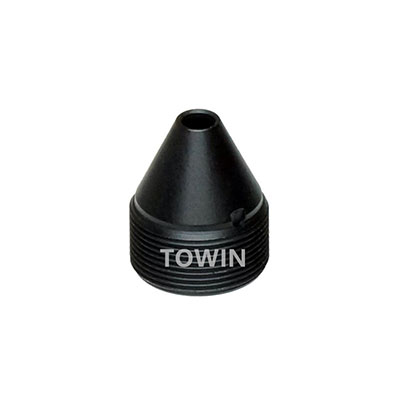
Photography enthusiasts often debate the merits of Pinhole vs. Conventional Lenses, each offering distinct advantages and drawbacks. While conventional lenses dominate modern imaging, pinhole photography remains a niche yet captivating art form.
Pinhole vs. Conventional Lenses: A Fundamental Overview
At first glance, pinhole and conventional lenses seem worlds apart. A pinhole lens is a tiny aperture—often just a hole in a light-tight material—that projects an inverted image onto a sensor or film. In contrast, conventional lenses use glass elements to focus light, enabling sharper images and adjustable focal lengths.
The core difference lies in how they manipulate light. Pinhole lenses rely on the principle of diffraction, where light bends around the aperture’s edges to form an image. This results in a soft, dreamy aesthetic with infinite depth of field. Conventional lenses, however, use precision-engineered glass to minimize aberrations, delivering crisp details and controlled bokeh.

Pinhole lens 45mm IR corrected CCTV M12 telecentric lens
1. Image Quality: Sharpness vs. Artistic Blur
Conventional lenses excel in sharpness, thanks to their multi-element designs. Modern lenses, like the Canon EF 50mm f/1.8, achieve tack-sharp results even at wide apertures. They also correct chromatic aberration and distortion, ensuring professional-grade output.
Pinhole lenses, by contrast, produce intentionally soft images. The lack of glass elements means no optical corrections, leading to visible diffraction patterns and vignetting. However, this “flaw” becomes an artistic tool, creating ethereal portraits or surreal landscapes.
2. Depth of Field: Infinite vs. Selective Focus
One of the most striking differences is depth of field (DoF). Pinhole lenses offer near-infinite DoF, meaning everything from a few inches to infinity remains in focus. This makes them ideal for landscape photography where maximum sharpness is desired across the frame.
Conventional lenses allow precise control over DoF. A wide aperture (e.g., f/1.4) isolates subjects with creamy bokeh, while a narrow aperture (e.g., f/16) ensures front-to-back sharpness. This versatility is crucial for genres like portraiture or macro photography, where selective focus adds drama.
3. Light Gathering: Efficiency vs. Simplicity
Conventional lenses are designed to maximize light transmission. Their coated glass elements reduce flare and improve contrast, even in low-light conditions.
Pinhole lenses struggle with light efficiency. The tiny aperture requires longer exposures, often necessitating a tripod. For instance, a pinhole camera might need a 2-second exposure at f/128, while a conventional lens captures the same scene at 1/125th of a second. This limitation makes pinhole photography impractical for action shots but perfect for long-exposure experiments.
4. Portability and Cost: Minimalist vs. High-Tech
Pinhole lenses are incredibly lightweight and affordable. You can even create one at home using a body cap and aluminum foil, costing less than $10.
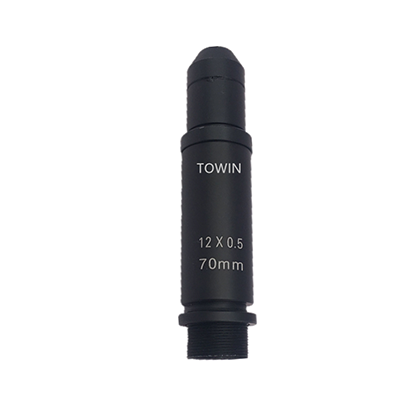
70mm pinhole M12 telecentric Low-Distortion lens
5. Creative Applications: Nostalgia vs. Precision
Pinhole photography appeals to artists seeking a retro, analog aesthetic. Its soft focus and unpredictable results evoke a sense of nostalgia, reminiscent of early photographic processes. Photographers like Jessica Lange have used pinhole cameras to create haunting, timeless portraits.
Conventional lenses cater to professionals needing technical perfection. Whether shooting weddings, wildlife, or architecture, their precision ensures consistent, high-quality results.
Conclusion
The choice between Pinhole vs. Conventional Lenses boils down to your goals. If you prioritize artistic expression, experimentation, and affordability, pinhole lenses offer unmatched charm. For those needing sharpness, versatility, and reliability, conventional lenses remain indispensable.